
Cosmeta Intelligence
Research. Formulation. Future of Beauty.
"Free-From" Claims: What They Really Mean
"Paraben-free," "sulfate-free," and "chemical-free" labels have become common in skincare, but what do they actually tell you? Learn what free-from claims really mean, where they can be useful, and why removing an ingredient doesn't automatically create a better formula.
Peptides in Skincare: What They Actually Do
Peptides are among the most popular ingredients in skincare, but not all peptides work the same way. Learn what peptides actually do, how cosmetic chemists formulate with them, and why the overall formulation matters just as much as the peptide itself.
Biotech Ingredients: The Future of Cosmetic Formulation
Biotech ingredients are changing how cosmetic products are developed. From precision fermentation to bioengineered actives, these innovations improve sustainability, consistency, and performance while opening entirely new possibilities for skincare formulation.
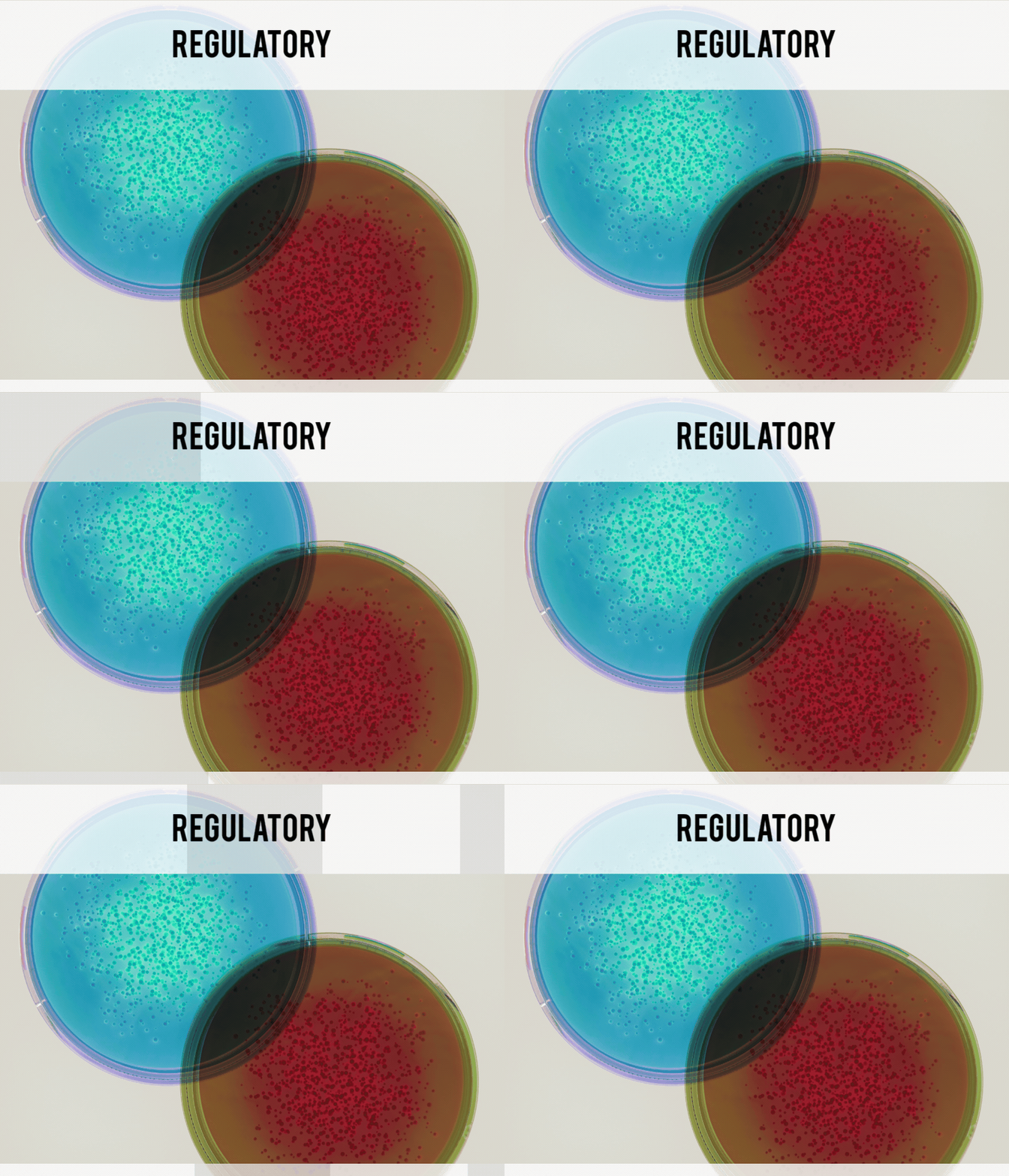
Challenge Testing vs. Preservative Efficacy Testing: What's the Difference?
Challenge Testing and Preservative Efficacy Testing (PET) are often used interchangeably, but they don't always mean exactly the same thing. Learn how these microbiological evaluations work, why they're critical for cosmetic safety, when they're performed, and how they fit into the product development process.
How Cosmetic Chemists Evaluate New Ingredients
How do cosmetic chemists decide whether a new ingredient belongs in a formula? Learn the scientific process behind ingredient evaluation, from supplier credibility and clinical evidence to formulation compatibility, stability, manufacturability, cost, and commercial viability.

What Is an INCI List and How Is It Created?
Every cosmetic product requires an INCI ingredient list, but few founders understand how it's created. Learn what an INCI list is, why it matters, how ingredients are ordered, and the common mistakes brands should avoid before taking a product to market.
How Sensory Science Shapes a Product's Texture
Texture is one of the first things consumers notice, yet it's one of the most complex aspects of cosmetic formulation. Learn how cosmetic chemists engineer spreadability, absorption, afterfeel, and finish through sensory science—not by accident, but by design.
Hyaluronic Acid: Why Great Skincare Is About More Than Hydration
Hyaluronic acid is one of skincare's most recognizable ingredients, but the real story isn't how much water it can hold. Learn how molecular weight, formulation strategy, and product architecture determine whether hyaluronic acid creates an ordinary moisturizer or an exceptional one.