"Free-From" Claims: What They Really Mean
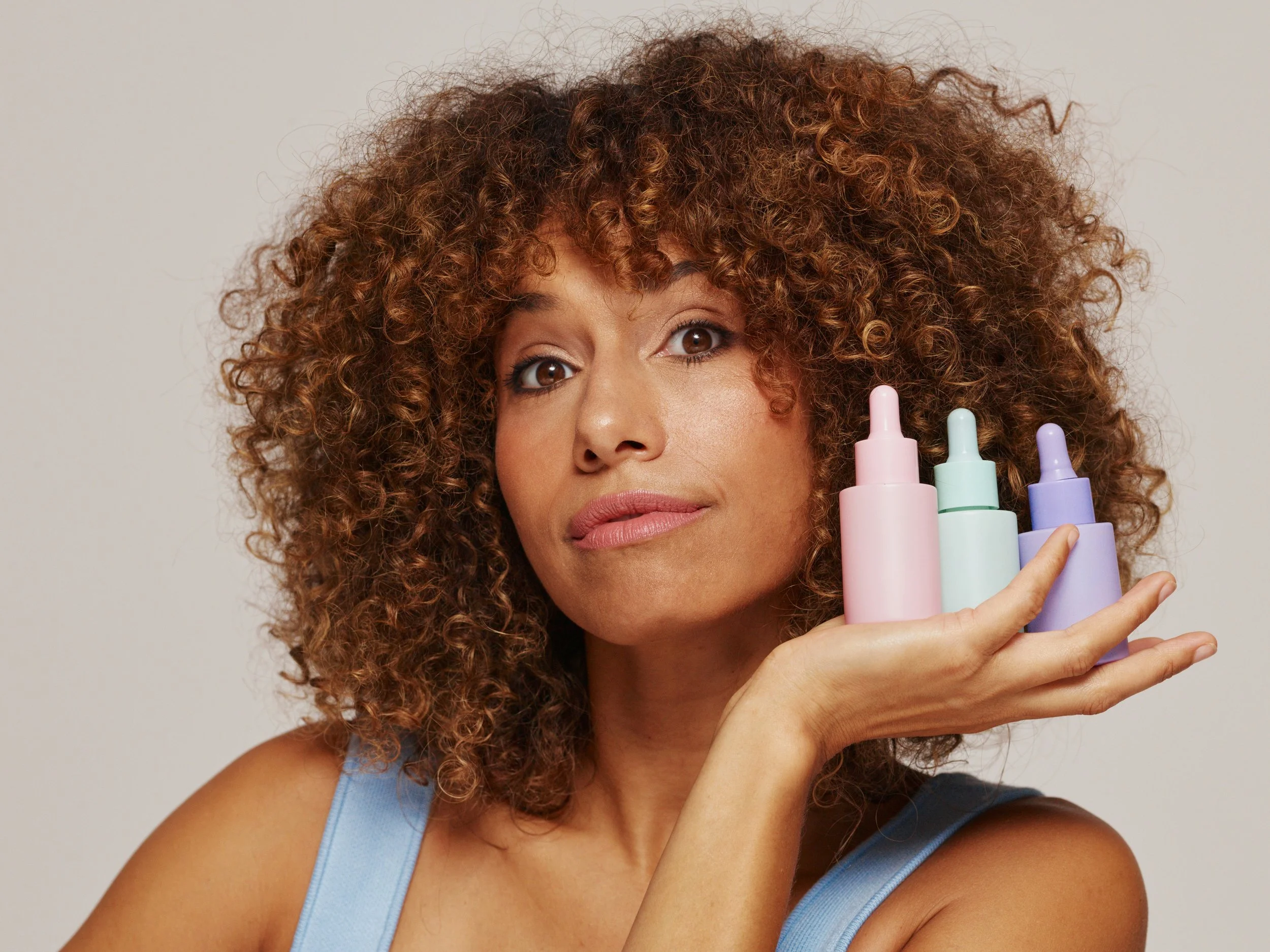
“Consumers deserve choices, and brands need chemists who can creatively adapt to the demographic they serve with elegant formulations”
Walk through any beauty retailer today, and you'll notice the same words appearing again and again.
Paraben-free.
Silicone-free.
Sulfate-free.
Mineral oil-free.
PEG-free.
Fragrance-free.
These "free-from" claims have become one of the defining languages of modern beauty. For some consumers, they're an important part of choosing products that align with their values or skin concerns. For brands, they communicate a formulation philosophy long before someone reads the full ingredient list.
But what do these claims actually tell us?
More importantly, what don't they tell us?
The answer is more nuanced than many people realize.
A free-from claim doesn't determine whether a formula is good or bad. Instead, it represents one of many formulation decisions a cosmetic chemist makes while balancing performance, safety, stability, manufacturing requirements, retailer standards, certifications, and consumer expectations.
Understanding free-from claims isn't about deciding whether they're right or wrong.
It's about understanding how they fit into the much bigger picture of product development.
What Is a Free-From Claim?
A free-from claim simply communicates that a product has been formulated without a specific ingredient or class of ingredients.
Some of the most common examples include:
Paraben-free
Sulfate-free
Silicone-free
PEG-free
Mineral oil-free
Alcohol-free
Fragrance-free
Dye-free
Phthalate-free
Unlike a performance claim, such as "improves hydration" or "reduces the appearance of fine lines," a free-from claim doesn't describe what a product does. Instead, it tells consumers something about the product's formulation philosophy.
For many brands, these claims reflect the expectations of their target customer, retailer requirements, or certification standards. They can also communicate that a product was designed for a particular skin type, lifestyle, or ingredient preference.
By themselves, however, they tell only part of the story.
A great formula isn't defined by what it leaves out.
It's defined by how well every ingredient works together to achieve the desired result.
Why Free-From Claims Became So Important
Free-from claims didn't become popular by accident.
As consumers became more interested in understanding what was in their skincare products, ingredient lists became part of the purchasing decision. Brands responded by making those choices easier to recognize on the front of the package.
Over time, free-from claims evolved from a niche marketing message into one of the primary ways brands communicate their formulation philosophy. This is often referred to today as the clean beauty movement. Now, many consumers actively look for products that are fragrance-free, silicone-free, sulfate-free, or formulated without other ingredient classes that align with their personal preferences or skin concerns.
For beauty founders, these decisions often start long before a cosmetic chemist selects the first ingredient.
The first question isn't, "What ingredients should we remove?"
It's "Who are we developing this product for?"
A product designed for consumers with eczema-prone skin may have very different requirements than one developed for a luxury spa, a prestige retailer, or a natural beauty brand. Likewise, many founders begin with retailer standards or certification goals that influence ingredient selection from the very beginning.
Depending on your brand, you may choose to formulate around standards such as the National Eczema Association Seal of Acceptance, Sephora Clean, Credo Clean, Whole Foods Premium Body Care, COSMOS, Ecocert, vegan, or cruelty-free certifications. Each has its own requirements, and those requirements become part of the formulation strategy.
This is where an experienced cosmetic chemist adds value.
A good chemist understands evolving ingredient technologies, retailer requirements, certification standards, and consumer trends. Rather than viewing these as limitations, they use them as design parameters to develop the highest-performing formula possible within your brand's goals.
Free-from claims are one part of that process. They communicate what matters to your brand, but they're only one piece of a much larger formulation strategy.
What Free-From Claims Can Tell You
Free-from claims can tell you quite a bit about a product's formulation goals.
They may indicate that a brand is developing for consumers with specific sensitivities, aligning with a retailer's ingredient standards, pursuing a particular certification, or following a defined formulation philosophy. They can also help consumers quickly identify products that match their personal preferences or lifestyle.
For example, a fragrance-free moisturizer may be designed for sensitive skin. A silicone-free hair product may appeal to consumers seeking a different sensory experience. A COSMOS-certified product follows a different ingredient framework than one developed for Sephora Clean. None of these approaches is inherently better than another—they're simply designed for different consumers and different markets.
What free-from claims don't tell you is how well the product performs.
They don't tell you whether the moisturizer effectively strengthens the skin barrier, whether the cleanser removes makeup without over-drying the skin, or whether the serum remains stable throughout its shelf life.
Those qualities come from thoughtful formulation, careful ingredient selection, and rigorous testing.
A free-from claim is one design parameter.
The finished formula is the result of balancing many others, including performance, stability, safety, sensory experience, manufacturing, cost, packaging compatibility, and the expectations of the people who will ultimately use the product.
Every Removal Requires a Thoughtful Replacement
One of the biggest misconceptions in cosmetic formulation is that creating a better product simply means removing ingredients.
In reality, every ingredient is chosen because it serves one or more important functions. When a brand decides to exclude a particular ingredient or ingredient class, the cosmetic chemist must identify alternatives that achieve the same objective while remaining consistent with the brand's formulation philosophy.
For example, if a brand chooses to eliminate parabens, another preservation system must provide adequate protection against bacteria, yeast, and mold. If silicones are excluded, alternative emollients must create the desired slip, spreadability, and after-feel. If sulfates are removed, a different surfactant system must still cleanse effectively while delivering the intended consumer experience.
Sometimes those alternatives perform equally well. Sometimes they perform even better. In other cases, they introduce new formulation challenges that require additional optimization.
This is why formulation is rarely about finding a direct substitute for a single ingredient. It's about redesigning the system so every component works together to achieve the desired performance.
The best cosmetic chemists don't simply replace ingredients. They understand the science behind what each ingredient contributes and build formulas that balance efficacy, stability, sensory experience, manufacturability, cost, and the goals of the brand.
That's where formulation expertise makes the difference.
Common Free-From Claims Explained
Not all free-from claims exist for the same reason.
Some are driven by certification standards. Others reflect retailer requirements, consumer preferences, formulation philosophy, or product positioning. Understanding the purpose behind each claim helps founders make more informed decisions during product development.
Paraben-Free
Parabens have been used safely in cosmetic preservation systems for decades and remain approved for use within established regulatory limits in many parts of the world. Even so, many brands choose alternative preservative systems because their customers, retailers, or certifications prefer formulas without parabens.
Choosing to formulate without parabens doesn't automatically make a product better or worse. It simply means the preservation strategy has been designed differently.
Sulfate-Free
The term "sulfate-free" generally refers to the exclusion of cleansing ingredients such as sodium lauryl sulfate (SLS) or sodium laureth sulfate (SLES).
Many modern sulfate-free cleansers use alternative surfactant systems to create a milder cleansing experience or to align with a brand's positioning. The overall surfactant blend—not the presence or absence of a single ingredient—ultimately determines how a cleanser performs.
Silicone-Free
Silicones are widely used to improve slip, spreadability, softness, shine, and sensory feel.
Some brands avoid them because of consumer preference, certification requirements, or brand philosophy. In those cases, cosmetic chemists select alternative emollients and sensory modifiers that deliver the desired experience while remaining consistent with the formulation goals.
Alcohol-Free
This claim can be confusing because not all alcohols serve the same purpose.
When consumers see "alcohol-free," it usually refers to the absence of short-chain alcohols such as ethanol or denatured alcohol. Fatty alcohols, including cetyl alcohol and cetearyl alcohol, are entirely different ingredients that function as emollients, stabilizers, and thickeners in many moisturizers and creams.
Fragrance-Free
Fragrance-free products contain no added fragrance intended to provide scent.
For consumers with fragrance sensitivities or compromised skin barriers, this can be an important design consideration. However, fragrance-free doesn't necessarily mean odor-free. Many raw materials have their own natural aroma, even when no fragrance has been added.
Each of these claims communicates something about the product's formulation strategy. None of them, on their own, determines whether the formula is effective, elegant, or appropriate for its intended consumer. Those qualities come from the complete formulation working together.
The Best Formula Starts With Clear Objectives
Great formulation doesn't begin with an ingredient list.
It begins with a clear understanding of what the product is trying to achieve and who it's being developed for.
Before selecting raw materials, an experienced cosmetic chemist is thinking about questions such as:
Who is the target consumer?
What skin type or concern is the product designed for?
Will the product be sold through a retailer with specific ingredient standards?
Does it need to meet certification requirements?
Which ingredient classes align with the brand's philosophy?
What level of performance and sensory experience is expected?
The answers to these questions shape every formulation decision that follows.
A product developed for the National Eczema Association Seal of Acceptance may require a very different approach than one designed for a prestige beauty retailer. Likewise, a brand pursuing COSMOS certification will work within a different set of ingredient options than a brand focused primarily on luxurious texture and sensory performance.
Neither approach is inherently better.
They're simply designed for different consumers and different business objectives.
This is where experience matters. A skilled cosmetic chemist understands not only formulation science, but also evolving consumer preferences, retailer requirements, certification standards, and ingredient innovation. They can explain the trade-offs, recommend alternatives, and develop a formula that stays true to your brand while delivering the performance consumers expect.
The strongest formulas aren't defined by the longest list of ingredients they've removed.
They're defined by how well they meet the needs of the people they were created for.
Regulatory Considerations
Free-from claims are powerful marketing tools, but they also come with regulatory responsibilities.
In many markets, brands can certainly communicate what a product does not contain. However, those claims should be truthful, meaningful, and supported by the overall formulation strategy. They also shouldn't imply that approved cosmetic ingredients used by other brands are inherently unsafe simply because your product excludes them.
As regulations continue to evolve, there has been a noticeable shift away from fear-based marketing and toward greater transparency. Consumers increasingly want to understand why a product was formulated a certain way, not just what was left out.
For founders, this is an opportunity.
Instead of relying solely on a list of excluded ingredients, explain the thinking behind your formulation. Tell consumers why you selected a particular preservative system, why you chose a silicone alternative, or why your product meets a specific certification standard. That type of education builds far more trust than an exclusion list alone.
Ultimately, free-from claims are most valuable when they reflect a deliberate formulation strategy rather than simply following a trend. When backed by thoughtful ingredient selection, strong product performance, and honest communication, they become part of a much more compelling brand story.
Key Takeaways
Free-from claims communicate a product's formulation philosophy, but they're only one part of the overall formulation story.
Many ingredient exclusions are driven by consumer preferences, retailer standards, or certification requirements rather than ingredient safety alone.
Every ingredient performs one or more important functions, so removing an ingredient requires thoughtful alternatives that maintain product performance.
Great cosmetic chemistry is about balancing efficacy, stability, safety, sensory experience, manufacturability, and brand values—not simply eliminating ingredients.
The best formulation strategy starts by understanding the target consumer, the desired certifications, and the performance goals of the product.
An experienced cosmetic chemist understands evolving ingredient technologies, market trends, retailer requirements, and certification standards, helping founders make informed formulation decisions.
The strongest products are those that successfully align science, consumer expectations, and commercial objectives.
Cosmeta's Perspective
The clean beauty movement changed the beauty industry in meaningful ways. It encouraged consumers to become more engaged with ingredient lists, pushed brands toward greater transparency, and challenged cosmetic chemists to rethink how products are developed.
At Cosmeta, we've been formulating clean beauty products since the early days of that movement. Today, we believe the industry is entering Clean Beauty 2.0, where transparency remains important, but performance, stability, and consumer experience are equally essential.
Over the years, we've developed products for brands with many different philosophies. Some need to meet retailer standards like Sephora Clean or Credo Clean. Others pursue certifications such as COSMOS, Ecocert, vegan, or cruelty-free. Some are designed for consumers with sensitive or eczema-prone skin, while others are built around a specific ingredient philosophy.
Those aren't limitations.
They're part of the design brief.
One of the first questions we ask isn't simply, "What ingredients do you want to avoid?"
It's "Who is this product for?"
Understanding the consumer often answers the bigger questions. Once you know your target customer, the retailer, the certifications you want to achieve, and the ingredient classes that align with your brand, formulation becomes much more focused.
Founders don't need to memorize thousands of cosmetic ingredients. What's far more valuable is understanding the ingredient categories that matter to your brand, the standards you want to meet, and the experience you want consumers to have.
A good cosmetic chemist stays current with emerging ingredient technologies, evolving retailer standards, certification requirements, and market trends. Their job is to explain the trade-offs, recommend the right technologies, and build the highest-performing formula possible within your constraints.
To us, that's what Clean Beauty 2.0 looks like.
It's no longer about creating the longest list of ingredients you don't use. It's about making intentional formulation decisions that reflect your brand values while delivering products consumers genuinely love to use.
Ready for the Next Step
Whether you're developing a product for sensitive skin, pursuing a clean beauty certification, launching with a specific retailer, or simply creating a formula that reflects your brand philosophy, success starts with a clear formulation strategy. The earlier those goals are defined, the easier it becomes to build a product that delivers on both performance and expectations.
FAQs
-
Not necessarily. A free-from claim simply indicates that a product excludes a particular ingredient or ingredient class. Safety depends on the complete formulation, appropriate manufacturing, and regulatory compliance—not the absence of one ingredient.
-
No. Every water-based cosmetic requires an effective preservation system. If parabens are not used, the cosmetic chemist must select another preservative system that provides adequate protection against microbial contamination.
-
Not inherently. Silicones provide benefits such as slip, spreadability, and a smooth skin feel. Whether a silicone-free formula is preferable depends on the product's purpose, target consumer, and the alternative ingredients used.
-
Fragrance-free generally means that no fragrance ingredients have been intentionally added to provide scent. However, the product may still have a natural aroma from its raw materials.
-
Only if those claims genuinely support the product's purpose and target consumer. Free-from claims should be the result of thoughtful formulation decisions—not the starting point. The strongest products balance consumer preferences with sound cosmetic chemistry, product performance, and long-term stability.