Allantoin for Skin: Why This Quiet Workhorse Still Matters
“Allantoin is a good reminder that an ingredient doesn’t have to be the hero to earn its place. Sometimes its value is simply making the whole formula kinder to the skin.”
Allantoin is easy to overlook.
It usually doesn't appear in giant type on the front of a serum. Consumers rarely compare products based on whether they contain 0.2% or 0.5% allantoin. And it doesn't have the trend cycle of peptides, ceramides, bakuchiol, or niacinamide.
Yet formulators keep using it.
Allantoin is a well-established skin-conditioning ingredient used across moisturizers, cleansers, after-sun products, hand creams, baby care, scalp products, oral care, and formulas designed around dry or easily irritated skin. Cosmetic Ingredient Review has concluded allantoin and the related complexes it assessed are safe as used in cosmetics, and its review documented allantoin in well over a thousand cosmetic products.
Its real value is not that it does one spectacular thing.
It is that a relatively small amount can quietly make a formula more useful.
What Is Allantoin?
Allantoin is a small nitrogen-containing organic compound with the cosmetic INCI name:
Allantoin
It occurs naturally in some plants, including comfrey, and in many other biological systems. Commercial cosmetic allantoin, however, is commonly manufactured synthetically rather than extracted directly from botanical material. Synthetic allantoin is chemically equivalent to the allantoin molecule regardless of whether the molecule originally came from a plant source.
That distinction matters because skincare marketing often implies that allantoin is essentially “comfrey extract.”
It isn't.
Allantoin is one defined molecule. Comfrey extract is a complex botanical mixture containing many constituents, one of which may be allantoin.
For formulation, the purified ingredient gives the chemist far more predictability than simply relying on the concentration naturally present in a botanical extract.
What Does Allantoin Actually Do for Skin?
In cosmetics, allantoin is primarily valued as a skin-conditioning, soothing, moisturizing, and keratolytic-support ingredient. Supplier literature also positions it for rough, chapped, or externally stressed skin.
The evidence behind individual claims is not equally strong, so it helps to separate what allantoin is well established for in formulation from what is sometimes exaggerated online.
It Helps Improve Skin Feel and Softness
Allantoin is commonly used to improve the condition and feel of dry or rough skin.
That is one reason it works so well in hand creams, body lotions, after-shave products, sensitive-skin formulas, and products designed around skin comfort.
For consumers, this is a fairly simple benefit.
For formulators, it is useful because allantoin can provide that contribution without necessarily making the product heavier or oilier.
It Can Support a Soothing Product Strategy
Allantoin is frequently included in products intended to help calm uncomfortable or stressed-feeling skin.
There is mechanistic research supporting effects on inflammatory response and tissue-repair pathways, but much of the classic wound-healing evidence comes from animal models rather than cosmetic human trials. A rat wound model, for example, found changes in inflammatory response, fibroblast proliferation, and extracellular-matrix synthesis with allantoin treatment.
That is interesting science.
It is not the same as proving that a 0.2% allantoin moisturizer “heals damaged skin.”
For a cosmetic product, I would keep the language where the evidence and regulation are more comfortable:
helps soothe, condition, soften, and support the feel of dry or stressed skin.
It Has Mild Keratolytic Properties
Allantoin is also frequently described as keratolytic.
That term can sound much stronger than what most cosmetic products are doing.
Allantoin is not typically used like glycolic acid, salicylic acid, or another strong exfoliating active. Its role is much gentler and better understood as helping support smoother, softer-feeling skin and the shedding of rough surface cells. Supplier technical information similarly describes allantoin as having keratolytic and soothing action.
This is another reason it fits well into sensitive-skin and barrier-conscious formulations.
A product can support surface smoothness without turning into an exfoliating treatment.
Allantoin Is Not a Botanical Extract
This point deserves its own section because it creates a lot of unnecessary confusion.
Allantoin can occur naturally in comfrey and other plants.
That does not mean a cosmetic product containing Allantoin necessarily contains comfrey.
And a product containing Symphytum Officinale extract is not automatically delivering a standardized amount of allantoin.
Those are different raw-material strategies.
A purified allantoin ingredient gives the formulator a known material with controlled specifications.
A botanical extract provides a broader phytochemical profile that depends on plant source, extraction method, standardization, carrier, and supplier.
Neither approach is inherently superior.
They simply solve different formulation and marketing problems.
Natural Allantoin vs. Synthetic Allantoin
From a chemistry standpoint, the molecule is the molecule.
If purified correctly, synthetic allantoin does not become biologically inferior simply because it was manufactured rather than isolated from a plant.
For cosmetic development, synthetic production can offer important advantages:
Purity
Batch consistency
Supply reliability
Easier standardization
Less botanical variability
More predictable formulation behavior
That may matter more than origin when allantoin's role is functional rather than botanical storytelling.
For brands pursuing a specific natural-origin certification, however, manufacturing route and supplier documentation can still matter.
The relevant question is not simply:
“Is allantoin natural?”
It is:
“Does this specific commercial grade qualify under the standard we're designing toward?”
What Percentage of Allantoin Is Used in Skincare?
This is one of the more interesting formulation realities around allantoin.
It is typically useful at relatively low levels.
Commercial supplier guidance varies, but cosmetic use commonly sits around the tenths-of-a-percent range, while broader use ranges can extend higher depending on product type and technical strategy. CIR's historical cosmetic-use data reported allantoin at concentrations up to 2%, while some supplier guidance describes broader application ranges for particular uses.
For many conventional skincare formulations, a formulator may work in a territory such as roughly 0.1% to 0.5% when the goal is skin conditioning and soothing support.
That is not a universal prescription.
It is a useful formulation reality.
And with allantoin, increasing the percentage creates a particularly important technical problem.
Why More Allantoin Can Become a Formulation Problem
Allantoin has limited water solubility at room temperature.
That may be the most important thing a founder could understand about the ingredient from a formulation perspective.
Supplier data describe allantoin as only sparingly soluble in cold water, with solubility improving as temperature rises.
That means a chemist cannot simply keep increasing allantoin because a higher percentage sounds more impressive on the front of a package.
At some point, the formulation has to physically keep that allantoin dissolved or appropriately incorporated.
If it doesn't, crystallization can become a stability problem.
The product can look fine when it is first manufactured and develop crystals later as it cools, ages, or encounters different storage conditions.
This is where a seemingly simple ingredient turns into a very good formulation lesson:
The maximum amount you can put into a product is not necessarily the amount you should put into it.
Solubility Is Why Processing Matters
Allantoin's solubility increases with temperature, which is why it is commonly incorporated using a process designed to dissolve it adequately before the finished product cools. Supplier data also caution that prolonged heating of aqueous allantoin can create stability concerns, so both dissolution and thermal exposure have to be considered.
For a consumer, none of this is visible.
They see:
Allantoin
The formulator has to think about:
Concentration
Solubility
Temperature
Cooling
Other dissolved materials
Finished pH
Long-term crystallization risk
Product format
Stability storage
That is why ingredient selection and formulation are two different jobs.
Allantoin Is a Good Example of Why Stability Starts During Formulation
Allantoin shows why stability cannot be treated as something that happens after the formula is complete.
Imagine increasing allantoin because the brand wants a stronger percentage claim.
The formula may initially appear perfectly homogeneous.
Then the product sits at room temperature.
Or goes through cold storage.
Or spends weeks in accelerated stability.
If excess material begins crystallizing, the problem wasn't created by the stability test.
The test simply revealed a formulation decision that wasn't robust enough.
This is exactly why Cosmeta approaches cosmetic stability testing as validation of decisions that begin with ingredient selection and formula architecture.
Shelf life is built into the product from the beginning.
Is Allantoin an Active Ingredient?
That depends on what someone means by “active.”
In normal cosmetic conversation, brands often call any benefit-focused ingredient an active, and allantoin can certainly be positioned as a functional skincare ingredient.
Regulatorily, however, “active ingredient” can have a more specific meaning in drug products.
In a conventional moisturizer, allantoin is generally functioning as a cosmetic skin-conditioning ingredient rather than an OTC drug active simply because it appears on the ingredient list. CIR classifies the allantoin ingredients it reviewed as skin-conditioning agents in cosmetics.
This distinction matters whenever product claims start moving from:
soothes dry skin
toward:
heals wounds, treats eczema, or treats another medical condition.
The ingredient may have biological research behind it.
The finished product's regulatory category is determined by much more than that.
Does Allantoin Heal Skin?
This is where I would be particularly careful with internet skincare claims.
Allantoin has a longstanding association with wound-care research, and animal studies have investigated mechanisms related to tissue repair.
There have also been clinical products containing allantoin evaluated in medical contexts, including scar preparations and specialized topical products. But those products frequently contain other active ingredients or use allantoin at levels very different from ordinary cosmetics, so the results cannot automatically be transferred to a standard face cream.
For everyday skincare, the cleaner position is:
Allantoin is a useful soothing and conditioning ingredient with a long history in products designed for dry, rough, or stressed skin.
It doesn't need to be turned into a wound-healing drug claim to be valuable.
What Works Well With Allantoin?
Allantoin is particularly useful because it can support many other active strategies without needing to dominate the product.
Panthenol
Panthenol and allantoin are a very natural pairing for hydration, comfort, and barrier-focused products.
They work through different chemistry and can support the same consumer without being redundant.
Recent in vitro research has even investigated allantoin together with D-panthenol, bisabolol, and dipotassium glycyrrhizinate in UVB-exposed human keratinocytes, finding reductions in several inflammatory mediators. Because the study tested the combination, it cannot tell us how much of the observed effect belonged specifically to allantoin.
That is exactly how combination evidence should be interpreted.
Beta-Glucan and Oat
Allantoin can also fit beautifully into products using beta-glucan, colloidal oatmeal, or oat extracts.
These ingredients provide different hydration, film-forming, lipid, and botanical components, while allantoin can provide another layer of skin-conditioning support.
For a sensitive-skin concept, that can be far more rational than simply stacking ten “soothing” botanical extracts.
Ceramides
Allantoin and ceramides do very different jobs.
Ceramides belong to the lipid architecture of the stratum corneum.
Allantoin is a small water-soluble conditioning ingredient.
That difference can make the combination useful in a barrier product.
A strong moisturizer doesn't need every ingredient to operate through the same mechanism.
Niacinamide
Niacinamide can provide a broader barrier, tone, and oil-control story, while allantoin can sit quietly in the supporting system.
This is exactly the kind of formula where allantoin may never appear on the front label but still earns its place.
Allantoin and Retinoids or Exfoliating Acids
Allantoin often makes sense in formulas or routines designed around stronger actives.
A retinoid product, AHA product, or exfoliating treatment may benefit from supporting ingredients that improve hydration and comfort.
But allantoin does not “cancel out” irritation.
If the underlying active system is too aggressive for the consumer, adding a soothing ingredient doesn't magically fix the product.
This is an important formulation principle.
Supporting ingredients can improve a formula. They cannot always rescue a bad active strategy.
Sometimes the right answer is less acid, a different retinoid, better delivery, a more supportive vehicle, or a different product format.
Allantoin is part of the system.
It isn't a permission slip to overload the system.
Is Allantoin Good for Sensitive Skin?
It can be a very useful ingredient for sensitive-skin product development.
Its long history as a skin-conditioning ingredient, low typical use level, and compatibility with many other cosmetic technologies make it attractive for products focused on dryness, roughness, or discomfort. CIR's safety review concluded allantoin and its related complexes were safe in the practices of use assessed.
But the same rule applies here as with panthenol, beta-glucan, or ceramides:
One soothing ingredient does not make a sensitive-skin formula.
The entire formulation matters.
That includes:
Fragrance
Surfactants
Preservatives
Acids
Retinoids
Botanical load
pH
Emollients
Packaging
Claims
Testing
Sensitive-skin development is a product architecture, not an ingredient checklist.
Allantoin and Acne-Prone Skin
Allantoin may make sense in products intended for blemish-prone or oily skin because these consumers can still experience dryness, irritation, or barrier stress, especially when using exfoliating acids, benzoyl peroxide, or retinoids.
That does not make allantoin an acne treatment.
For a cosmetic product, the useful role is supporting comfort, softness, and condition around a more targeted acne strategy.
If the product claims to treat acne, the regulatory conversation becomes different.
Again, formulation role and marketing claim need to stay aligned.
Does Allantoin Exfoliate?
Yes, but not in the way consumers usually think about exfoliation.
Allantoin is described as having mild keratolytic properties, meaning it can help support the removal or loosening of rough surface keratin. Supplier descriptions include this keratolytic role alongside soothing and moisturizing effects.
That is very different from a high-strength glycolic-acid peel.
I would not build a product around allantoin as the primary exfoliating technology if meaningful resurfacing is the goal.
Its advantage is precisely that it can support smoother-feeling skin without turning the product into an aggressive exfoliant.
Allantoin Is Usually Better as a Supporting Ingredient
Allantoin can certainly become part of a hero story, particularly in minimalist or sensitive-skin products.
But commercially, I think its strongest role is often behind the scenes.
A product can lead with:
Ceramides
Peptides
Retinoids
Niacinamide
Vitamin C
Beta-glucan
Colloidal oatmeal
A new biotech active
and still use allantoin to make the surrounding product more comfortable and complete.
That doesn't diminish allantoin.
It makes the product architecture smarter.
Formulators don't need every useful raw material to become a marketing claim.
Allantoin Is Also Useful Outside Facial Skincare
Allantoin's versatility extends well beyond face creams.
Suppliers position it for use in products such as:
Hand creams
Body lotions
After-shave products
Baby care
Scalp products
Oral care
Cleansing products
Ashland, for example, offers USP-grade allantoin for skin and oral-mucosa protection applications, while Clariant positions cosmetic allantoin across skin-care formats.
This breadth is part of why the ingredient has lasted.
It solves a practical formulation need across many categories.
Allantoin Has a Weak Hero Story but Strong Formulation Value
This is an interesting commercial distinction.
Consumers know what hyaluronic acid is.
They increasingly know peptides, ceramides, retinol, and niacinamide.
Allantoin has much lower consumer recognition.
That might make it weaker as the single ingredient used to sell a prestige serum.
But low awareness does not mean low formulation value.
For a founder, that creates two possible strategies.
One is to educate the consumer and make allantoin part of a minimalist sensitive-skin story.
The other is probably more common: let a better-known active lead the marketing while allantoin improves the actual formula underneath it.
There is nothing wrong with that.
Not every technically important ingredient needs to become famous.
Does Allantoin Need a Multi-Form Strategy?
Usually, no.
Allantoin is not like vitamin C, ceramides, peptides, or hyaluronic acid, where different forms can create legitimately different functional strategies.
The main cosmetic ingredient is simply:
Allantoin
There are related allantoin complexes and salts evaluated in cosmetic safety literature, including materials such as aluminum salts and other complexes, but that does not mean modern skincare needs a “five-form allantoin complex.”
For most product concepts, the sophistication comes from:
Choosing the appropriate grade
Using the appropriate concentration
Getting it properly incorporated
Preventing crystallization
Pairing it intelligently with the surrounding formula
That is enough.
Formula Ownership Can Matter Even With a Low-Level Ingredient
Allantoin is also a useful example of why an ingredient list tells only part of the product story.
The label may show:
Allantoin
It doesn't show whether the product contains 0.1%, 0.3%, 0.5%, or another level.
It doesn't tell you whether the concentration was chosen because of efficacy, solubility, sensory considerations, or simply because the formulator wanted a trace amount on the ingredient list.
For a brand, 100% ownership of the finished quantitative formula provides visibility into those decisions.
That can become valuable if the formula later needs to be:
Moved to another manufacturer
Cost optimized
Reformulated
Adjusted for a different market
Modified to meet retailer requirements
Updated as raw materials change
Formula ownership isn't only about hero ingredients.
It is about understanding and controlling the architecture of the whole product.
From Allantoin to a Commercial Product
The temptation with an ingredient like allantoin is to think there isn't much formulation strategy involved.
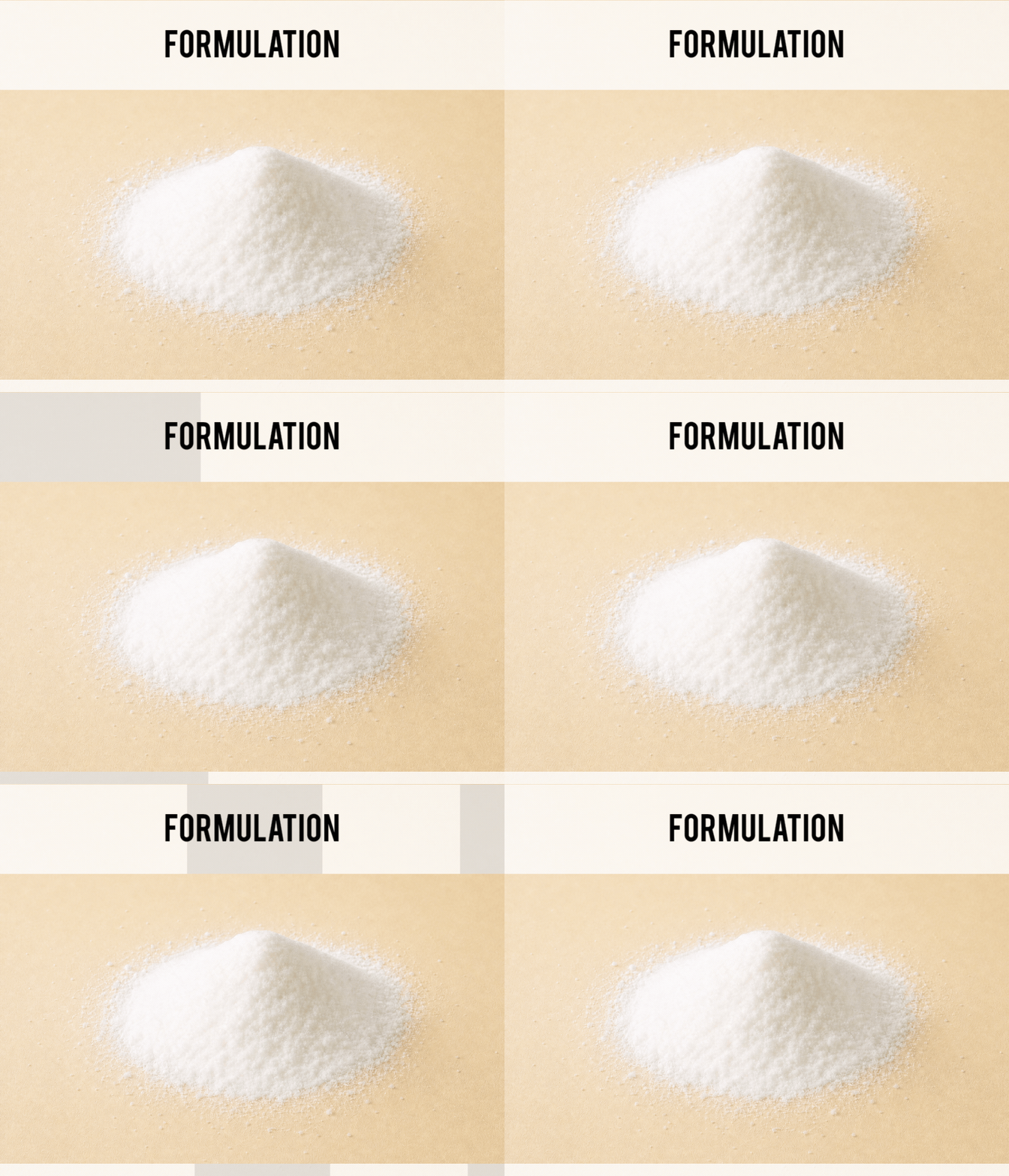
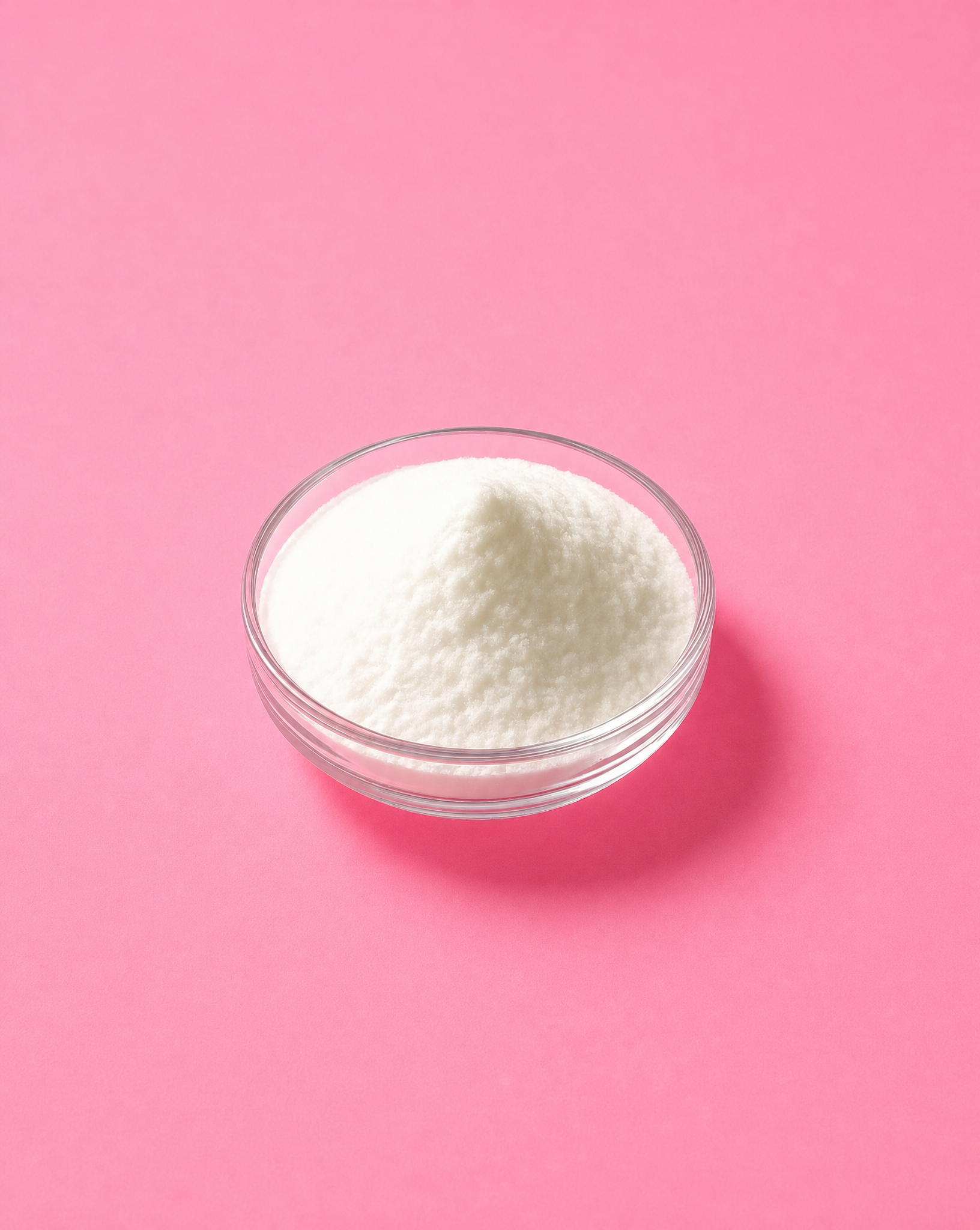
It's just a white powder used at a small percentage.
But that small percentage still has to dissolve.
It still has to remain stable.
It still has to work with the active system.
It still has to fit the desired sensory profile.
And it has to contribute enough value to justify being there.
That is one reason experienced formulators tend to respect ingredients like allantoin.
They aren't complicated because the marketing story is complicated.
They're useful because we know exactly what job we're asking them to do.
Key Takeaways
Allantoin is a well-established skin-conditioning ingredient used in cosmetics for soothing, moisturizing, softening, and mild keratolytic support. Cosmetic Ingredient Review concluded that allantoin and the related allantoin complexes assessed were safe in the practices of use reviewed.
Commercial allantoin is commonly manufactured synthetically. It is chemically the same defined molecule regardless of whether allantoin can also occur naturally in plants such as comfrey.
Allantoin is often effective at relatively low use levels, and its limited water solubility means pushing concentration higher can create a crystallization and stability challenge rather than a better product.
It pairs naturally with panthenol, beta-glucan, ceramides, niacinamide, and other technologies because its role is usually supportive rather than competitive.
And that may be the most important thing about allantoin: it doesn't need to be the most exciting ingredient in the formula to be one of the most useful.
Cosmeta's Perspective
Allantoin is exactly the kind of ingredient I don't want beauty to lose in the rush toward novelty.
Ingredient innovation matters. New peptides, biotechnology, delivery systems, and engineered actives give formulators capabilities we didn't have before.
But good formulation is not built only from new ingredients.
It is built from knowing which ingredients consistently solve the problem in front of you.
Allantoin can improve the comfort of a barrier cream, support a sensitive-skin concept, soften a hand treatment, sit behind a stronger active system, or help make a product feel more complete without ever becoming the marketing headline.
There is also a useful commercial lesson in its solubility.
The marketing instinct is often to increase the percentage.
The formulation instinct is to ask whether the product actually becomes better.
With allantoin, that answer can very quickly become no.
Sometimes expertise shows up not in how much of an ingredient you add, but in knowing where to stop.
Ready for the Next Step
If allantoin belongs in a new formula, decide what job it should perform before deciding how much to use. A sensitive-skin moisturizer, retinoid-support product, hand treatment, scalp product, and post-active cream may all benefit from allantoin, but the surrounding formulation determines whether it actually earns its place.
FAQs
-
Allantoin is widely used in products designed for dry, rough, or sensitive skin because of its skin-conditioning and soothing properties. Cosmetic Ingredient Review concluded allantoin and the related complexes it assessed were safe under the cosmetic uses reviewed. Whether a finished product is suitable for sensitive skin still depends on the entire formula.
-
Yes. Allantoin is commonly used in moisturizers, cleansers, body care, scalp products, and other products intended for daily use. Its typical cosmetic concentrations are relatively low, and the frequency of use is usually determined more by the complete product than by allantoin itself.
-
Allantoin has mild keratolytic properties, meaning it can help support smoother-feeling skin and the removal of rough surface cells. It is much gentler than traditional exfoliating actives such as glycolic acid or salicylic acid and is generally used for conditioning rather than intensive resurfacing.
-
There is no universal best percentage. Allantoin is commonly useful at relatively low levels, often around the tenths-of-a-percent range in cosmetic skincare. The correct level depends on the product and raw material, and increasing the concentration is limited in part by allantoin's relatively low water solubility at room temperature.
-
Allantoin occurs naturally in plants such as comfrey, but cosmetic-grade allantoin is commonly manufactured synthetically to provide a purified and consistent raw material. The molecule itself is the same chemical compound. If natural-origin certification is important to a brand, the specific supplier grade and documentation should be evaluated rather than making assumptions from the INCI name alone.