Airless Pump vs. Dropper vs. Jar: How Packaging Choice Affects Formula Stability
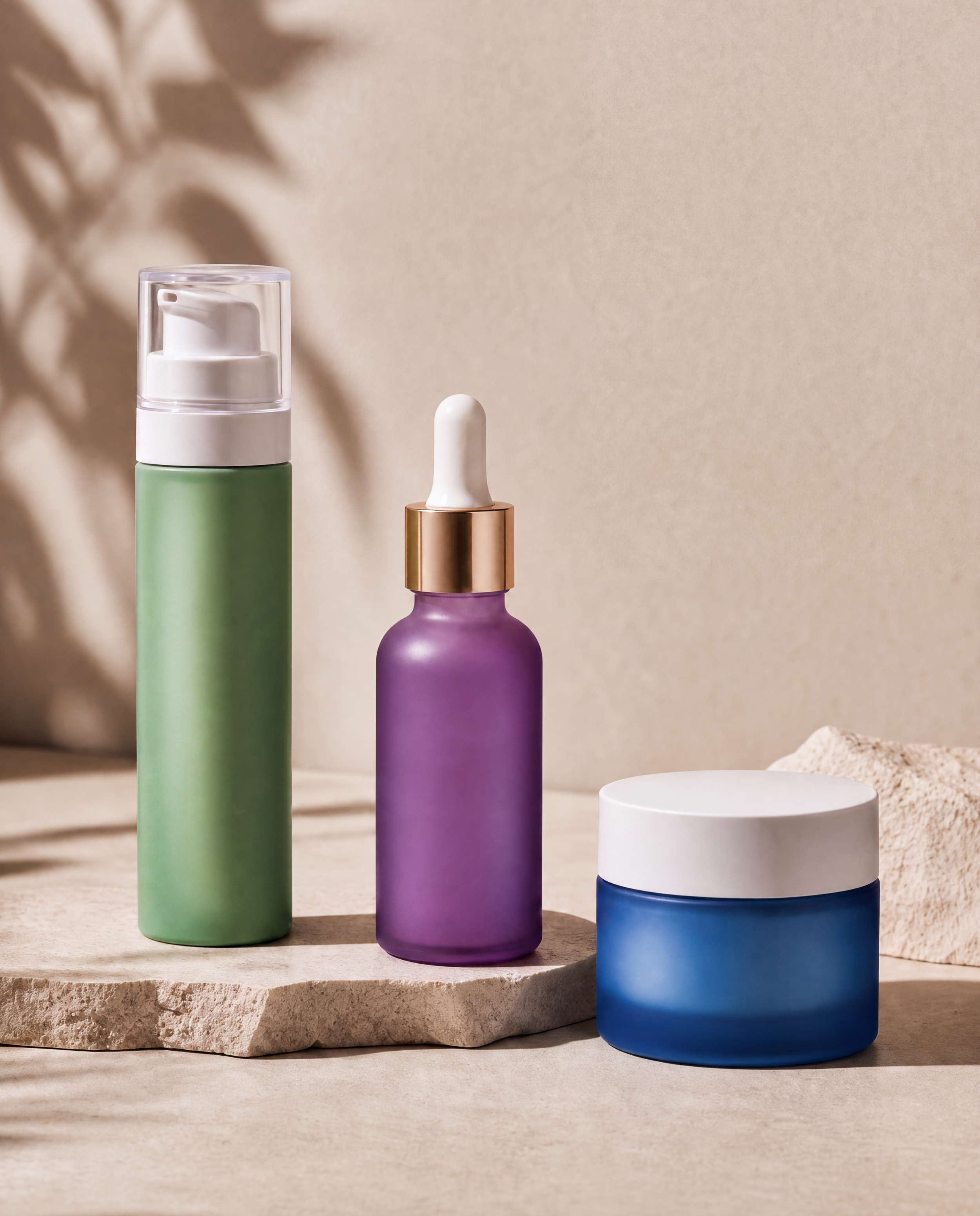
“I don’t choose packaging by asking which format is technically best. I choose it by asking what this particular formula needs to stay stable, dispense properly, and make sense for the consumer.”
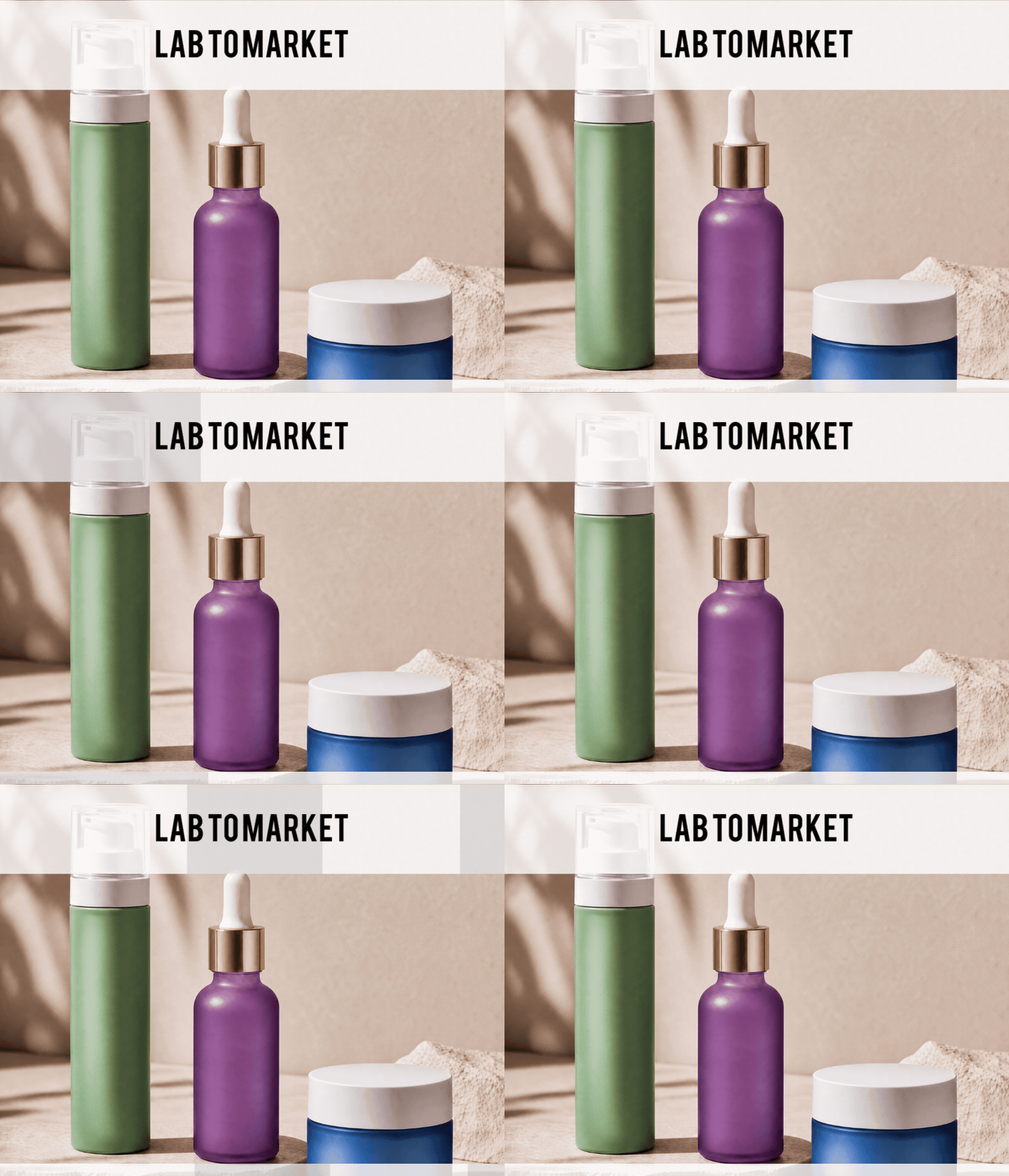
Airless packaging has developed a reputation for being the technically superior choice for skincare.
Sometimes it is.
But I would not automatically put every serum into an airless pump, every oil into a dropper, or assume that a jar is poor packaging simply because the consumer opens it.
Packaging is another formulation decision.
An airless pump can reduce repeated environmental exposure during use, but it still has to dispense the formula properly. A dropper may be appropriate for an oil or low-viscosity serum even though it is opened repeatedly. A jar can work perfectly well for a stable cream or balm when the formulation, preservation system, and intended use support that format.
The better question isn't which package is best?
It's which package is best for this formula?
That distinction matters because packaging is part of the commercial product-development process, not simply the decoration chosen after the formulation is complete. Cosmeta's broader skincare development framework treats packaging compatibility and manufacturing readiness as part of the path from concept to market.
Packaging Can Change What Happens to a Formula
A cosmetic formula doesn't stop interacting with its environment when it leaves the laboratory.
Once filled, the product may be exposed to varying amounts of:
Oxygen
Light
Moisture loss
Repeated consumer handling
Temperature changes
Contamination during use
The packaging system influences all of those exposures.
Packaging also has to contain and protect the product without negatively affecting it. The broader packaging literature describes protection, containment, compatibility, and preservation of product quality as core functions of cosmetic packaging.
That means packaging can influence both formula stability and consumer use.
And those are connected.
A perfectly stable cream has limited commercial value if the pump can't dispense it.
A beautiful dropper bottle is a poor choice if the formula oxidizes rapidly under the conditions that package creates.
A jar isn't automatically inferior if the product is stable, well preserved, easy to use, and appropriate for that format.
Packaging should protect the formula without fighting the product.
What Does Packaging Actually Protect a Cosmetic From?
Different formulas have different vulnerabilities.
Oxygen
Some ingredients and oil systems are particularly susceptible to oxidation.
Oxidation can contribute to changes in:
Color
Odor
Ingredient integrity
Sensory quality
Overall product stability
Packaging that reduces repeated exposure to fresh air may therefore be useful for formulas containing oxidation-sensitive materials.
But packaging cannot make an inherently unstable active suddenly stable.
The formulation still needs an appropriate antioxidant strategy, pH, supporting system, manufacturing process, and storage conditions where relevant.
The package is one layer of protection.
Light
Light exposure can affect certain colorants, fragrances, botanical materials, vitamins, antioxidants, and other light-sensitive components.
This is why the beautiful clear bottle may not always be the best technical choice.
An opaque or light-protective package can sometimes reduce a stress the formula would otherwise have to tolerate.
Again, this is formula specific.
There is no formulation rule stating that every active serum needs an opaque package.
Water and Volatile Loss
Packaging also influences how well a product retains water and other volatile components over time.
If water or solvent is gradually lost, the product may become more concentrated.
That can affect:
Viscosity
Texture
Ingredient concentration
Dispensing
Sensory profile
Stability
The package may look completely normal while the formula inside slowly changes.
This is one reason the package needs to be evaluated with the actual product rather than judged by appearance alone.
Packaging Also Changes Microbial Exposure During Use
Water-containing cosmetics need an appropriate preservation strategy regardless of packaging.
But the way a consumer accesses the product changes the contamination opportunity.
A wide-mouth jar can involve repeated finger contact and repeated opening.
A dropper is opened each time and may be touched to the skin by some consumers.
A conventional pump limits direct access to the bulk.
Closed airless-style systems can further reduce accessibility to the product compared with repeatedly opened containers, which is one reason packaging design is considered alongside preservation strategy in cosmetic microbiology.
This does not mean an airless package eliminates the need for preservation or Preservative Efficacy Testing.
FDA emphasizes that cosmetic products can become hazardous if contaminated with harmful microorganisms, and product safety remains the responsibility of the company marketing the cosmetic.
Packaging can reduce certain exposure pathways.
It doesn't replace a properly designed preservation system.
Airless Pump vs. Dropper vs. Jar: The Short Answer
If you want the simple comparison:
Airless pumps can be useful when minimizing repeated exposure and controlled dispensing are priorities.
Droppers work particularly well for low-viscosity serums and oils when visual application and precise consumer dosing are part of the product experience.
Jars make sense for products that are too thick or structurally unsuitable for a pump, or where direct access is desirable.
None is universally superior.
The formula, viscosity, oxidation sensitivity, preservation strategy, consumer experience, cost, manufacturing capability, and brand positioning determine the better choice.
That is the answer a founder usually needs before the more technical discussion begins.
Airless Pumps: What They Actually Do
The term airless packaging generally describes dispensing systems designed so that product is evacuated without repeatedly drawing outside air into the product reservoir in the way a conventional atmospheric pump may.
Depending on the system, this may involve a moving piston, collapsible pouch, or another architecture.
This can provide several useful advantages.
Reduced Repeated Exposure During Use
Because the consumer isn't repeatedly opening the bulk product, an airless system can reduce direct contact and certain environmental exposures.
This can be useful for formulas where oxidation, contamination exposure, or repeated opening is undesirable.
Closed dispensing systems have also been discussed in cosmetic preservation literature as less accessible to contamination than open jars and bottles.
Controlled Dispensing
A well-matched airless system can provide a consistent dose and a polished consumer experience.
That is commercially important.
Consumers often perceive pumps as cleaner and easier to use than repeatedly opening a jar.
But the phrase well matched matters.
The pump still has to work with the formula.
Airless Does Not Mean Oxygen-Free
This is probably the biggest misconception about airless packaging.
Airless does not mean a formula has never been exposed to oxygen.
Oxygen can be present:
In raw materials
In the bulk after manufacturing
In headspace
From mixing and filling
Within the package itself depending on the system
An airless pump can reduce repeated introduction of fresh outside air during use.
That is different from creating an oxygen-free environment.
So if a formula contains a highly oxidation-sensitive active, simply changing the package to airless does not remove the need to formulate around the chemistry.
Airless packaging can support stability. It cannot manufacture stability for you.
Airless Pumps Can Fail Mechanically
A technically protective package is not useful if the consumer can't get the product out.
Airless pumps can struggle with formulas that are:
Too viscous
Too structured
Stringy
Highly shear-dependent
Particulate-containing
Prone to drying at the actuator
Poorly matched to the pump output
The package supplier may offer viscosity guidance, but viscosity alone does not fully describe how a product will dispense.
Two formulas can produce similar numerical viscosity readings and behave completely differently through a pump.
Rheology matters.
The formula's internal structure matters.
This is one of those places where a packaging decision becomes formulation science very quickly.
Airless Packaging Can Also Affect Product Positioning
Airless packaging often communicates:
Clinical
Modern
Controlled
Protective
Premium
Hygienic
That can be useful for a formula built around peptides, antioxidants, retinoid technologies, sensitive-skin positioning, or other performance-focused concepts.
But packaging needs to support the brand story rather than dictate it.
A beautiful botanical balm in an airless pump simply because “airless is better” may create a worse user experience than an appropriate jar.
Technical protection and consumer expectation have to meet somewhere.
When an Airless Pump Makes the Most Sense
I would strongly consider airless packaging when several of these are true:
Repeated exposure to the environment should be minimized.
Controlled dispensing matters.
The product is compatible with the pump mechanics.
A more enclosed consumer-use system supports the preservation strategy.
The product positioning benefits from a clinical or controlled-dose experience.
The formula can be filled and manufactured efficiently in the selected system.
That still doesn't mean I would commit to the package before testing it.
Compatibility and dispensing should be evaluated using the intended formula and commercial component.
Dropper Bottles: Why They Remain Popular
Droppers are one of skincare's most recognizable serum formats.
They work particularly well with:
Facial oils
Oil serums
Low-viscosity aqueous serums
Concentrated treatment products
Products where the visual ritual of dosing is part of the experience
The appeal isn't purely technical.
A dropper allows the consumer to see the product and control the amount they dispense.
For many beauty brands, that application ritual has considerable value.
But a dropper creates a different exposure profile than an enclosed pump.
Every use typically requires opening the bottle.
The pipette enters and leaves the package.
Air enters.
The product can contact the closure or pipette.
And consumers sometimes touch the pipette directly to their face.
That doesn't make droppers bad packaging.
It means the formula has to make sense for that pattern of use.
Droppers Are Particularly Logical for Oils
Anhydrous oils are one of the easiest examples.
A facial oil generally doesn't carry the same microbial risk profile as a conventional water-containing emulsion, although the specific formula still needs appropriate evaluation.
A dropper also handles low-viscosity oils naturally.
This creates a product format where the mechanics and consumer experience line up nicely.
That is why dropping a relatively stable facial oil into a glass pipette bottle can make perfect sense even though an airless system may technically reduce environmental exposure further.
Maximum protection is not always the objective. Appropriate protection is.
Droppers Can Be a Bigger Issue for Oxidation-Sensitive Formulas
A dropper repeatedly opens the package to the environment.
For a highly oxidation-sensitive formulation, that can become more relevant.
The bottle color, headspace, antioxidants, product viscosity, fill volume, closure design, and complete formulation strategy can all matter.
This is where packaging decisions become cumulative.
A clear bottle.
Large headspace.
Repeated opening.
A highly oxidation-sensitive active.
Now several small choices may be pushing in the same unfavorable direction.
None necessarily causes failure on its own.
Together they may.
Clear Glass Is a Marketing Decision and a Stability Decision
Consumers love seeing beautiful serums.
Brands love showing color and texture.
Chemists occasionally wish everything came in opaque packaging.
There is a compromise.
If the formula is sufficiently light stable, clear packaging may be completely appropriate.
If it isn't, aesthetics need to yield to chemistry or the formulation needs to change.
Amber glass, opaque coatings, secondary cartons, UV-protective materials, or another package strategy may be considered depending on the actual risk.
The important thing is to make that decision deliberately.
A clear bottle should be chosen because the product can tolerate it, not simply because it photographs well.
Dropper Bulbs and Wipers Matter Too
A dropper bottle is not just glass.
The system can include:
Pipette
Bulb
Collar
Wiper
Closure
Gasket or sealing components
These materials may interact differently with the formula.
An oil or solvent system that is perfectly compatible with the glass bottle can still interact with another part of the dropper assembly.
That is why Cosmeta's companion guide to Cosmetic Packaging Compatibility Testing treats the entire package as the product-contact system rather than focusing on the main bottle alone.
FDA uses the same broader container-closure concept in pharmaceutical packaging guidance: the package is the collection of components that together contain and protect the product, not merely the visible outer vessel. While pharmaceutical requirements are not interchangeable with cosmetic requirements, the systems principle is useful.
Jars: Are They Really Bad for Skincare?
No.
Jars are not automatically bad packaging.
They are simply a more open package format.
A jar may be an excellent choice for:
Rich creams
Body butters
Balms
Masks
Cleansing balms
Thick treatments
Products where scooping is part of the intended use
The formula needs to be designed appropriately for that use.
This becomes especially important for water-containing formulas because repeated opening and consumer contact need to be considered in preservation and product safety.
But a properly formulated, appropriately preserved cream does not become a bad product simply because it lives in a jar.
The blanket advice to avoid all jar packaging is far too simplistic.
Jar Packaging Can Be Better for Very Thick Products
Some formulas simply do not want to move through a pump.
A rich butter or highly structured balm may require a pump so specialized that the packaging creates more problems than it solves.
Forcing the formula into a pump may require changing:
Viscosity
Rheology
Oil structure
Wax structure
Consumer dose
Sensory characteristics
At that point, we need to ask which is driving the product:
the formula or the package?
Sometimes changing the formula makes sense.
Sometimes the jar was the better answer all along.
Jars Change the Preservation Conversation
A consumer puts fingers into a jar.
Maybe a spatula.
Maybe wet fingers.
Maybe the lid stays open while they finish a routine.
These are foreseeable use conditions.
Cosmetic preservation therefore needs to be robust enough for the product and package as they will actually be used. FDA's cosmetic GMP guidance emphasizes adequate preservation against microbial contamination under reasonably foreseeable storage and consumer-use conditions.
That does not mean formulators should simply add more preservative because a jar was selected.
Preservation should be designed and verified as a system.
Product water activity, pH, raw materials, packaging, consumer use, preservative technology, manufacturing hygiene, and challenge testing can all contribute to that strategy.
Jars Can Provide a Better Consumer Experience
This is where technical discussions about packaging often miss something important.
A rich cream in a heavy jar may feel luxurious in a way an airless pump does not.
Consumers can see the texture.
They can control exactly how much they use.
They can access nearly every bit of product.
They may associate the package with masks, night creams, or intensive treatments.
Those sensory and behavioral factors are part of product design.
Packaging should protect the formula.
It also has to sell and deliver the experience the brand intended.
The Most Protective Package Is Not Automatically the Best Package
This is the formulation point I would want a founder to remember.
If technical protection were the only goal, cosmetic packaging would be much easier.
But commercial products have to balance:
formula protection + dispensing + consumer behavior + aesthetics + manufacturing + cost + sustainability + brand positioning
An airless pump may offer a more enclosed dispensing system.
A dropper may create the right application ritual.
A jar may be the only format that gives the consumer the rich, tactile experience the product was designed around.
There is no prize for selecting the most technically elaborate package.
The package has to solve the right problem.
Packaging Choice Can Affect COGS More Than Founders Expect
Primary packaging can be one of the largest contributors to cosmetic COGS, and Cosmeta's guide to COGS in Cosmetic Manufacturing specifically identifies bottles, jars, tubes, pumps, droppers, airless systems, caps, and closures as direct product costs.
This matters when comparing formats.
An airless pump may cost materially more than a basic jar.
A heavy glass dropper may increase freight.
A package may require manual assembly.
A specialized pump can have a higher MOQ.
Decorations can add cost and lead time.
A refill architecture can create additional components.
The question isn't simply:
Which package costs the least?
It is:
Which package gives this product the best combination of protection, consumer experience, manufacturability, and commercial economics?
That is a much more useful development question.
Packaging Can Affect Shelf Life, but It Does Not Create Shelf Life
Packaging is one part of the shelf-life equation.
A more protective package may reduce certain stresses, such as repeated oxygen exposure, light exposure, moisture loss, or consumer contamination. But shelf life still depends on the formulation itself, preservation, manufacturing quality, storage conditions, and how the product changes over time.
That is why an airless pump cannot be used as a shortcut around stability testing.
Cosmeta's guide to How Shelf Life Is Actually Determined for Cosmetic Products explains this more fully: shelf life is established through a combination of accelerated and real-time stability, packaging compatibility, microbial evaluation, and product-specific testing rather than inferred from the container alone.
A package can improve the environment surrounding the formula.
It cannot compensate indefinitely for poor chemistry.
Some Ingredients Make Packaging Choice More Important
Not every formula needs the same level of protection.
Packaging becomes more strategically important as the formulation becomes more sensitive.
Retinoids
Retinol is well known for sensitivity to light, oxygen, and heat. Reviews of topical retinoid formulation specifically identify stabilization as a major development challenge.
For a retinol product, I would therefore think carefully about:
Light protection
Repeated oxygen exposure
Headspace
Package barrier properties
Dispensing
Formula stability
Consumer use
That does not automatically mean airless pump.
It means the package needs to be part of the stabilization strategy.
Vitamin C
Vitamin C is another category where the exact ingredient form matters enormously.
A low-pH L-ascorbic acid serum and a moisturizer containing a more stable vitamin C derivative may have very different packaging needs.
This is why saying “vitamin C should always be in dark glass” is too broad.
Which vitamin C?
In what formula?
At what pH?
With what antioxidant system?
Those questions come first.
Peptides
Peptides are often placed into airless packaging because the format supports the clinical positioning and can reduce repeated consumer exposure to the bulk.
But peptides are a large chemical family.
A palmitoylated peptide, copper peptide, and acetylated peptide do not necessarily share identical stability concerns.
The commercial peptide raw material may also contain its own carrier, stabilizers, and preservation system.
Again, the ingredient category does not select the package by itself.
Botanical Extracts and Natural Oils
Botanical materials may contribute color, odor, oxidation sensitivity, or variability depending on the material.
Highly unsaturated oils can be more oxidation-prone than more saturated lipid systems.
That may influence whether the formula benefits from better oxygen or light protection, antioxidants, or a different package.
The more complicated the formula, the less useful packaging rules of thumb become.
The Same Formula May Need Different Packaging at Different Sizes
This is an easy detail to miss.
A 15 mL eye serum and a 100 mL face serum may use the same formula but experience different:
Headspace ratios
Consumer-use periods
Number of openings
Pump output needs
Package dimensions
Exposure time after opening
A small package that is consumed in six weeks may behave differently in real life from a large package used for six months.
That is why changing pack size is not always a purely graphic decision.
The consumer-use pattern changes too.
Pump Output Is Part of Formula Design
One of the most practical reasons to think about packaging early is dosage.
An airless pump may dispense 0.2 g per actuation.
Another may dispense 0.5 g.
A treatment product might be intended for one pump.
A body lotion might need several.
That affects how the consumer experiences the formula and how long the package lasts.
It can also affect claims and directions.
If the brand intends to communicate:
Use one pump for the entire face
the selected package actually has to deliver enough product to make that instruction realistic.
Packaging therefore influences the dose architecture of a cosmetic even when the ingredient percentages never change.
Droppers Give Consumers More Control, but Less Consistency
A dropper creates a very different dosing experience.
Some consumers use three drops.
Others fill the entire pipette.
Some barely squeeze the bulb.
That variability is often fine for facial oils and conventional serums.
But it may be less appropriate when a product concept depends on particularly consistent dosing.
This is another reason package selection should consider the claims and consumer instructions rather than only the formula.
The most elegant package may not be the best way to deliver the intended amount.
Jars Can Encourage Overuse, but That Is Not Always Bad
Jars also create flexible dosing.
A consumer scoops what feels right.
For a rich night cream, body butter, mask, or balm, that can be part of the appeal.
For a concentrated treatment product, it may be less desirable.
This becomes a commercial consideration too.
Consumer dosing influences:
Perceived value
How quickly the product is finished
Repurchase timing
Product performance
Complaint risk
Packaging architecture and business strategy can quietly intersect in ways founders do not always anticipate.
Should Antioxidant Serums Always Use Airless Packaging?
No.
Airless packaging can be a strong choice for some antioxidant formulas because it can reduce repeated exposure to outside air during use.
But the antioxidant itself matters.
A relatively stable oil-soluble antioxidant system is different from a highly oxidation-sensitive aqueous active.
A dropper may be entirely appropriate for one antioxidant serum and a poor choice for another.
A good packaging decision should consider:
formula sensitivity + package protection + compatibility + consumer use + economics
rather than relying on the word antioxidant.
Is a Jar Less Hygienic Than a Pump?
A jar creates more direct access to the product, so the consumer-use contamination opportunity is generally greater than with a closed dispensing system.
Published cosmetic preservation literature has found that container closure design influences in-use microbial contamination and describes jars and more open bottles as more accessible to contamination than closed systems such as airless pumps.
That is relevant.
It does not mean:
jar = unsafe
or
airless = microbiologically safe
A properly preserved jarred cream can be completely appropriate.
An inadequately preserved product does not become safe simply because it is dispensed through an airless package.
FDA continues to emphasize that harmful microbial contamination can make cosmetics unsafe.
Preservation still has to be designed and verified.
Is Glass Better Than Plastic for Formula Stability?
Not universally.
Glass can offer excellent barrier properties and chemical resistance for many products.
Plastic can provide:
Lower weight
Less breakage
Squeezability
Different dispensing options
Lower transportation burden
Design flexibility
Different plastic materials also have very different barrier and compatibility properties.
So glass vs. plastic is not really one comparison.
It is:
this glass package versus this plastic package for this particular formulation.
That is what should be tested.
Packaging Compatibility Still Has to Be Proven
Even if the packaging format looks ideal in theory, the actual formula and package need to be evaluated together.
Cosmeta's companion article on Cosmetic Packaging Compatibility Testing covers this process in depth.
A package may need evaluation for:
Leakage
Evaporation
Formula discoloration
Package distortion
Pump performance
Valve performance
Tube recovery
Label adhesion
Decoration durability
Compatibility testing matters because the same general packaging format can perform differently depending on the exact materials and components.
An airless pump is not one standardized object.
Neither is a dropper.
Neither is a jar.
The commercial component matters.
Packaging Choice Can Affect the Development Timeline
Packaging is also one of the most common reasons cosmetic projects slow down.
Cosmeta's development timeline guidance identifies packaging revisions alongside raw-material availability, feedback delays, manufacturing schedules, and prototype iterations as common causes of project delay.
That is another reason I do not like leaving packaging until the very end.
If the chosen pump fails compatibility, the brand may need to:
Find another package
Order samples
Confirm dimensions
Re-test compatibility
Redesign labels
Modify cartons
Revisit filling requirements
One packaging change can ripple through the commercial development process.
Packaging Choice Should Include Manufacturing From the Beginning
The package also has to work on the production line.
A founder may select a beautiful airless bottle only to discover:
The contract manufacturer cannot fill it efficiently.
It requires manual assembly.
Minimum run speeds are poor.
The filling nozzle does not fit.
The formula traps air during filling.
The package cannot be coded easily.
The pump requires priming procedures that complicate production.
This is why packaging should be discussed with the contract manufacturer before large quantities are purchased.
The right package is not only compatible with the formula.
It is compatible with manufacturing.
Sustainability Adds Another Layer
Packaging sustainability matters increasingly to consumers and brands, but there is no single packaging format that wins every environmental comparison.
Glass is recyclable but heavy.
Plastic can be lightweight and resource-efficient but may have recycling challenges depending on material and local infrastructure.
Airless systems may contain multiple materials and components.
Droppers can combine glass, rubber-like bulbs, plastic collars, and pipettes.
Jars may be simpler or more complex depending on the design.
Current research on personal-care packaging continues to highlight the challenge of material complexity and post-consumer recycling.
That means the best sustainability question is often not:
Which material sounds greener?
It is:
Can we protect the formula with less material, fewer incompatible components, and a system that has a realistic end-of-life path?
A package that causes formula failure and product disposal is not a strong sustainability outcome either.
Refillable Packaging Needs to Work More Than Once
Refill systems create a different challenge because the durable component may be expected to survive multiple product cycles.
A pump or dispenser that works perfectly through one 50 mL fill may perform differently after repeated use.
The development team should consider:
Mechanical durability
Cleaning or contamination assumptions
Product compatibility over repeated fills
Consumer assembly
Refill sealing
Dispensing consistency
Refillable packaging is not simply conventional packaging with less plastic.
It is a different product-use system.
The Best Package Is the One the Consumer Will Use Correctly
There is another part of packaging science that is easy to overlook: behavior.
A pump encourages one type of use.
A dropper encourages another.
A jar another.
Packaging can influence:
How much product is applied
Where it is stored
Whether it is shared
Whether fingers contact the bulk
Whether the consumer closes it properly
Whether the product travels well
Whether it fits into a routine
That can influence the real-world performance of the product.
A packaging decision therefore isn't only about protecting the formula from the consumer.
It is also about helping the consumer use the formula correctly.
There Is No “Premium” Packaging Format
Airless packaging can look clinical and technical.
Glass droppers can feel apothecary or prestige.
Heavy jars can feel luxurious.
None is inherently more premium.
Premium comes from the execution.
A poorly functioning airless pump feels cheap very quickly.
A well-designed jar can feel extraordinary.
A dropper that drips down the bottle neck creates a frustrating experience regardless of how expensive the glass is.
The package should reinforce what the formula is supposed to be.
Packaging Can Become the Product's Differentiation
Sometimes packaging is not just protecting the formulation.
It becomes part of why the product is interesting.
That may include:
Precision dosing
Dual chambers
Refillable systems
Mixing immediately before use
Powder-to-liquid activation
Separate incompatible actives
Metered pumps
Specialty applicators
Cooling applicators
Targeted scalp or body delivery
In those cases, packaging and formulation need to be developed together from the beginning.
The package may actually enable a formula architecture that would otherwise be impossible or commercially impractical.
This is where packaging becomes genuine product innovation rather than decoration.
Formula Ownership Gives Brands More Flexibility Around Packaging
Packaging strategy can also connect back to formula ownership.
Suppose a product launches in a dropper and the brand later decides an airless system would better support the next generation.
If the brand owns 100% of its finished quantitative formula, it has visibility into the formulation architecture and can work with qualified formulators and manufacturers to evaluate whether any modifications are needed for the new package.
Maybe viscosity needs adjustment.
Maybe nothing needs to change.
Maybe a raw material needs to be replaced.
Maybe a different package solves the problem without touching the formula at all.
Owning the quantitative formula gives the brand more control over those decisions and more flexibility to evolve the product without remaining tied permanently to the original manufacturing source.
That does not mean the brand owns patented packaging technology or proprietary supplier components.
It means the formula remains a controllable business asset.
Airless Pump vs. Dropper vs. Jar: How I Would Make the Decision
I would not start with the package.
I would start with the product.
What is the formula?
How sensitive is it to oxygen or light?
What is the viscosity?
Does it contain particles?
How is it preserved?
How much should the consumer use?
How often will they use it?
What sensory experience are we trying to create?
How long will the package remain open during normal consumer use?
What does the brand need the package to communicate?
Can the manufacturer fill it?
Does it meet the target COGS?
Can it survive transportation?
Once those questions are answered, the format usually becomes much clearer.
Airless pump: often strongest when controlled dispensing and reduced repeated environmental exposure are priorities.
Dropper: often strongest for oils and low-viscosity serums where flexible dosing and the serum ritual support the product.
Jar: often strongest for rich, structured, scoopable formulas and product experiences where direct access makes sense.
Those are tendencies.
Not rules.
Key Takeaways
Packaging can influence oxygen exposure, light exposure, moisture loss, microbial exposure, dispensing, and ultimately product stability.
Airless pumps can reduce repeated environmental exposure during use, but they do not create an oxygen-free environment and do not eliminate the need for preservation or stability testing.
Droppers work well for many oils and low-viscosity serums but expose the package to repeated opening and offer less consistent consumer dosing.
Jars create more direct access to the product but can be entirely appropriate for properly formulated and preserved creams, balms, masks, and other thick products.
Glass is not automatically better than plastic, and airless is not automatically better than a jar or dropper.
Packaging selection should consider the formula, consumer, manufacturing, compatibility, COGS, stability, sustainability, and intended product experience together.
The best packaging format is not the one that offers the most protection in theory. It is the one that provides the right protection for the actual formula.
Cosmeta's Perspective
Packaging is where formulation science becomes very visible.
A consumer may never know why the chemist chose one antioxidant system over another, why a polymer level changed, or why an emollient was replaced.
They absolutely notice when a pump stops working.
They notice when the serum turns brown.
They notice when product crusts around the dropper.
They notice when a jar feels wonderful to use.
That is why I don't think packaging belongs at the end of product development.
It is part of formulation strategy.
The bigger opportunity for beauty brands is to stop asking which package is universally best and start designing the formula, package, consumer experience, manufacturing process, and commercial economics as one system.
Sometimes that leads to an airless pump.
Sometimes it leads to a dropper.
Sometimes the much-maligned jar is exactly the right answer.
The sophistication is not in choosing the most technical package.
It is in knowing why you chose it.
Ready for the Next Step
Choose packaging while the formula is still flexible enough to respond to what testing reveals. The strongest commercial products develop the formula, dispensing system, compatibility strategy, manufacturing plan, and consumer experience together rather than forcing one to accommodate decisions already made by another.
FAQs
-
Not always. Airless pumps can reduce repeated exposure of the bulk product to outside air and provide more controlled dispensing, which can benefit some formulations. Droppers may be better suited to facial oils or low-viscosity serums. The better format depends on the formula's sensitivity, viscosity, preservation strategy, consumer use, and compatibility with the package.
-
It may help reduce certain stresses, particularly repeated environmental exposure during use, but an airless pump does not establish shelf life by itself. Shelf life depends on the formulation, stability, preservation, manufacturing quality, package compatibility, and storage conditions.
-
No. Jars create more direct access to the product and therefore need to be considered carefully from a preservation and consumer-use perspective, but a properly formulated and preserved cream, balm, mask, or other thick product can be completely appropriate in a jar. Closed systems generally offer less opportunity for in-use contamination, but package format is only one part of microbial safety.
-
It depends on the specific formula. Some vitamin C forms and retinoids are sensitive to light or oxygen, so repeated opening and package transparency may matter. Retinol in particular is well documented as being sensitive to light, oxygen, and heat. Packaging should be selected as part of the formula's overall stability strategy rather than from the ingredient name alone.
-
Yes. The actual commercial formula and package should be evaluated together because packaging can affect leakage, evaporation, dispensing, light exposure, formula stability, and other aspects of product performance. Cosmeta's product-development guidance specifically treats packaging compatibility as a separate commercialization step.