N-Acetyl Glucosamine for Skin: Why Formulators Pair It With Niacinamide
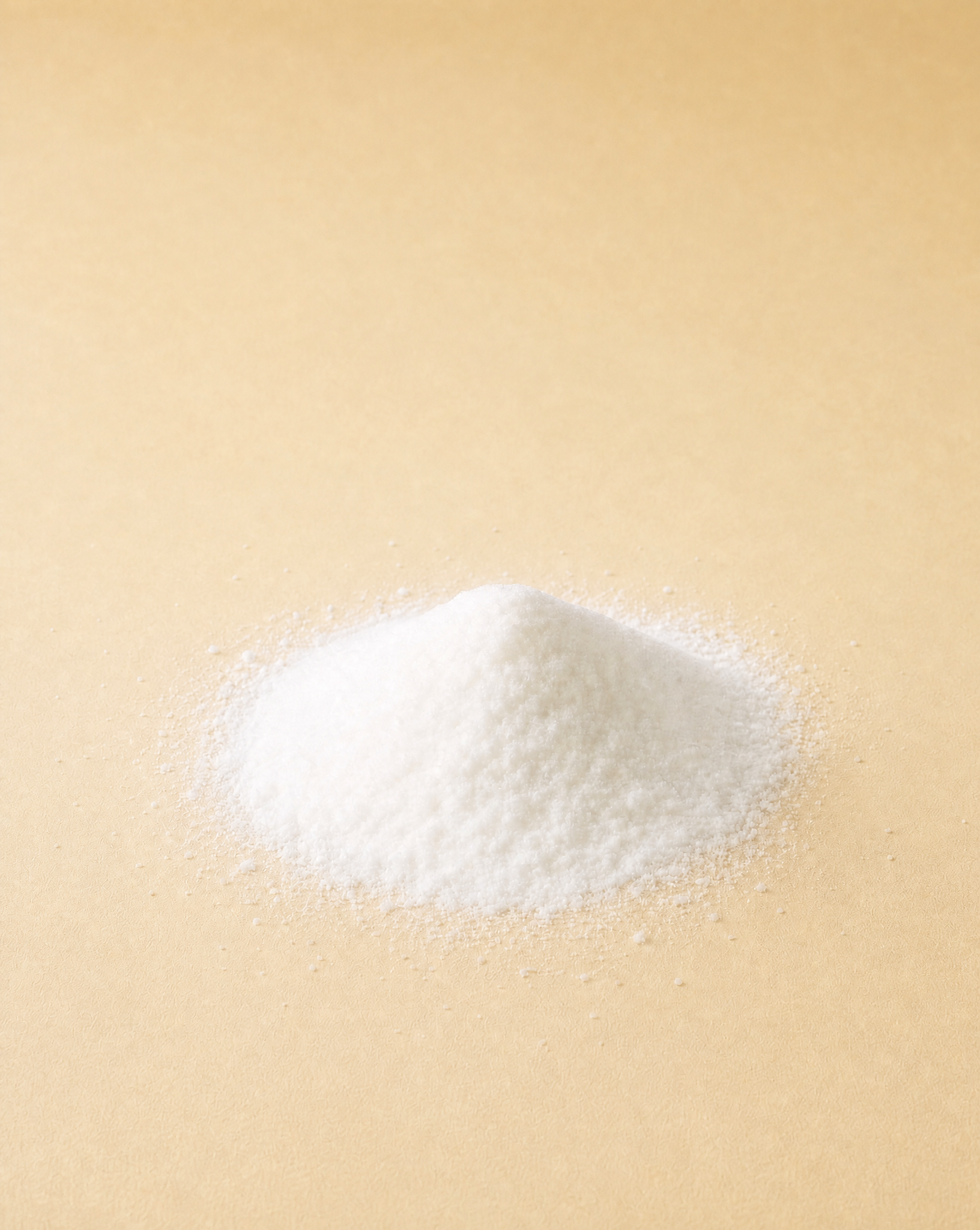
“N-Acetyl Glucosamine is the kind of supporting active I like because it gives us another mechanism without forcing the formula into another extreme percentage story.”
N-Acetyl Glucosamine is a good example of an ingredient that has more formulation value than consumer fame.
Most shoppers know niacinamide. Far fewer recognize N-Acetyl Glucosamine, often shortened to NAG. Yet the two have been studied together in topical products for irregular pigmentation, and NAG also has its own research around skin tone, stratum corneum function, and hyaluronan biology.
That makes it interesting for a very specific reason.
NAG does not need to replace niacinamide or compete with it. It can give a formulator another way to build a more complete brightening and barrier-focused system around an ingredient consumers already understand.
What Is N-Acetyl Glucosamine?
N-Acetyl Glucosamine is an amino sugar derived from glucosamine.
Its cosmetic INCI name is:
Acetyl Glucosamine
You may also see the ingredient discussed in scientific literature as:
N-Acetyl Glucosamine
N-Acetyl-D-Glucosamine
NAG
GlcNAc
These names generally refer to the same underlying molecule in the skincare literature, although the cosmetic ingredient list will typically use the standardized INCI Acetyl Glucosamine.
Cosmetic Ingredient Review identifies Acetyl Glucosamine as a cosmetic skin-conditioning ingredient and has assessed it within the broader glucosamine ingredient family.
For consumers, the naming can be confusing because “N-Acetyl Glucosamine” is the phrase commonly used in ingredient education, while the back of the product may simply say Acetyl Glucosamine.
That is the same reason cosmetic chemistry often requires translating between scientific names, supplier language, and INCI labeling.
What Does N-Acetyl Glucosamine Actually Do for Skin?
NAG has been studied most meaningfully in three areas:
Visible hyperpigmentation
Stratum corneum differentiation and exfoliation
Hyaluronan-related biology
These are related but distinct stories.
It Can Help Improve the Appearance of Hyperpigmentation
This is probably the strongest consumer-facing reason NAG deserves more attention.
A double-blind, placebo-controlled, split-face clinical study found that 2% N-Acetyl Glucosamine reduced the appearance of facial hyperpigmentation over eight weeks. The authors selected NAG in part because it was a more stable derivative than glucosamine and demonstrated useful skin penetration in testing.
That makes NAG much more than a theoretical “brightening” ingredient.
There is human topical evidence behind the claim.
But the mechanism is also useful to understand.
Glucosamine-related compounds have been investigated for their ability to influence melanin-related biology, which gives NAG a different formulation story from many familiar brightening actives.
For a formulator, that opens the door to a multi-mechanism tone product rather than simply increasing one active to a higher percentage.
Why N-Acetyl Glucosamine Pairs So Well With Niacinamide
This pairing is one of the most interesting things about NAG.
A randomized, double-blind, vehicle-controlled study evaluated a topical moisturizer containing 4% niacinamide and 2% N-Acetyl Glucosamine for irregular facial pigmentation and found significant improvements in pigmentation-related measures compared with vehicle.
That is useful clinically.
It is also useful strategically.
Niacinamide is familiar to consumers and already has its own evidence for visible tone and barrier support.
NAG adds another mechanism and gives the formulator a way to strengthen the product without simply moving niacinamide from 5% to 10% or 15%.
This is exactly the kind of active pairing I find more interesting than percentage escalation.
The question becomes:
Can we make the system smarter rather than just stronger on paper?
Why the Niacinamide + NAG Combination Makes Formulation Sense
There are several reasons this combination is attractive.
First, both can fit naturally into aqueous skincare systems.
Second, they can contribute to overlapping consumer concerns through different biological pathways.
Third, niacinamide already has strong consumer recognition, so NAG can function as the more technical supporting ingredient without having to carry the marketing story alone.
That creates a useful commercial structure:
Niacinamide provides familiarity. NAG provides differentiation.
This is often a stronger product-development strategy than trying to turn every ingredient into a hero.
Cosmeta's article on niacinamide for skin explores why niacinamide itself is usually more useful at a thoughtfully selected level than simply pushed to the highest number the formula will tolerate.
N-Acetyl Glucosamine and Skin Exfoliation
NAG is sometimes described as exfoliating, but that word can be misleading.
It is not an acid exfoliant like glycolic acid or salicylic acid.
Research in keratinocytes has shown that NAG can influence markers associated with epidermal differentiation and may modulate cellular adhesion in ways that support normalization of stratum corneum exfoliation.
That is a much gentler and more biologically nuanced story than conventional acid exfoliation.
For consumers, I would translate it this way:
NAG may help support smoother, more even-looking surface skin without functioning like a strong chemical peel.
That makes it potentially interesting in tone-correcting formulas for consumers who do not necessarily want another exfoliating acid.
NAG Is Also Connected to Hyaluronic Acid Biology
N-Acetyl Glucosamine is one of the repeating sugar components involved in hyaluronan structure.
Hyaluronic acid consists of repeating units that include N-acetyl-D-glucosamine and glucuronic acid.
That biochemical relationship has led researchers to investigate whether exogenous NAG influences hyaluronan production.
In cultured human dermal fibroblasts, NAG increased hyaluronan production, although it did not increase the mRNA expression of the hyaluronan synthase enzymes measured in that study.
This is interesting mechanistic evidence.
It is not the same as proving that a topical NAG serum produces the same hydration outcome as applying hyaluronic acid directly.
Those are different formulation strategies.
N-Acetyl Glucosamine Is Not Hyaluronic Acid
This distinction matters because the biochemical connection between them can easily turn into sloppy marketing.
N-Acetyl Glucosamine is one molecular building block involved in hyaluronan structure.
Hyaluronic acid is a much larger glycosaminoglycan polymer.
They are not interchangeable ingredients.
Topical hyaluronic acid primarily contributes to hydration and film-forming behavior through the properties of the polymer and its molecular-weight distribution.
NAG is a much smaller molecule with different skin penetration, biological interactions, and formulation behavior.
A product may use both.
But it should not imply that NAG simply “turns into hyaluronic acid on the skin.”
That would oversimplify the biology.
N-Acetyl Glucosamine vs. Glucosamine
The names sound nearly identical.
The formulation difference matters.
Glucosamine itself has been investigated for effects related to pigmentation, but stability limitations have made N-Acetyl Glucosamine especially useful for topical cosmetic development. The clinical hyperpigmentation research specifically chose NAG as the more stable derivative.
That illustrates a broader formulation principle.
The biologically interesting parent molecule is not always the form we choose for a commercial cosmetic product.
Stability can determine which derivative is actually useful.
That is the same reason cosmetic formulators often select vitamin C derivatives, retinoid derivatives, or modified peptides instead of simply defaulting to the most famous parent molecule.
What Percentage of N-Acetyl Glucosamine Is Used in Skincare?
The most useful clinical data give us some perspective.
Human topical studies have evaluated 2% N-Acetyl Glucosamine, including both standalone NAG and formulas combining 2% NAG with 4% niacinamide.
That makes approximately 2% a particularly evidence-relevant concentration to discuss.
It does not mean every product must contain exactly 2%.
The appropriate level still depends on:
Raw-material purity
Supplier recommendations
Product format
Supporting actives
pH
Tolerability
Stability
Sensory profile
Intended claims
Finished-product testing
The better formulation question is not:
How high can we push NAG?
It is:
What level has a defensible reason to be there?
Higher NAG Is Not Automatically Better
NAG has not been commercialized around the same extreme percentage escalation we have seen with niacinamide.
That may actually be an advantage.
There is little reason to assume that doubling a clinically relevant concentration automatically doubles the visible benefit.
And a higher concentration can create new formulation constraints around solids load, sensory feel, cost, or compatibility with the rest of the active system.
If the ingredient has a useful evidence base at a moderate level, that gives the formulator room to build around it.
That can be more valuable than using the entire active budget on one number.
Does N-Acetyl Glucosamine Need a Multi-Form Strategy?
Usually, no.
NAG is not an ingredient family like hyaluronic acid or vitamin C where multiple commercially important forms can create distinct delivery or stability strategies.
The primary skincare ingredient is Acetyl Glucosamine.
The sophistication usually comes from what you pair it with and what role it plays in the broader product.
That might include:
Niacinamide
Vitamin C derivatives
Tranexamic acid
Alpha-arbutin
Licorice-derived technologies
Barrier-support ingredients
Humectants
But every combination should have a reason.
A long list of tone-correcting actives is not automatically a better hyperpigmentation product.
What Works Well With N-Acetyl Glucosamine?
Niacinamide
This is the obvious pairing because it has direct clinical evidence behind it.
The 4% niacinamide + 2% NAG combination has been studied in a randomized, controlled facial pigmentation trial.
That is stronger justification than simply saying two ingredients are “often paired.”
Hyaluronic Acid
NAG and hyaluronic acid can make sense together because they contribute differently.
Hyaluronic acid provides polymer-based hydration and film-forming behavior.
NAG contributes a smaller-molecule biological and conditioning story.
That is complementary rather than redundant.
Barrier Ingredients
Ceramides, cholesterol, panthenol, beta-glucan, glycerin, and other barrier or hydration technologies may also make sense depending on the product.
This is especially useful when the product is intended to improve uneven tone without creating the aggressive sensory or irritation profile associated with some high-active brightening systems.
NAG Can Make a Brightening Formula Smarter Without Making It Harsher
This is where I think NAG becomes commercially interesting.
Hyperpigmentation formulas often become overloaded.
Niacinamide.
Vitamin C.
Tranexamic acid.
Alpha-arbutin.
Licorice.
Kojic acid.
Exfoliating acids.
Retinoids.
Now the formula may have an impressive list, but it also has more opportunities for pH conflicts, color changes, oxidation, irritation, tack, stability problems, and a confusing consumer story.
NAG provides another route.
It can strengthen a tone-focused formula without necessarily requiring a highly acidic pH or an aggressive exfoliating mechanism.
That does not make it automatically gentle.
It makes the formulation opportunity different.
NAG Is Better as a Supporting Active Than a Hero Ingredient
Commercially, NAG has an interesting problem.
The science is useful.
Consumer awareness is relatively low.
That usually makes it stronger as a supporting active than as the only reason a consumer buys a product.
A product positioned as:
4% niacinamide + 2% N-Acetyl Glucosamine
has an easy entry point because consumers understand niacinamide while the second ingredient adds technical interest.
A product positioned only as:
2% N-Acetyl Glucosamine Serum
would require more education.
That does not mean the second concept cannot work.
It simply has a higher marketing burden.
For brands, this is where scientific value and marketing value need to be considered separately.
NAG Has Potential Beyond Brightening
Visible pigmentation is currently the clearest consumer story.
But the ingredient is also interesting from a broader skin-quality perspective.
Research has investigated NAG in relation to:
Keratinocyte differentiation
Stratum corneum exfoliation
Hyaluronan production
UV-related collagenase signaling in cell models
For example, in vitro fibroblast research found that NAG suppressed UVB-induced collagenase activation and collagen destruction through signaling pathways involving Akt, MAPKs/AP-1, and NF-κB.
That is interesting mechanistic evidence.
It should not yet be turned into a definitive anti-aging clinical claim.
This is where evidence hierarchy matters.
A cell study can reveal a plausible mechanism.
It does not automatically predict what a finished topical product will do on human skin.
Is N-Acetyl Glucosamine Good for Sensitive Skin?
Potentially.
NAG is not primarily known as an irritating exfoliating active, and Cosmetic Ingredient Review has assessed Acetyl Glucosamine within the glucosamine ingredient family used as skin-conditioning agents. CIR materials have also referenced evidence supporting low skin-sensitization concern.
That makes it attractive for tone-focused products intended for consumers who may not tolerate very aggressive acid or retinoid strategies.
But again, one ingredient cannot define the entire formula.
A NAG serum containing multiple strong acids or sensitizing fragrance materials is not automatically a sensitive-skin product.
The whole architecture still matters.
Is N-Acetyl Glucosamine an Exfoliant?
Not in the conventional sense.
NAG may influence epidermal differentiation and the normalization of stratum corneum exfoliation, but it does not function like a strong alpha hydroxy acid or beta hydroxy acid.
This is why I would avoid positioning it as simply “another exfoliant.”
Its value is subtler.
It can support smoother-looking skin and tone without requiring the product to revolve around an aggressive resurfacing story.
Is N-Acetyl Glucosamine Natural or Synthetic?
The answer depends on the specific commercial raw material.
NAG is a naturally occurring biological molecule, but cosmetic-grade material may be produced through controlled industrial processes rather than simply extracted from natural tissues.
For a brand developing toward natural-origin, vegan, retailer, or certification standards, the relevant question is not whether the molecule exists in nature.
It is whether the specific raw material and manufacturing route meet the requirements of the intended program.
Supplier documentation matters.
The INCI name alone does not tell you:
Source
Manufacturing process
Feedstock
Purity
Carrier
Certification status
Natural-origin calculation
That is a sourcing question, not an INCI question.
Does N-Acetyl Glucosamine Come From Shellfish?
This is another common point of confusion because glucosamine supplements are frequently associated with shellfish-derived chitin.
Cosmetic N-Acetyl Glucosamine should not automatically be assumed to come from shellfish.
Commercial raw materials can be produced through different feedstocks and processes.
If shellfish-free, vegan, allergen, or natural-origin positioning matters to the product, the brand should verify the source and manufacturing documentation for the exact cosmetic raw material being purchased.
This is especially important because consumer assumptions based on the ingredient name may not reflect the commercial supply chain.
Topical NAG Is Different From Oral Glucosamine Supplements
This distinction is particularly important with this ingredient family.
Consumers commonly recognize glucosamine as a joint supplement.
That oral use does not establish what N-Acetyl Glucosamine does when applied topically to skin.
Oral glucosamine or NAG is ingested, absorbed, metabolized, and distributed systemically.
Topical NAG is delivered directly to the skin through a finished formulation.
The evidence supporting topical pigmentation benefits comes from topical studies, including controlled facial studies with 2% NAG.
That is the evidence relevant to skincare.
Joint-supplement research is not.
Why the Finished Formula Still Matters
NAG may be formulation-friendly compared with more unstable or strongly pH-dependent actives, but that does not mean it works independently of the product.
A formulator still has to consider:
Solubility
pH
Other dissolved solids
Rheology
Preservation
Supporting actives
Sensory profile
Packaging
Long-term stability
The most important issue may not be whether NAG itself is difficult.
It may be everything else being built around it.
A formula containing NAG plus niacinamide is relatively straightforward conceptually.
A formula containing NAG plus niacinamide plus vitamin C plus tranexamic acid plus alpha-arbutin plus multiple extracts is a different development problem.
The hero ingredients do not exist in isolation.
A Better Product Opportunity Than Another 10% Niacinamide Serum
From a market perspective, this may be where NAG has the most value.
Niacinamide is highly saturated.
Consumers know it, which is helpful.
But another straightforward 10% niacinamide serum has very little differentiation on ingredient alone.
NAG gives a brand an opportunity to keep the recognizable niacinamide story while making the active architecture more sophisticated.
A thoughtful tone-focused concept might use niacinamide at a defensible level, pair it with NAG, then add only the supporting technologies that genuinely strengthen the product.
That is a better innovation strategy than simply competing on niacinamide percentage.
In other words:
NAG can make a familiar ingredient story feel technically smarter without making it harder for the consumer to understand.
Formula Ownership Matters When the Combination Is the Innovation
An ingredient list might show:
Niacinamide
Acetyl Glucosamine
That tells you both are present.
It does not tell you whether the product uses the clinically studied 4% niacinamide + 2% NAG architecture, another concentration strategy, or trace amounts of either ingredient.
That distinction can matter to a brand.
With 100% ownership of the finished quantitative formula, the brand can know and control the actual percentages and the broader active system.
That matters if the product's differentiation is based on the combination itself.
It also gives the brand more flexibility later if it needs to:
Change manufacturers
Optimize COGS
Adjust active levels
Qualify different raw-material suppliers
Evolve the brightening strategy
Adapt to retailer standards
Modify the product for another market
Formula ownership does not transfer ownership of third-party patents, trademarks, supplier technologies, or proprietary raw materials.
It gives the brand control of its finished quantitative formula.
From NAG to a Commercial Product
N-Acetyl Glucosamine is not the kind of ingredient I would automatically build a product around simply because it exists.
I would ask what problem it solves in the concept.
If the product is intended for uneven tone, the niacinamide pairing is compelling.
If the consumer is sensitive to aggressive exfoliating systems, NAG may help us build a more measured approach.
If hydration and overall skin quality are part of the story, its relationship with hyaluronan biology becomes interesting.
If none of those needs exist, there may be no reason to add it.
That is the point.
A good supporting active is valuable because it has a job.
Not because it gives the ingredient list another line.
Key Takeaways
N-Acetyl Glucosamine, commonly shortened to NAG, appears on cosmetic ingredient lists as Acetyl Glucosamine.
Human topical research has shown that 2% NAG can reduce the appearance of facial hyperpigmentation, and a randomized controlled study found improvements in irregular pigmentation with a combination of 4% niacinamide + 2% NAG.
NAG is also being studied for effects related to epidermal differentiation, stratum corneum exfoliation, and hyaluronan production.
Its strongest product-development role may be as a supporting active rather than a standalone hero.
That is especially true in brightening products, where NAG can add another evidence-based mechanism without forcing the formula into another percentage competition.
Cosmeta's Perspective
N-Acetyl Glucosamine is the kind of ingredient I think beauty needs more of.
Not because it is new.
Not because consumers are asking for it by name.
But because it gives us another way to formulate intelligently.
Niacinamide is already familiar. We do not necessarily need to keep increasing the percentage to make the next niacinamide product different.
We can instead ask what should sit beside it.
NAG is interesting because there is real topical evidence behind the pairing and a rational reason for both ingredients to be there.
That is a very different philosophy from stacking actives for the sake of the ingredient list.
Sometimes product innovation is not finding a louder hero ingredient.
It is finding the supporting ingredient that makes the hero more complete.
Ready for the Next Step
If N-Acetyl Glucosamine belongs in a new product, decide what role it should play before building the rest of the active system. A niacinamide brightening serum, sensitive-skin tone product, barrier-focused moisturizer, and multi-active treatment may all use NAG differently. The consumer, concentration strategy, supporting actives, sensory target, and quantitative formula should determine the final product architecture.
FAQs
-
N-Acetyl Glucosamine has topical research supporting improvements in visible facial hyperpigmentation and has also been investigated for effects on epidermal differentiation and hyaluronan production. A controlled clinical study found that topical 2% NAG reduced the appearance of facial hyperpigmentation over eight weeks.
-
The combination has direct clinical support. A randomized, double-blind, vehicle-controlled study evaluated a moisturizer containing 4% niacinamide and 2% N-Acetyl Glucosamine and found improvements in irregular facial pigmentation. The ingredients also offer complementary formulation and biological strategies rather than simply duplicating one another.
-
No. N-Acetyl Glucosamine is one of the sugar components involved in the molecular structure of hyaluronic acid, but the two are very different cosmetic ingredients. Hyaluronic acid is a large glycosaminoglycan polymer, while NAG is a much smaller molecule with different formulation and skin-interaction properties.
-
Not in the same way as glycolic or salicylic acid. Research suggests NAG can influence keratinocyte differentiation and normalization of stratum corneum exfoliation, but it is not typically used as a strong chemical exfoliant.
-
Not necessarily. Although glucosamine ingredients are often associated with shellfish-derived materials in supplements, cosmetic Acetyl Glucosamine can be produced using different commercial sources and processes. Brands seeking shellfish-free, vegan, or specific natural-origin positioning should verify the exact raw-material source and supplier documentation rather than assuming its origin from the INCI name alone.