Cosmetic Labeling Requirements: What Beauty Brands Need Before Launch
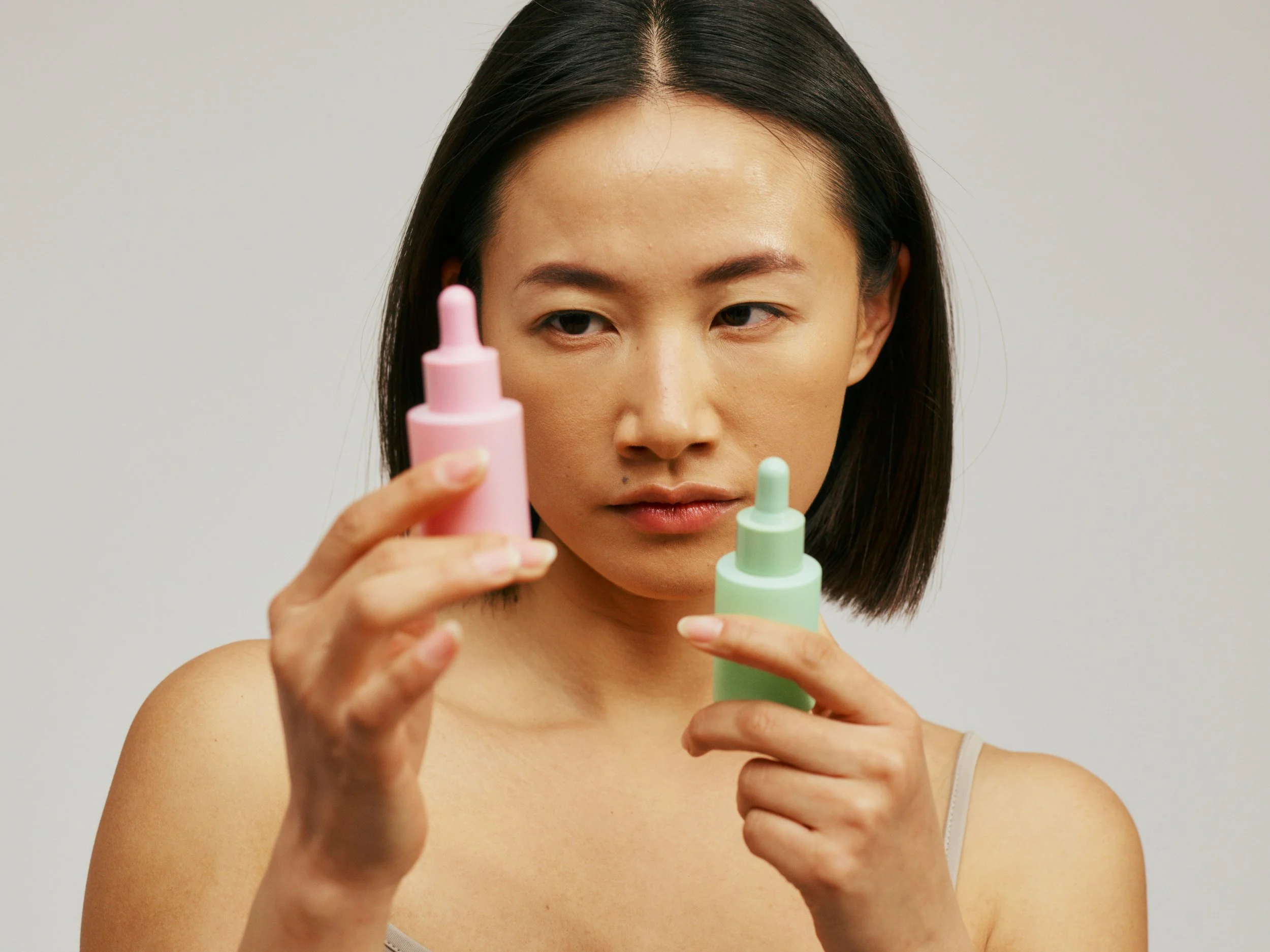
“A label is where formulation, claims, regulation and packaging finally meet. By the time the artwork is finished, most of those decisions should already be settled.”
Cosmetic labels look deceptively simple.
Product name on the front.
Ingredient list on the back.
Net weight at the bottom.
Maybe directions and a few marketing claims.
But by the time a cosmetic product reaches commercial packaging, that label is doing several jobs at once. It identifies the product, tells the consumer how much they're buying, discloses ingredients, identifies the business responsible for the product, communicates required warnings where applicable, and helps establish what the product legally claims to do.
Under U.S. law, cosmetics are regulated by FDA even though conventional cosmetics generally do not require FDA premarket approval. A cosmetic that is improperly labeled, falsely labeled, or marketed with claims that push it into drug territory can be considered misbranded or subject to a different regulatory framework.
That is why I would not wait until the graphic designer sends the final artwork to start thinking about compliance.
What Information Is Required on a Cosmetic Label in the United States?
For a conventional cosmetic sold to consumers in the United States, several core pieces of information generally need to appear on the package.
The principal display panel, meaning the portion of the package most likely to be seen under normal retail display, must identify what the product is and state the net quantity of contents. Other required information, including the business identity and ingredient declaration, generally appears on an information panel.
At a high level, a beauty brand should be thinking about:
Product identity
Net quantity of contents
Ingredient declaration
Name and place of business
MoCRA adverse-event contact information
Required warnings where applicable
Directions where necessary for safe use
Country of origin for imported products
Claims and other statements that must be truthful and not misleading
That sounds manageable.
The complexity usually appears in the details.
The Front Label Needs to Tell the Consumer What the Product Is
FDA refers to this as the statement of identity.
A brand name by itself may not be enough.
A product called MIDNIGHT, for example, may be beautifully branded but does not necessarily tell the consumer whether they are buying a moisturizer, serum, cleanser, mask, or fragrance.
FDA's current guidance distinguishes the product name from the brand name and explains that the statement of identity communicates the type or functional use of the cosmetic.
For most beauty products, this is easy to solve naturally:
Hydrating Facial Serum
Body Moisturizer
Cleansing Balm
Hair Conditioner
The exact wording can still be on-brand.
It simply needs to make the nature of the product understandable.
Net Contents Belong on the Principal Display Panel
The principal display panel also needs an accurate net quantity statement.
FDA's current summary says liquid cosmetics are generally declared by fluid measure, while solid, semisolid, and viscous cosmetics are generally declared by weight, subject to the detailed rules in 21 CFR 701.13. The declaration must be prominent, positioned appropriately on the principal display panel, and sized in relation to the display panel.
This is one of those details designers can easily treat as flexible typography when it isn't completely flexible.
The net contents statement isn't just another line of copy.
Its placement and presentation are regulated.
Metric quantities can also be provided in addition to the required U.S. customary declaration.
A Cosmetic Ingredient List Is Not Simply the Formula Printed on the Package
The ingredient declaration is one of the most visible pieces of cosmetic regulation.
Retail cosmetics generally must identify their ingredients using the required common or usual names and follow the ordering rules in 21 CFR 701.3.
But translating a quantitative formula into a compliant ingredient declaration is not always as simple as sorting the formulation spreadsheet from highest percentage to lowest.
Commercial cosmetic raw materials are often blends.
A preservative system might contain several ingredients.
A peptide solution may contain water, a humectant, the peptide, and preservatives.
A botanical extract may contain its extraction solvent and stabilization system.
An emulsifier may contain several INCI components.
The finished label needs to account for the ingredients contributed by those commercial raw materials where required.
This is why a professional INCI declaration should be built from the actual supplier compositions, not merely the trade names listed on the formulation sheet.
That distinction is invisible to the consumer and extremely important to the person preparing the label.
What Order Do Cosmetic Ingredients Go In?
The general rule is descending order of predominance.
Ingredients used at higher levels appear before ingredients used at lower levels.
There is an important exception that explains why you cannot reverse-engineer exact percentages from an INCI list.
Under the alternative ordering permitted by 21 CFR 701.3:
Ingredients above 1%, excluding color additives, are listed in descending order.
Ingredients at 1% or less may then be listed without regard to their relative predominance.
Color additives may follow without regard to predominance.
This creates what formulators often informally think of as the 1% line.
Once you reach that part of the ingredient declaration, the order tells you considerably less about the quantitative formula.
The 1% Rule Is Why Ingredient Lists Don't Reveal Exact Percentages
Suppose two serums both list:
Niacinamide
Panthenol
Allantoin
Acetyl Glucosamine
The INCI order does not necessarily tell you how much of each one is present.
If several ingredients are being used at or below 1%, their order can legally become much less informative under the permitted labeling structure.
And even above 1%, you still don't know exact percentages.
This is one reason an INCI list is not a quantitative formula.
It tells a consumer what ingredients are present.
It does not tell a brand or competitor exactly how the product was formulated.
Cosmeta's article What Is an INCI List? goes deeper into this distinction.
Trade Names Do Not Belong on the Ingredient Declaration
This is another easy mistake.
A formulator may know a raw material primarily by its supplier trade name.
The consumer ingredient declaration generally needs the appropriate cosmetic ingredient name instead.
FDA specifically notes that trade names are not acceptable substitutes for the required ingredient names on consumer cosmetic labels.
So the formulation document might say:
Supplier Complex XYZ
while the ingredient declaration may need to disclose several component ingredients that make up that raw material.
This is why formulation documentation should ideally include both:
Trade name
and
full INCI composition
A well-organized formula makes labeling easier.
U.S. Ingredient Naming and International INCI Naming Are Not Always Identical
This is especially important for founders creating one package for multiple countries.
The global beauty industry commonly refers to cosmetic ingredient naming as INCI, but U.S. labeling rules still require the names recognized under U.S. regulations.
FDA specifically notes that alternatives such as Aqua in place of Water and Parfum in place of Fragrance are not accepted as substitutes for the U.S.-required terminology.
That does not mean international packaging is impossible.
It means the brand needs to plan dual-market ingredient declarations correctly rather than assuming the EU ingredient list can simply be dropped onto a U.S. package unchanged.
This becomes one more reason to establish intended markets before packaging is finalized.
Fragrance Can Usually Be Declared as “Fragrance”
Under current U.S. cosmetic ingredient-labeling rules, fragrance or flavor components can generally be declared collectively as Fragrance or Flavor rather than individually listing every aromatic component, provided the material meets the regulatory meaning of fragrance or flavor.
This is different from some international markets, where individual fragrance allergens may need separate declaration above specified thresholds.
MoCRA also requires FDA to establish U.S. fragrance-allergen labeling regulations, but as of August 2026 FDA continues to describe that rulemaking as an implementation requirement rather than a completed fragrance-allergen list brands can simply follow today.
This is an area brands should continue monitoring because the U.S. requirements are still evolving.
MoCRA Added Contact Information to the Cosmetic Label
One of the most important newer U.S. requirements comes from the Modernization of Cosmetics Regulation Act of 2022.
Each cosmetic product must bear a label containing a domestic address, domestic phone number, or electronic contact information, which may include a website, through which the Responsible Person can receive adverse-event reports.
This is easy to miss if a founder is working from an older cosmetic label template.
A brand may already have:
Company name
City, state, ZIP
Website
But the details need to satisfy the current statutory requirement and actually provide a functional route for receiving adverse-event reports.
FDA's guidance specifically notes that electronic contact information can include an email address or website and recommends considering whether the chosen method genuinely facilitates reporting.
That is more than decorative contact information.
It connects the label directly to the brand's post-market safety responsibilities.
Who Is the “Responsible Person” in U.S. Cosmetics?
Under MoCRA, the Responsible Person is the manufacturer, packer, or distributor whose name appears on the product label in accordance with the applicable labeling provisions.
This matters because founders sometimes assume the contract manufacturer should automatically appear as the regulatory company on the product.
Not necessarily.
A brand may be the distributor and Responsible Person depending on how the business and labeling are structured.
If the product is manufactured by someone other than the firm named on the label, the label generally needs qualifying wording such as Distributed by or Manufactured for, or equivalent appropriate language.
The legal entity shown on the package should therefore be decided deliberately.
It isn't filler copy.
The Business Address Requirement Is Separate From the MoCRA Contact Requirement
FDA's long-standing cosmetic labeling regulations require the name and place of business of the manufacturer, packer, or distributor to appear conspicuously on the label. The regulation specifies the business-address information and allows qualifying language where the named firm is not the actual manufacturer or packer.
MoCRA then adds the adverse-event contact pathway.
Brands should therefore avoid treating these as one interchangeable line of copy without confirming that the complete label satisfies both obligations.
A website may satisfy the newer electronic-contact element under appropriate circumstances.
It does not necessarily replace every other business-identification requirement.
Imported Cosmetics Need Country-of-Origin Marking Too
For imported products, country-of-origin requirements add another layer.
FDA's current cosmetic labeling summary notes that the Tariff Act requires imported articles to state the English name of the country of origin.
That is why you may see:
Made in Korea
Made in Italy
Made in France
on cosmetic packaging imported into the U.S.
Where the product was formulated, where the brand is headquartered, and where the finished goods were manufactured are not necessarily the same place.
The label needs to reflect the actual applicable requirement rather than the location that sounds best for the brand story.
Required Cosmetic Label Information Must Be Conspicuous
Having the right words somewhere on the package is not enough.
Required information has to be presented so the consumer can reasonably notice and understand it.
FDA requires the ingredient declaration to be conspicuous and generally sets a minimum letter height of 1/16 inch, with a smaller 1/32-inch allowance for packages with less than 12 square inches of available labeling surface. The regulations also provide specific accommodations for some small packages.
This is where very minimalist packaging can collide with regulation.
The designer wants tiny gray type.
The law wants readable required information.
The package has to accommodate both.
The Bottom of the Jar Is Not Always the Easy Answer
Brands often try to solve crowded artwork by moving regulatory copy to the bottom.
That can create a problem.
FDA's labeling guidance explains that required information generally belongs on an information panel where the consumer is likely to see it, and the bottom of the package is generally not considered an acceptable location for required information such as the ingredient declaration.
A label can look cleaner by hiding everything underneath.
That does not necessarily make it compliant.
Packaging design needs to leave real regulatory space.
Small Packaging Has Special Options, but “It's Tiny” Is Not a General Exemption
Lip products, eye products, miniatures, ampoules, and other small cosmetics can create genuine space problems.
The regulations provide certain options for tags, tapes, cards, alternate displays, and reduced type size under defined circumstances.
The important point is not to improvise.
There are structured exceptions and accommodations.
There is not a universal rule that small beauty packaging can simply omit whatever does not fit.
This should be addressed before the packaging purchase.
A 5 mL bottle with almost no printable surface needs a different labeling strategy from a 200 mL carton.
Cosmetic Claims Are Part of Label Compliance
The label isn't only regulated by what it discloses.
It is also regulated by what it claims.
FDA explains that whether a product is legally a cosmetic, drug, or both depends on intended use, and intended use can be established through claims appearing on the label, website, advertising, and other promotional materials.
A conventional moisturizer can claim cosmetic benefits such as:
Moisturizes skin.
Softens skin.
Improves the appearance of dryness.
Helps skin look smoother.
But claims that the product treats disease or affects the structure or function of the body can move it into drug territory. FDA gives examples including restoring hair growth, treating varicose veins, altering melanin production, and regenerating cells.
This is why claims strategy cannot be separated from labeling strategy.
Your Website Can Change the Regulatory Story Too
This point surprises founders.
Changing a sentence on the website can matter even if the package stays exactly the same.
FDA states that intended use may be established through claims made not only on the label, but also in advertising, websites, and other promotional materials.
So imagine a facial serum whose package says:
Improves the appearance of uneven tone.
Then the website says:
Stops melanin production.
The formulation did not change.
The regulatory positioning potentially did.
Marketing, web copy, influencer briefs, product pages, packaging, and formulation claims should therefore be reviewed as one claims ecosystem.
Acne Claims Are a Classic Example
A cosmetic product can be appropriate for blemish-prone skin without necessarily being marketed as an acne drug.
But once a product is intended to treat acne, the regulatory category changes.
FDA identifies acne treatments as drugs and explains that products can be both cosmetics and drugs depending on their intended uses.
This distinction becomes especially important in modern skincare because cosmetic language can drift toward medical language very quickly.
Compare:
Helps improve the appearance of clogged-looking pores
with
Treats acne
Those are not automatically the same regulatory claim.
A formulator and regulatory reviewer should understand the intended positioning before the artwork is built around it.
Sunscreen Changes the Label Completely
A moisturizer with an SPF claim is not merely a cosmetic moisturizer with another benefit added to the front panel.
FDA regulates sunscreen products intended to protect against the sun as drugs. Makeup or moisturizers with sun-protection claims can therefore be both cosmetics and drugs and must satisfy the requirements that apply to both categories.
That changes labeling substantially.
OTC drug-cosmetic products use the applicable drug labeling framework, including active-ingredient disclosure, while cosmetic ingredients are handled separately under the relevant provisions.
This is why you cannot take the label layout from a conventional face cream and add “SPF 30” to it.
The product category changed.
The regulatory architecture changes with it.
“Cosmeceutical” Does Not Create a Middle Category
Beauty loves the word cosmeceutical.
U.S. law does not recognize it as a separate regulatory category.
FDA states that a product can be a cosmetic, a drug, or both, but “cosmeceutical” has no legal meaning under the FD&C Act.
This matters because calling a serum a cosmeceutical does not give a brand permission to make drug-style claims while following only cosmetic requirements.
The actual intended use still controls the regulatory classification.
Cosmetic Labels Are Not “FDA Approved”
Conventional cosmetics generally do not undergo FDA premarket approval.
The major exception is color additives, which must be approved for their intended cosmetic uses, and certain color additives also require batch certification.
FDA specifically states that cosmetic products should not be labeled or promoted in a way that suggests the cosmetic itself is FDA Approved.
This remains true even though MoCRA introduced facility registration and cosmetic product listing.
Registration and listing are not approval programs. FDA expressly states that cosmetic registration and product listing do not constitute cosmetic approval and that FDA does not issue certificates of approval for them.
That distinction is worth understanding before someone adds a seal or compliance badge to the packaging.
FDA Product Listing Does Not Replace the Product Label
MoCRA requires many Responsible Persons to list marketed cosmetic products with FDA and provide ingredient and other product information, subject to applicable exemptions. Product listings also require updates.
But product listing and consumer labeling serve different functions.
The listing provides information to FDA.
The label provides required information to the consumer and identifies the responsible business.
Doing one does not complete the other.
This is another place where cosmetic commercialization now has more moving parts than it did before MoCRA.
Color Cosmetics Have Additional Labeling Complexity
Makeup labels can become more complicated because color additives are regulated separately and must be permitted for their particular intended use.
A color approved for lipstick may not automatically be approved for the eye area.
Some permitted colors require FDA batch certification.
Others do not.
FDA maintains specific lists of color additives permitted for cosmetic applications and their restrictions.
This matters to formulation before it matters to labeling.
A label cannot fix a color additive that was not legally appropriate for the intended product.
This is a good example of why regulatory compliance starts with ingredient selection rather than artwork.
“May Contain” Is Not a Catch-All Ingredient Disclaimer
Color cosmetics often use may contain language because shades within one product family can vary in their color additives.
21 CFR 701.3 allows specific flexibility for declaring certain color additives with “may contain” language under defined circumstances.
That does not mean a brand can use “may contain” to avoid knowing which functional ingredients are in a formula.
It is a regulated labeling mechanism, not a general uncertainty clause.
Some Cosmetics Require Specific Warnings
Most everyday moisturizers and serums do not carry a universal FDA cosmetic warning statement.
Certain products and situations do.
FDA's current labeling summary notes that products requiring specific warning or caution statements include categories such as self-pressurized aerosol cosmetics, feminine deodorant sprays, and children's bubble bath products. Products that could be hazardous when misused must also carry appropriate warnings and adequate directions for safe use.
There are additional category-specific rules.
A founder should therefore avoid assuming that copying the warning language from another brand is sufficient.
The required warning depends on the actual product.
Safety Substantiation and Labeling Are Connected
MoCRA requires Responsible Persons to ensure and maintain records supporting adequate substantiation of cosmetic product safety.
This is separate from the appearance of the ingredient list, but the two systems connect.
A cosmetic should be safe under its labeled or customary conditions of use.
If the directions tell consumers to use a product in a way that changes exposure materially, that affects the safety question too.
The label is therefore part of how the finished product is evaluated.
Formulation, directions, warnings, package size, and intended consumer use all belong in the same product-development conversation.
Directions Are Not Universal, but They Can Be Important
FDA does not require identical directions on every conventional cosmetic.
But directions can become necessary where they are needed to ensure safe use or to avoid misleading consumers.
From a product-development perspective, I also think directions deserve more attention than they usually get.
A highly concentrated facial treatment may require very different usage instructions from a basic body lotion.
A rinse-off product should make rinse-off use clear.
A product intended for one specific area of the body should not accidentally invite another use if that use creates a safety or regulatory problem.
The label is where the intended product use becomes concrete.
Claims Substantiation Should Be Considered Before the Label Is Written
A beauty label can legally become misleading even when every ingredient is declared correctly.
FDA prohibits false or misleading cosmetic labeling claims.
That makes substantiation part of label development.
A claim such as:
24-hour hydration
should have evidence appropriate to the claim.
A statement such as:
clinically shown to reduce the appearance of fine lines
creates a different evidentiary expectation from:
helps skin feel softer.
The formulation team, claims team, regulatory reviewer, and marketing team should therefore agree on the claims architecture before artwork is locked.
Testing after the packaging has already been printed can create a very expensive rewrite.
Ingredient Claims Need to Match the Actual Formula
This is one place where control of the quantitative formula becomes commercially important.
Suppose the front label says:
5% Niacinamide
The brand needs to know what that claim means quantitatively.
Is there actually 5% niacinamide in the finished formula?
Or 5% of a commercial blend that itself contains a lower percentage of niacinamide?
The same issue applies to:
Peptide complexes.
Ceramide complexes.
Retinol systems.
Vitamin C technologies.
Botanical extracts.
Ferments.
Delivery systems.
A formula percentage claim should not be invented from a trade-name use level.
This is where marketing needs access to technical formulation information.
The Ingredient List Is Not a Good Place to Guess
This sounds obvious, but it happens.
A supplier changes the composition of a raw material.
The manufacturer substitutes another grade.
A fragrance revision adds or removes supporting ingredients.
A preservative system changes.
The package artwork still carries the old ingredient declaration.
Now the formula and label no longer match.
That is why the final ingredient declaration should be generated from the final approved commercial formula, not an early prototype.
Formula version control and label version control should meet before production.
Packaging Changes Can Trigger Label Changes
Changing a package may look cosmetic.
It can change regulatory presentation.
A jar gives you different label area than an airless pump.
Removing an outer carton may move ingredient-declaration obligations onto another part of the package.
Changing from a domestic package to imported finished goods may add country-of-origin considerations.
A smaller component may require different type-size planning.
A dual-market package may need another language.
Packaging compatibility testing is one issue.
Packaging regulatory compatibility is another.
Both should be addressed before ordering tens of thousands of components.
If You Use a Carton, Know Which Information Lives Where
FDA's current summary explains that Fair Packaging and Labeling Act requirements such as ingredient labeling and the net quantity declaration generally apply to the outer container when the cosmetic has one.
That is why a bottle inside a carton does not necessarily carry every piece of copy in exactly the same way as a bottle sold without one.
But the immediate container can still have applicable labeling requirements under the FD&C Act and product-specific regulations.
The safest development approach is not to ask:
What can we get away with leaving off the bottle?
It is to map which required information must appear on each packaging component for the actual configuration being sold.
Removing the Carton Later Can Become a Regulatory Project
This is a useful commercial point that founders often miss.
A brand launches with:
Bottle + folding carton.
Two years later, it wants to eliminate the carton to reduce COGS or packaging waste.
That may sound like a packaging simplification.
But if the carton currently carries:
Ingredient declaration.
Directions.
Warnings.
Responsible Person information.
Other required copy.
then the bottle now needs to accommodate that information.
The formula didn't change.
The regulatory artwork project did.
This is why sustainable packaging decisions and compliance decisions need to be considered together.
Multilingual Packaging Has Rules Too
Required U.S. cosmetic label information generally needs to appear in English.
If the label contains representations in another language, FDA regulations can also require the mandatory information to appear in that language.
This becomes especially relevant for:
English/Spanish U.S. packaging.
International cartons.
Canadian packaging.
Global multilingual packs.
Adding one translated marketing claim to make packaging feel international can create more labeling obligations than expected.
Language strategy should therefore be deliberate.
A U.S. Label Is Not Automatically an EU Label
The U.S. and European cosmetics systems overlap conceptually but differ in important details.
Ingredient nomenclature.
Responsible Person structures.
Product notification.
Fragrance-allergen rules.
Minimum durability and period-after-opening requirements.
Required labeling particulars.
Languages.
Claims standards.
All of these can vary.
Cosmeta's guide to the Cosmetic Product Information File (PIF) explains the broader documentation required for the EU and Great Britain. The practical point for labeling is simple:
If Europe is part of the plan, design for Europe before the U.S. label is permanently locked.
Do not assume the American carton can be translated later and become European-compliant.
Expiration Dates Are Not Universally Required on U.S. Cosmetics
This is another area of confusion.
FDA does not impose a universal expiration-date requirement on all conventional cosmetics.
But the company remains responsible for ensuring the product is safe under labeled or customary conditions of use, and shelf life still needs to be supported through appropriate product development and testing.
Some categories, particularly products regulated as drugs, have different requirements.
Brands may also choose to print lot codes, manufacturing dates, internal expiration information, or other traceability information for operational reasons.
Cosmeta's article How Shelf Life Is Actually Determined for Cosmetic Products goes deeper into the science behind shelf life itself.
Lot Codes Are Commercially Essential Even When the Consumer Barely Notices Them
Batch or lot coding is one of the least glamorous parts of packaging.
It becomes extremely important when something goes wrong.
Traceability allows a company to connect a finished product back to:
Manufacturing batch
Raw-material lots
Production date
Stability history
Complaint investigation
Distribution
MoCRA expanded FDA's cosmetic oversight, including serious adverse-event reporting and recall authority.
A functioning quality system therefore needs a way to identify the product involved.
The small code on the bottom of the bottle may have more operational value than much larger marketing copy on the front.
“Clean,” “Natural,” “Non-Toxic,” and Similar Claims Need Care
These phrases attract attention because consumers care about ingredient philosophy.
They can also be vague.
FDA requires cosmetic labeling to be truthful and not misleading, even where it has not established a specific regulatory definition for a marketing term.
A label can also encounter requirements outside FDA depending on the type of environmental, origin, certification, or advertising claim being made.
This is where Clean Beauty 2.0 benefits from specificity.
Instead of relying only on a broad claim like:
Clean formula
a brand may be able to communicate something more concrete:
Fragrance-free
Vegan, when appropriately substantiated
Formulated without [specific ingredient class]
Meets [verified retailer or certification standard]
The stronger claim is often the one the brand can clearly define and support.
Retailer Standards Are Not FDA Labeling Requirements
Credo.
Sephora Clean.
Whole Foods.
National Eczema Association.
COSMOS.
Ecocert.
Other retailers and certification organizations may influence what ingredients a brand uses and what claims it can make.
Those programs do not replace federal cosmetic labeling requirements.
A product can meet a retailer's clean standard and still have an incorrect ingredient declaration.
A product can have a fully compliant FDA label and fail a retailer's ingredient restrictions.
These are different layers of commercialization.
The smartest time to decide which layers matter is during the product brief.
Formula Ownership Can Make Labeling Easier to Control
Formula ownership is not a labeling requirement.
A brand can absolutely market a compliant private-label cosmetic without owning the underlying formula.
But ownership of the finished quantitative formula provides something useful:
visibility.
The brand can know:
The actual ingredient percentages
Which raw-material grades are being used
The full composition of supplier blends
Whether percentage claims are accurate
What changed during a reformulation
Which ingredients may need to change for another retailer or country
This becomes particularly valuable when a product is being sold across several channels or markets.
With 100% ownership of the quantitative formula, a brand has a direct technical reference for what the label is supposed to represent.
That does not transfer ownership of supplier patents, trademarks, proprietary ingredient technologies, or other third-party intellectual property.
It simply gives the brand greater control over its own finished formula.
Private Label Can Still Be Perfectly Appropriate
Private label is not inherently harder to label.
A good private-label manufacturer may provide:
Finished ingredient declarations
Regulatory documentation
Claims guidance
Packaging support
Compliance review
That can actually simplify a launch.
The trade-off is that the brand may have less control over formula architecture and future changes.
If the manufacturer changes a raw material, the label may need updating.
If the brand wants to alter an ingredient percentage, it may not have that option.
If the company later changes manufacturing partners, it may need a new formula.
That is a commercial trade-off, not a compliance failure.
Who Should Review a Cosmetic Label?
There is no single universal label-review structure.
Depending on the product, a launch may involve input from:
Brand
Cosmetic chemist
Contract manufacturer
Regulatory consultant
Legal counsel
Packaging designer
Claims-testing partner
The chemist can confirm what is actually in the formula.
The manufacturer can confirm the commercial batch and production details.
Regulatory specialists can review labeling requirements.
Legal counsel may be appropriate for higher-risk claims or complex interstate and international issues.
The designer makes all of that fit onto a package a consumer still wants to buy.
The important thing is that one person is clearly responsible for final approval.
If everyone assumes somebody else checked it, mistakes survive.
Build the Label From the Formula, Not From the Mood Board
This may be the most practical advice in the article.
The mood board can begin early.
Final regulatory artwork should not.
A sound development order looks more like:
Concept and intended claims.
Target markets and product classification.
Formula development.
Raw-material documentation.
Packaging selection.
Final quantitative formula.
Final ingredient declaration.
Claims substantiation.
Regulatory label review.
Artwork lock.
Commercial printing.
The exact order may overlap in real development.
The principle is that the label should reflect the finished product instead of forcing the finished product to fit copy that was approved too early.
The Most Expensive Label Error Usually Happens After Printing
A typo in a digital mockup costs almost nothing.
A label error discovered after:
20,000 cartons are printed.
10,000 bottles are decorated.
Finished goods are filled.
Retailer inventory is scheduled.
is a completely different problem.
Sometimes stickers or over-labels can solve it.
Sometimes they cannot.
This is why regulatory review before printing is inexpensive compared with regulatory correction afterward.
Founders naturally want to move fast at the end of development.
That is exactly when slowing down for one final label check can save the most time.
A Label Review Should Use the Actual Final Artwork
Reviewing copy in a Word document is not the same as reviewing the commercial label.
The final artwork determines:
Placement
Readability
Type size
Panel location
Contrast
Crowding
Whether required information was accidentally deleted during design
Whether the ingredient list still matches the commercial formula
The technical copy can be correct and the final execution can still create a problem.
Regulatory review should therefore include the actual artwork that will go to print.
Cosmetic Labeling Is Really a Change-Control Problem
This may be the more useful founder perspective.
A label can be correct today and wrong six months later because something changed.
The formula changed.
The manufacturer changed.
The Responsible Person contact changed.
The package size changed.
The country of manufacture changed.
The claims changed.
The fragrance changed.
The product became an OTC drug-cosmetic.
A retailer requested another claim.
The regulations changed.
Cosmetic labeling should therefore be treated as controlled product documentation, not one-time graphic design.
When the product changes, the label should be part of the change review.
Key Takeaways
U.S. cosmetic labels generally need to communicate the product identity, net quantity of contents, ingredient declaration, manufacturer, packer, or distributor information, and any applicable warnings or directions. MoCRA also requires a label pathway through which the Responsible Person can receive adverse-event reports.
Ingredient lists are generally declared in descending order, but ingredients at 1% or less and color additives have additional ordering flexibility. That is one reason an INCI declaration does not reveal a quantitative formula.
Claims matter just as much as ingredients. Language that communicates disease treatment or an effect on body structure or function may change the product from a conventional cosmetic into a drug or cosmetic-drug combination.
FDA registration and cosmetic product listing under MoCRA are not FDA approval, and conventional cosmetics should not be marketed as FDA approved.
And a technically correct label can still become wrong if the formula, package, claims, business information, or manufacturing arrangement changes.
Cosmeta's Perspective
I think labels reveal how interconnected cosmetic development really is.
The founder sees packaging.
The chemist sees the formula.
Marketing sees claims.
Regulatory sees intended use and required disclosures.
Manufacturing sees fill size, lot coding, and the commercial batch.
The consumer sees one finished product.
All of those perspectives have to agree before the bottle goes into a box.
This is why I would never treat labeling as the designer's final task.
A compliant ingredient declaration begins with accurate raw-material documentation.
A percentage claim begins with the quantitative formula.
A clinical claim begins with an evidence strategy.
A country-of-origin statement begins with the manufacturing plan.
The net contents statement begins with the package.
And the product claims can determine whether you're even labeling a conventional cosmetic anymore.
That is also where formula ownership can quietly become valuable. If the brand controls its quantitative formula, it has a much clearer reference point for the product it is representing on the package and more flexibility to update that product intentionally as markets, retailers, manufacturing partners, and ingredient technologies change.
The label is the public version of a much larger technical story.
The stronger that story is behind the scenes, the easier the label becomes to defend.
Ready for the Next Step
Before commercial artwork is locked, make sure the final formula, ingredient declaration, claims, package size, Responsible Person information, target markets, and manufacturing details all describe the same product.
A label should be one of the last things finalized.
It should not be one of the last things considered.
FAQs
-
For a conventional U.S. retail cosmetic, required labeling generally includes a statement identifying what the product is, the net quantity of contents, the ingredient declaration, and the name and place of business of the manufacturer, packer, or distributor. Additional warnings or directions may apply depending on the product. MoCRA also requires contact information through which the Responsible Person can receive adverse-event reports.
-
Generally, yes. Cosmetic ingredients are declared in descending order of predominance. However, ingredients present at 1% or less may be listed without regard to their relative order after ingredients above 1%, and color additives have separate ordering flexibility. This is why an ingredient list cannot reliably reveal exact formula percentages.
-
Not as substitutes for the required U.S. ingredient names. FDA states that terms such as Aqua instead of Water and Parfum instead of Fragrance are not accepted substitutes under U.S. cosmetic ingredient-labeling rules. Brands using international packaging should make sure their ingredient declaration satisfies the requirements of each market.
-
No. FDA does not routinely pre-approve conventional cosmetic products or their labels before marketing, and a cosmetic should not be promoted as FDA Approved. Color additives are an important exception because they must be approved for their permitted cosmetic uses. FDA registration and cosmetic product listing under MoCRA also do not constitute product approval.
-
Yes. FDA determines product classification in part from intended use, and intended use can be established through claims on packaging, websites, advertising, and other promotional materials. Claims that a product treats or prevents disease or affects the structure or function of the body can cause a product to be regulated as a drug, or as both a cosmetic and a drug.