Cosmetic Formulation Glossary: Essential Terms for Beauty Founders
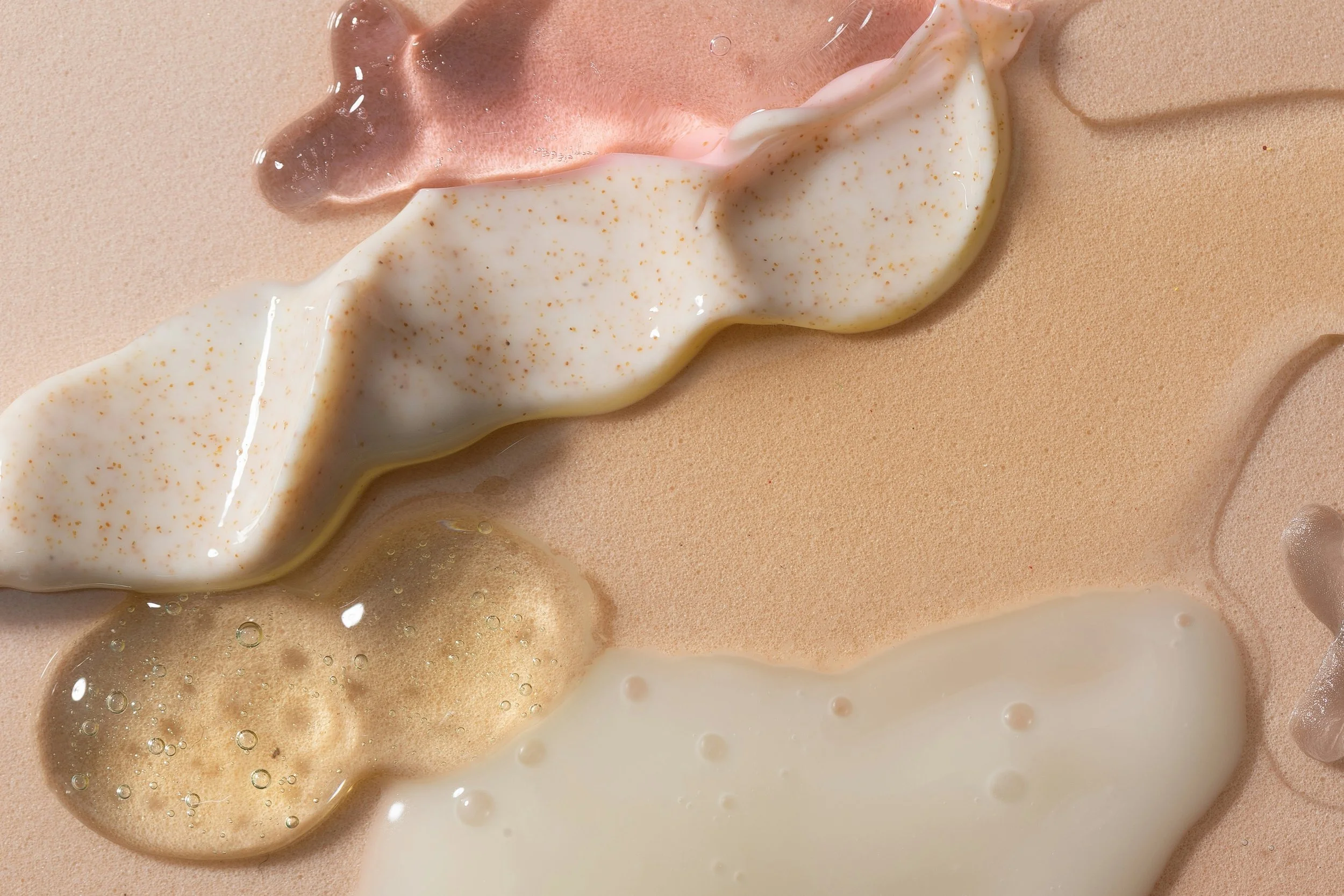
“Learning the terminology helps, but the more important skill is understanding what each term means for the formula, the timeline, the cost, and the decisions you’re about to make.”
Beauty product development has a language of its own.
INCI. MOQ. COGS. PET. Pilot batch. Stability. Scale-up. GMP. Active. QS.
None of these terms is especially difficult once someone explains them, but founders are often expected to understand them while simultaneously developing a formula, sourcing packaging, talking to manufacturers, evaluating costs, reviewing testing, and planning a launch.
More importantly, knowing the definition isn't always enough.
A founder may know that MOQ means "minimum order quantity" and still not realize that there may be separate MOQs for the formula, bottle, pump, decoration, carton, and raw materials.
They may know what an INCI list is without realizing that it does not reveal the quantitative formula.
They may hear that a product "passed stability" without knowing what conditions were actually tested, for how long, or in what packaging.
This glossary is designed to explain both the terminology and what it means during real cosmetic product development.
A
Accelerated Stability Testing
Testing in which a cosmetic product is stored under elevated or otherwise challenging conditions to help identify physical, chemical, sensory, packaging, or microbiological problems faster than they might appear under ordinary storage.
Elevated temperature is commonly used, although an accelerated stability program may include several conditions.
Accelerated testing can provide useful information about likely stability and help identify failure modes earlier, but it does not literally place a product two years into the future.
Founder translation: "One month at an elevated temperature" should not automatically be interpreted as "we proved a two-year shelf life." Ask what was tested, under what conditions, and how the shelf-life decision is being supported.
Active Ingredient
An ingredient included to provide a particular benefit or function.
In ordinary cosmetic conversation, "active" is often used loosely for ingredients such as peptides, niacinamide, vitamin C, retinoids, exfoliating acids, ceramides, or botanical technologies.
In an OTC drug, active ingredient has a specific regulatory meaning and refers to the component intended to furnish pharmacological activity or another direct effect in the diagnosis, cure, mitigation, treatment, or prevention of disease, or to affect the structure or function of the body.
Those meanings should not be confused.
Anhydrous
A formulation designed without added water.
Examples can include oils, balms, sticks, powders, and certain concentrated products.
Anhydrous does not automatically mean preservative-free, easier to formulate, more natural, or more stable. The actual product, packaging, ingredients, manufacturing environment, and consumer use determine what risks need to be evaluated.
Antioxidant
An ingredient used to help slow oxidation.
Antioxidants may protect the formula itself, contribute cosmetic skin benefits, or both, depending on the ingredient and application.
Vitamin E, for example, may be useful in an oil phase, but an antioxidant is not the same thing as a preservative. Oxidation control and microbial preservation solve different problems.
B
Batch
A defined quantity of product manufactured during one production cycle according to a specific formula and process.
Batch size might be 500 grams during laboratory development, several kilograms during pilot work, or hundreds or thousands of kilograms in commercial production.
Changing batch size can change how the formula behaves, which is one reason scale-up matters.
Batch Record
Documentation describing what was actually manufactured in a particular batch, including relevant materials, quantities, processing information, and other production records.
The formula tells you what should be made.
The batch record documents what was made.
Benchmark
A product used as a performance reference during development.
A benchmark may establish expectations for viscosity, application, foam, spreadability, absorption, finish, fragrance, payoff, wear, or another characteristic.
Benchmarking does not necessarily mean creating an exact duplicate. A benchmark can simply establish the sensory or functional target.
Bulk
The finished or near-finished product before it is filled into final retail packaging.
A manufacturer may quote "bulk" separately from filling, components, decoration, cartons, assembly, and freight.
C
Challenge Test
See Preservative Efficacy Test (PET).
Claims
Statements communicating what a product does or what consumers can expect from it.
Claims can be cosmetic, performance-based, sensory, ingredient-based, environmental, or, in some categories, drug claims.
Claims should be considered during product development rather than written entirely at the end because the desired claim can affect ingredient selection, testing, regulatory classification, and even the formula itself.
Clean Beauty
A market and product-development philosophy generally involving ingredient selection or exclusion based on a brand, retailer, certification program, or consumer standard.
There is no single universal U.S. legal definition of "clean beauty."
Different retailers and brands maintain different standards.
For a formulator, the useful question is not whether clean beauty is objectively "right" or "wrong." The useful questions are which standards the product needs to meet and whether the resulting formula can still achieve the required performance, preservation, stability, sensory quality, and cost.
Clinical Testing
Testing conducted in human subjects under a defined protocol to evaluate a product or claim.
"Clinically tested" does not tell you the study design, sample size, endpoint, duration, control, statistical result, or magnitude of the benefit.
The quality of the evidence matters more than the phrase itself.
COGS
Cost of Goods Sold.
In beauty product development, this usually refers to the cost associated with producing the finished product, although exactly what is included can vary by company and quotation.
COGS may involve:
Formula or bulk
Primary packaging
Secondary packaging
Filling
Decoration
Assembly
Testing
Freight
Duties
Other manufacturing costs
Founder translation: If someone says your product "costs $4," ask what the $4 includes.
Compatibility Testing
Testing used to determine whether a formula and another material or system work appropriately together.
Most commonly, founders encounter formula-packaging compatibility testing, where the product is stored in its intended package and evaluated for problems such as leakage, discoloration, deformation, corrosion, swelling, clogging, loss of function, or interaction with the formula.
Contract Manufacturer
A company hired to manufacture products for another company.
Depending on the manufacturer, services may include batching, filling, sourcing, packaging, testing coordination, warehousing, private label, formulation, or regulatory support.
Capabilities vary significantly.
A company that manufactures cosmetics is not automatically equipped for every product category, process, package, batch size, or OTC drug.
Cosmetic Chemist
A scientist or technical professional who develops and evaluates cosmetic and personal-care formulations.
The work can involve ingredient selection, formulation architecture, prototype development, sensory optimization, stability, troubleshooting, scale-up, manufacturing transfer, raw-material evaluation, and collaboration with regulatory, testing, packaging, and manufacturing teams.
The role is not simply choosing attractive ingredients.
A cosmetic chemist has to make those ingredients coexist inside a stable, manufacturable product that consumers actually want to use.
Cosmetic Ingredient
A substance used as part of a cosmetic formulation.
Ingredients may serve highly visible purposes, such as moisturization or exfoliation, or technical purposes consumers rarely notice, such as emulsification, chelation, pH adjustment, rheology modification, preservation, solubilization, or oxidation control.
Custom Formulation
Development of a formula specifically for a brand or product brief rather than selecting an existing stock formula.
Custom development allows greater control over elements such as:
Ingredient selection
Ingredient percentages
Texture
Sensory profile
Active systems
Product format
Claims strategy
Ingredient exclusions
Cost targets
Manufacturing requirements
Whether the brand ultimately owns that custom formula depends on the agreement.
"Custom" and "brand-owned" do not automatically mean the same thing.
D
Drug Facts
The standardized labeling format required for applicable OTC drug products in the United States.
It identifies information such as active ingredients, purpose, uses, warnings, directions, and other required information.
If a beauty product is also an OTC drug, Drug Facts can materially affect packaging design and space requirements.
E
Emollient
An ingredient that helps improve softness, smoothness, lubrication, spreadability, or skin feel.
Many oils and esters function as emollients, but emollient selection is also a major part of sensory design.
Two formulas can contain similar "hero" ingredients and feel completely different because their emollient systems are different.
Emulsifier
An ingredient or ingredient system that helps create and maintain a mixture of materials that would otherwise tend to separate, most commonly oil and water.
An emulsifier is not simply something added to "hold the formula together." Its chemistry can influence texture, stability, viscosity, electrolyte tolerance, application, ingredient compatibility, and scale-up behavior.
Emulsion
A system containing two normally immiscible liquid phases, typically oil and water, with one dispersed within the other.
Common cosmetic emulsions include oil-in-water and water-in-oil systems.
Lotions and creams are common examples, but two products that both appear to be "creams" may have very different internal structures.
F
Fill Weight / Fill Volume
The amount of product placed into a retail package.
These are not interchangeable measurements.
Weight describes mass. Volume describes space occupied.
A 50 mL bottle does not necessarily contain 50 grams of every formula because product density varies.
Finished Formula
The complete formulation intended for the final product.
For a brand, one of the important questions is whether it receives only an ingredient list, a manufacturing specification, or the actual quantitative formula showing the exact composition.
Finished Product Testing
Testing performed on the complete product rather than an isolated ingredient.
This distinction matters for claims.
Evidence that an ingredient can produce a benefit does not necessarily demonstrate that every finished product containing it will produce the same result.
G
GMP
Good Manufacturing Practice.
GMP refers to systems and practices intended to help ensure products are consistently manufactured and controlled appropriately.
Under the Modernization of Cosmetics Regulation Act of 2022, FDA is required to establish cosmetic GMP regulations. As of this writing, brands should verify the current regulatory status and the standards followed by their manufacturing partners rather than assuming that every use of the term "GMP" means exactly the same thing.
For OTC drug products, drug current Good Manufacturing Practice requirements apply.
Gum
A broad term often used for polymers that modify viscosity, suspension, flow, or texture.
Examples used in cosmetics include xanthan gum and sclerotium gum.
A gum can look insignificant on an ingredient list because it may be used at a low percentage, but small changes in rheology modifiers can dramatically alter a formula's viscosity, suspension, application, stability, and manufacturing behavior.
H
Homogenization
High-shear mechanical processing used to reduce droplet or particle size, create or refine dispersions and emulsions, or help develop a desired product structure.
More homogenization is not automatically better.
The appropriate processing depends on the formulation.
Humectant
An ingredient that helps attract or retain water.
Common cosmetic humectants include glycerin, propanediol, sodium PCA, and hyaluronic-acid materials.
Humectants can improve hydration, but they also affect tack, viscosity, preservation, water activity, sensory feel, and overall formula architecture.
I
INCI
International Nomenclature Cosmetic Ingredient.
INCI provides standardized ingredient names used for cosmetic ingredient identification.
For example, a consumer may know an ingredient as "hyaluronic acid," while a particular material may appear on the ingredient declaration as Sodium Hyaluronate.
INCI is essential for labeling and ingredient communication, but an INCI list does not reveal the entire formulation strategy.
Two raw materials with the same or similar INCI declaration can differ in concentration, molecular weight, purity, carrier, manufacturing method, supporting ingredients, sensory characteristics, or supplier technology.
INCI List / Ingredient Declaration
The ingredient list appearing on cosmetic packaging.
In the United States, cosmetic ingredients generally must be declared in descending order of predominance, with specific provisions affecting ingredients present at 1% or less and color additives.
This leads to one of the most important lessons for founders:
An INCI list is not a formula.
It does not normally tell you exact percentages, manufacturing procedure, raw-material trade names, processing conditions, or the complete formulation architecture.
Reverse engineering from an INCI list can provide useful clues, but it cannot reliably reconstruct every detail of the original quantitative formula.
Ingredient Deck
An informal industry term for the ingredient list or ingredient composition of a product.
Depending on the speaker, "deck" may mean the consumer-facing ingredient declaration or simply the collection of ingredients being considered for the formula.
Ingredient Supplier
A company that manufactures or distributes cosmetic raw materials.
Suppliers may provide technical data, specifications, safety information, formulation guidance, sample formulas, regulatory documentation, testing, and application support.
Supplier selection can matter almost as much as INCI selection because different raw materials sold under similar ingredient names may perform very differently.
L
Lead Time
The time required for a particular step or item to become available.
There is rarely one single "lead time" in cosmetic development.
You may have separate lead times for:
Raw materials
Custom packaging
Printed components
Testing
Manufacturing
Filling
Freight
A project can therefore be delayed by one component even when everything else is ready.
M
Master Formula
The controlled formulation and manufacturing instructions used as the authoritative reference for producing a product.
A robust master formula may include exact material identification, quantities or percentages, processing sequence, specifications, and other manufacturing information.
The exact terminology and documentation format can vary among organizations.
Micro Testing
A broad informal term for microbiological testing.
It may refer to different tests, so the phrase alone is not specific enough.
A microbial limits test and a preservative efficacy test answer different questions.
Ask which test is actually being performed.
MOQ
Minimum Order Quantity.
The smallest quantity a supplier or manufacturer is willing to sell or produce under specified conditions.
A beauty product can have several different MOQs:
Bulk formula MOQ
Manufacturing MOQ
Bottle MOQ
Pump MOQ
Closure MOQ
Carton MOQ
Decoration MOQ
Raw-material MOQ
These quantities do not always match.
A manufacturer may be willing to make 2,500 units while the custom bottle requires 10,000.
Founder translation: There often isn't one MOQ for a product. There is a chain of them, and the highest or least flexible one can control your economics.
O
OTC
Over-the-Counter drug.
A nonprescription drug product.
Within beauty and personal care, examples can include certain acne treatments, sunscreens, antiperspirants, dandruff products, and skin protectants.
OTC development follows drug requirements that differ from those for conventional cosmetics.
Oxidation
A chemical degradation process involving electron loss, often associated in cosmetics with changes caused or accelerated by oxygen, light, heat, metals, or other conditions.
Oxidation can cause:
Color change
Odor development
Ingredient degradation
Loss of potency
Changes in sensory quality
Antioxidants, chelators, packaging, processing, and formulation design may all be part of an oxidation-control strategy.
P
Packaging Compatibility
See Compatibility Testing.
A stable bulk formula is not necessarily stable in every package.
The formula and package should be considered as a system.
PAO
Period After Opening.
A symbol or statement used in many markets to communicate how long a product is intended to remain suitable after it has been opened.
PAO and unopened shelf life answer different questions.
A product might have an expected unopened shelf life of several years while carrying a shorter period after opening.
PET
Preservative Efficacy Test, also commonly called a challenge test.
PET evaluates how effectively a preserved product controls specified microorganisms after the product is deliberately challenged under a defined test method.
This is different from simply checking whether a sample currently contains microbial contamination.
A product can look perfectly normal and still have an inadequate preservation system.
pH
A measure related to the acidity or alkalinity of an aqueous system.
In cosmetic formulation, pH can influence:
Ingredient stability
Preservative efficacy
Active performance
Viscosity
Skin compatibility
Color
Emulsion behavior
A pH adjustment that looks tiny numerically can sometimes have a large formulation consequence.
Pilot Batch
A batch produced between laboratory development and full commercial manufacturing to evaluate how the formula behaves at a larger scale.
Pilot work can reveal issues that are difficult to see in a small beaker, including differences in mixing, heating, cooling, aeration, hydration, homogenization, transfer, filling, and final viscosity.
There is no universal batch size that makes something a "pilot." The meaningful question is whether the batch is large and representative enough to provide useful scale-up information.
Preservative
An ingredient or system used to help protect a product from microbial contamination and growth.
Preservation should be designed around the complete formula.
Its effectiveness can depend on factors such as:
pH
Water phase
Ingredient interactions
Packaging
Manufacturing hygiene
Consumer use
Preservative concentration
Using a preservative does not automatically prove that a product is adequately preserved.
That is one reason PET exists.
Preservative Efficacy Test
See PET.
Primary Packaging
Packaging that directly contains or contacts the product.
Examples include:
Bottle
Jar
Tube
Pump reservoir
Sachet
Primary packaging can affect stability, dispensing, contamination risk, oxygen exposure, light exposure, and consumer experience.
Private Label
A product developed from an existing formula or product platform that a supplier makes available for brands to sell under their own branding.
Private label can reduce development time, complexity, and initial investment.
The trade-off is typically less control over the underlying formula and, in many arrangements, no ownership of the quantitative formulation.
Private label is not inherently inferior to custom formulation. It solves a different business problem.
Prototype
A development sample created to evaluate a formulation concept.
A prototype may be used to evaluate texture, appearance, fragrance, application, active systems, packaging, stability, or other characteristics.
"Prototype" does not necessarily mean the formula is ready for manufacturing.
Q
QS / q.s.
Quantity sufficient.
A formulation notation indicating that enough of a material should be used to reach a specified final amount or condition.
For example, water may sometimes be listed as q.s. to 100%, meaning the amount is adjusted so the complete formula totals 100%.
It can also appear in other technical contexts.
Qualitative Formula
A formula or composition identifying what ingredients are present without necessarily providing their exact percentages.
An ingredient declaration is a form of qualitative information.
Knowing what is in a product is not the same as knowing how much is in it.
Quantitative Formula
A formula showing how much of each ingredient is present, usually as percentages by weight.
This is one of the most commercially important distinctions in cosmetic development.
A brand may possess the finished product's INCI list without possessing the quantitative formula.
Ownership of the quantitative formula gives a brand substantially greater visibility into ingredient levels and greater ability to evaluate reformulation, alternate suppliers, manufacturing transfer, cost optimization, and future product evolution.
R
Raw Material
An ingredient or ingredient blend purchased for use in manufacturing a cosmetic product.
A raw material may itself contain several components.
This is why the trade name and complete INCI declaration both matter during development.
A formula might use 2% of a supplier's raw material, while the actual concentration of the ingredient highlighted in marketing is only a fraction of that 2%.
Founder translation: Raw-material percentage and active concentration are not always the same number.
Regulatory Review
Evaluation of a product, ingredient, formula, label, claims, or supporting documentation for compliance with applicable laws, regulations, or market requirements.
Regulatory review can occur at several points during development.
Waiting until packaging is printed to think about regulatory requirements is usually much more expensive than considering them earlier.
Responsible Person
Under U.S. cosmetic law, the responsible person is the manufacturer, packer, or distributor of a cosmetic product whose name appears on the label in accordance with the applicable law.
Under MoCRA, the responsible person has specific obligations, including requirements involving cosmetic product listing, serious adverse-event reporting, and safety substantiation.
It is a defined regulatory role, not simply the person at the company who feels responsible for the project.
Reverse Engineering
The process of studying an existing product to understand how it may have been designed and to develop a product with selected comparable characteristics.
A chemist may evaluate:
INCI
Texture
Viscosity
pH
Density
Color
Odor
Application
Dry-down
Foam
Film
Packaging
Other measurable properties
Reverse engineering is not the same as possessing the original quantitative formula.
An INCI list provides clues, not the complete answer.
Rheology
The science of how materials flow and deform.
In cosmetic formulation, rheology affects much more than whether a product seems "thick" or "thin."
It can influence:
Pour
Pumpability
Suspension
Spread
Pickup
Stringiness
Cushion
Drip
Stability
Filling behavior
Viscosity is one measurement within the broader subject of rheology.
S
Safety Substantiation
Evidence supporting the safety of a cosmetic product.
Under MoCRA, the responsible person must ensure and maintain records supporting adequate substantiation of safety.
FDA does not prescribe one universal testing program for every cosmetic. Appropriate substantiation depends on the product and the evidence available.
This makes "Is the formula safe?" a more sophisticated question than checking whether each individual ingredient appears on a commonly used ingredient database.
Safety belongs to the finished product and its intended use.
Scale-Up
The process of transferring a formulation from laboratory scale toward pilot and commercial manufacturing scale.
Scale-up is not simply multiplying every ingredient by a larger number.
Mixing geometry, shear, heating, cooling, addition rates, vessel design, hydration, aeration, transfer, and processing time can all change as batch size increases.
A formula that works beautifully at 500 grams can behave differently at 500 kilograms.
That does not necessarily mean the formula was bad.
It means manufacturing is part of formulation reality.
Secondary Packaging
Packaging that does not directly contain the product but surrounds, protects, groups, or presents the primary package.
A folding carton is a common example.
Sensory
The way a product is perceived through the senses during and after use.
For skincare, sensory evaluation may include:
Slip
Drag
Cushion
Playtime
Absorption
Tack
Greasiness
Powderiness
Residue
Afterfeel
Sensory performance is not cosmetic fluff.
A technically excellent formula that consumers dislike applying can still be a commercially poor product.
Shelf Life
The period during which a product is expected to remain suitable under defined storage conditions while meeting relevant quality and performance expectations.
Shelf life should be supported rather than guessed.
For cosmetics, that support may draw from formulation knowledge, stability testing, packaging compatibility, microbiological strategy, ingredient information, historical data, and other appropriate evidence.
Shelf life and PAO are related but different concepts.
Solubilizer
An ingredient or system used to incorporate small amounts of otherwise poorly water-soluble material into an aqueous formulation, often while maintaining clarity or near-clarity.
Fragrance oils are a common reason formulators use solubilizers in products such as mists and toners.
Solubilization and emulsification are related formulation concepts, but they are not identical.
Specification
A defined requirement or acceptable range used to determine whether a raw material, bulk product, package, or finished product meets established criteria.
Specifications may include characteristics such as:
Appearance
Odor
pH
Viscosity
Density
Microbial limits
Active content
A specification turns "this looks about right" into something measurable.
Stability Testing
Evaluation of how a product changes over time under defined storage conditions.
Depending on the product and program, stability observations may include:
Appearance
Color
Odor
pH
Viscosity
Separation
Precipitation
Package interaction
Weight loss
Active content
Microbiological considerations
Stability is not one single universal test.
When someone says a product "passed stability," a useful follow-up is: What stability protocol did it pass?
Stock Formula
An existing formula already developed by a manufacturer, laboratory, or supplier.
Stock formulas may be used for private-label programs or as development starting points.
The amount of customization allowed varies considerably.
T
Trade Name
The commercial name a supplier gives a raw material.
The trade name is different from the INCI name.
This distinction matters because multiple suppliers may sell materials with similar INCI declarations but very different performance characteristics.
A robust development formula should identify the specific raw material being used, not merely its generic ingredient identity.
Transfer
The process of moving a formula and its supporting information from development into manufacturing.
A technology or formula transfer may involve:
Quantitative formula
Raw-material specifications
Trade names
Processing information
Finished-product specifications
Stability information
Packaging
Testing requirements
Troubleshooting history
A formula is easier to transfer when the development documentation is complete.
V
Validation
Documented evidence that a process, method, system, or procedure performs as intended under defined conditions.
The term is used in several different technical contexts, so founders should ask what exactly has been validated rather than treating "validated" as a universal quality stamp.
Viscosity
A measure of resistance to flow.
Consumers often describe viscosity simply as thickness, but viscosity measurement depends on the method and conditions used.
Instrument, spindle, speed, temperature, sample history, and timing can affect the result.
That is why "the viscosity is 20,000 cP" is incomplete information unless the measurement method is defined.
W
Water Activity
A measure of the water available in a product for microbial growth and other processes.
Water activity is different from total water content.
A formula can contain water while having less water available to microorganisms because dissolved ingredients bind or otherwise reduce its availability.
Water activity can be useful in preservation strategy, particularly for certain low-water or concentrated products, but it should be interpreted in the context of the complete formulation.
What Founders Usually Confuse
Some of the most expensive misunderstandings in beauty development come from terms that sound interchangeable but aren't.
INCI List vs. Quantitative Formula
An INCI list tells you what is declared in the product.
A quantitative formula tells you how much is actually used.
They are not the same asset.
Stability Testing vs. PET
Stability testing asks whether the product remains physically and chemically acceptable under the conditions being evaluated.
PET asks whether the preservation system can control specified microorganisms when deliberately challenged.
A product can pass one and fail the other.
Preservative vs. Antioxidant
A preservative primarily addresses microbial risk.
An antioxidant primarily addresses oxidation.
Adding vitamin E to an oil-containing formula does not preserve a water-containing cosmetic against bacteria, yeast, and mold.
Formula MOQ vs. Packaging MOQ
Your manufacturer may make 2,500 units.
Your bottle supplier may require 10,000 bottles.
Both statements can be true.
Ingredient Percentage vs. Active Percentage
If a supplier blend is used at 5%, that does not necessarily mean the formula contains 5% of the ingredient featured in the raw material's marketing name.
The raw material may itself contain carriers, solvents, stabilizers, or supporting ingredients.
Custom Formula vs. Formula Ownership
A formula can be developed specifically for your brand without the development agreement transferring ownership of the quantitative formulation to you.
If ownership matters, address it contractually before development.
Lab Sample vs. Manufacturing-Ready Formula
A beautiful prototype is an important milestone.
It is not the end of development.
The formula still has to survive appropriate testing, packaging, scale-up, manufacturing transfer, and commercial production.
The Terms That Matter Most Before You Spend Money
A founder does not need to become a cosmetic chemist to develop a cosmetic product.
They do, however, benefit from understanding enough terminology to ask good questions.
Before committing significant money to a project, make sure you understand at least:
Who owns the quantitative formula?
What is the actual MOQ, including packaging?
What does the quoted COGS include?
What testing will be performed?
Who is responsible for PET?
What stability protocol will be used?
Who selects and qualifies the manufacturer?
What happens during scale-up?
Who owns the manufacturing documentation?
What claims are being developed?
What regulatory responsibilities belong to the brand?
What happens if a raw material becomes unavailable?
Can the formula be transferred to another qualified manufacturer?
You do not need to know every technical answer yourself.
You need to know that these questions exist.
Key Takeaways
An INCI list identifies ingredients but does not reveal the complete quantitative formula.
MOQ can come from manufacturing, packaging, decoration, or even a single raw material.
PET and stability testing evaluate different risks.
"Active ingredient" can have a different meaning in cosmetic marketing than it does in OTC drug regulation.
Raw-material percentage and actual active concentration are not necessarily the same.
Scale-up is an engineering and formulation step, not simple multiplication.
Sensory performance is part of product performance.
"Custom formula" does not automatically mean "formula you own."
Shelf life should be supported by appropriate evidence rather than assigned arbitrarily.
Under MoCRA, U.S. cosmetic brands and manufacturers have regulatory responsibilities that founders should understand before launch.
The best time to understand product-development terminology is before the corresponding decision becomes expensive.
Cosmeta's Perspective
The terminology of cosmetic development matters because each word represents a decision somewhere in the commercialization process.
"MOQ" eventually becomes cash tied up in inventory.
"Viscosity" can become a pump that no longer dispenses properly.
"INCI" can become a label, retailer review, sourcing question, or regulatory issue.
"Stability" can become the difference between a product that survives distribution and one that changes six months after launch.
"Formula ownership" can determine whether a brand can move manufacturers several years later without rebuilding its product from the beginning.
That is why I don't think founders need to memorize cosmetic chemistry terminology for the sake of sounding technical. They need enough fluency to understand what they are buying, what they own, what has actually been tested, and what decisions are still ahead.
The language gets much easier once you see the development process as one connected system.
Ready for the Next Step
If you encounter a term during formulation, testing, packaging, or manufacturing that you don't understand, don't treat it as something you're supposed to already know.
Ask what it means for your specific product.
That second part is usually where the useful information begins.
FAQs
-
INCI stands for International Nomenclature Cosmetic Ingredient. The INCI system provides standardized names for cosmetic ingredients so they can be consistently identified. An INCI ingredient list tells you which ingredients are declared in a product, but it generally does not reveal their exact percentages or the complete quantitative formula.
-
MOQ means Minimum Order Quantity, or the smallest quantity a supplier or manufacturer is willing to produce or sell under specified conditions. A beauty product can have separate MOQs for manufacturing, bottles, pumps, cartons, decoration, and raw materials, so founders should not assume there is only one MOQ for the complete product.
-
PET stands for Preservative Efficacy Test and is also commonly called challenge testing. During PET, a product is deliberately challenged with specified microorganisms to evaluate whether its preservation system can adequately control them under the defined test method. PET is different from stability testing and routine microbial testing.
-
An INCI list identifies the ingredients declared in a cosmetic product. A quantitative formula identifies the exact amount or percentage of each ingredient used. The quantitative formula contains substantially more information and is important for manufacturing, reformulation, cost analysis, troubleshooting, and formula ownership.
-
COGS means Cost of Goods Sold. In beauty product development, it generally refers to the costs associated with producing the finished product, but different quotations may include different expenses. Founders should confirm whether a quoted COGS includes bulk formula, filling, packaging, decoration, cartons, testing, freight, duties, and other production costs.