Skincare Product Development: From Concept to Market
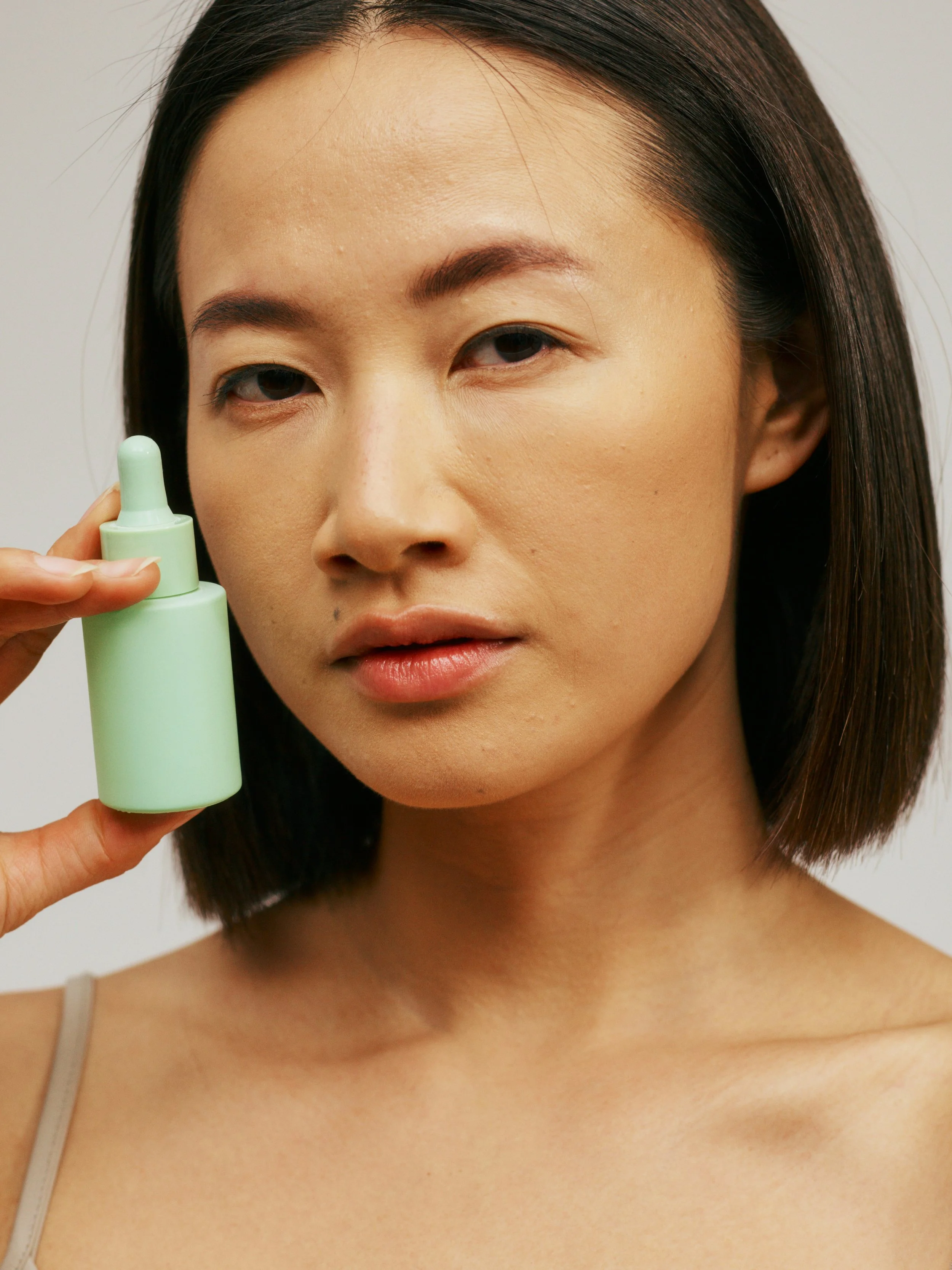
“The products consumers love most aren’t created by accident. They’re the result of hundreds of deliberate decisions made long before the first bottle reaches a shelf.”
Every successful skincare product begins with an idea.
Sometimes it's inspired by an unmet consumer need. Sometimes it's built around a breakthrough ingredient. Other times it's a founder's personal experience that sparks the vision for an entirely new brand.
What many people don't realize is that the formula itself is only one piece of the development process.
Creating a successful skincare product requires strategic planning, formulation science, testing, manufacturing preparation, regulatory awareness, packaging compatibility, and commercial thinking. Each stage builds upon the one before it, and overlooking any step can create delays, unnecessary costs, or product failures after launch.
Whether you're developing your first moisturizer or expanding an established skincare line, understanding the complete journey helps you make better decisions and set realistic expectations.
Step 1: Define the Product Strategy
Every successful project begins with strategy—not ingredients.
Before discussing peptides, niacinamide, or botanical extracts, define exactly what the product should accomplish.
Ask questions such as:
Who is the target customer?
What skin concern are you solving?
What makes your product different?
What price point are you targeting?
Where will the product be sold?
Will it become part of a larger product collection?
What consumer experience should it deliver?
These answers influence every formulation decision that follows.
Step 2: Research the Market
Great products solve real problems.
Before beginning formulation, study the competitive landscape.
Evaluate:
Leading products
Consumer reviews
Ingredient trends
Price positioning
Packaging formats
Clinical claims
Market gaps
The goal isn't to copy competitors.
It's to identify opportunities they have missed.
Often, the strongest product ideas emerge by improving an existing category rather than inventing an entirely new one.
Step 3: Build the Formulation Strategy
Only after defining the product objectives should formulation begin.
During this stage, the cosmetic chemist develops the technical roadmap for achieving the desired performance.
This includes selecting:
Functional ingredients
Active ingredients
Emulsification systems
Preservation systems
Texture modifiers
Rheology modifiers
Humectants
Emollients
Packaging-compatible materials
Every ingredient should serve a purpose.
Great formulations aren't built by adding trendy actives. They're built by creating ingredient systems that work together.
Step 4: Develop the First Prototype
The first laboratory sample is rarely the finished product.
Its purpose is to establish a foundation.
The initial prototype helps evaluate:
Texture
Appearance
Fragrance compatibility
Spreadability
Absorption
Stability potential
Initial performance
At this point, refinement begins.
Step 5: Prototype Refinement
Few successful products are perfected on the first attempt.
Multiple development rounds are normal.
Each iteration may improve:
Skin feel
Sensory profile
Stability
Active performance
Viscosity
Color
Manufacturing efficiency
Cost
Ingredient compatibility
Each revision brings the formula closer to the desired consumer experience.
For a deeper discussion, read How Many Prototype Iterations Should You Expect?
Step 6: Stability Testing
Once the prototype performs as intended, the next question becomes:
Will it continue performing six months—or two years—from now?
That's the purpose of stability testing.
A formula may appear perfect immediately after production yet separate, discolor, lose viscosity, develop odor changes, or become unstable over time.
Stability testing helps identify these issues before consumers ever purchase the product.
Depending on the product, testing may include:
Accelerated stability studies
Elevated temperature storage
Freeze-thaw cycling
Centrifuge testing
Light exposure
Long-term ambient storage
The objective is to understand how the product behaves under conditions that simulate months or years of normal use.
For more information, read Cosmetic Stability Testing Explained.
Step 7: Verify Packaging Compatibility
Packaging is more than branding.
It becomes part of the product system.
The wrong packaging can cause:
Formula discoloration
Ingredient degradation
Leaking
Pump failures
Product drying
Fragrance loss
Consumer complaints
Packaging compatibility testing evaluates how the formula interacts with its final container over time.
Airless pumps, tubes, jars, droppers, and bottles each present different considerations that should be evaluated before commercial production.
Step 8: Prepare for Manufacturing
A laboratory formula is not automatically ready for commercial production.
Before manufacturing begins, the formulation must be translated into detailed production documentation.
This process typically includes:
Manufacturing instructions
Ingredient specifications
Batch calculations
Processing temperatures
Mixing speeds
Equipment recommendations
Finished product specifications
Quality control parameters
This documentation forms the basis of technology transfer.
Without it, manufacturers are forced to make assumptions that can lead to inconsistent production.
Step 9: Scale Up the Formula
One kilogram in the laboratory behaves differently than 2,000 kilograms in a manufacturing vessel.
Scale-up confirms that the formulation performs consistently under commercial processing conditions.
During this stage, manufacturers evaluate:
Mixing efficiency
Heating and cooling rates
Homogenization
Batch consistency
Filling characteristics
Processing times
Sometimes only minor adjustments are required.
Occasionally, scale-up reveals challenges that require additional optimization before full production.
For a deeper discussion, read How to Scale a Cosmetic Formula from Lab to Manufacturing.
Step 10: Validate Claims
Marketing claims should never be created first and justified later.
Instead, they should be supported by appropriate evidence.
Depending on the product, claim support may include:
Instrumental testing
Consumer perception studies
Clinical evaluations
Ingredient data
Literature reviews
Safety assessments
Well-supported claims build consumer confidence while helping brands reduce regulatory risk.
Read Claims Substantiation: What You Can (and Can't) Say About Your Product for a deeper explanation.
Step 11: Begin Commercial Manufacturing
Only after development, testing, documentation, and manufacturing preparation are complete should commercial production begin.
The first production batch confirms that:
The formula scales successfully.
Manufacturing procedures are appropriate.
Quality standards are maintained.
Packaging performs as expected.
Finished products meet specifications.
Many brands treat this as the finish line.
Experienced developers see it as the beginning of the product's real-world performance.
Step 12: Continue Improving After Launch
Product development doesn't stop when customers begin purchasing.
The strongest brands continue collecting information from:
Customer reviews
Consumer feedback
Manufacturing observations
Ingredient innovations
Regulatory updates
Market trends
Sometimes improvements are subtle.
A texture may be refined.
A new preservative technology may improve stability.
An ingredient innovation may reduce costs while improving performance.
The best products evolve over time while remaining true to their original vision.
Key Takeaways
Successful skincare products begin with a well-defined strategy, not a list of ingredients.
Product development is an iterative process that typically includes multiple prototype revisions before a formula is finalized.
Stability testing, packaging compatibility, and manufacturing preparation are essential steps—not optional extras.
Technology transfer ensures a laboratory formula can be reproduced consistently at commercial scale.
Manufacturing success depends on thorough documentation, appropriate equipment, and experienced production partners.
Marketing claims should always be supported by appropriate scientific evidence.
Product development continues after launch through consumer feedback, manufacturing insights, and ongoing formulation improvements.
The strongest brands view product development as a long-term innovation process rather than a one-time project.
Cosmeta's Perspective
Many founders imagine product development as a straight line: create a formula, manufacture it, and launch.
In reality, the process is much more interconnected.
Every decision made early in development affects what happens later. An ingredient selected during formulation influences manufacturing. Packaging choices impact stability. Marketing claims determine what testing is required. Manufacturing capabilities can even shape formulation decisions before the first prototype is made.
This is why successful product development is never just about creating a great formula. It's about designing an entire system where formulation science, manufacturing, packaging, testing, commercialization, and business strategy all work together.
At Cosmeta, we believe the most successful products are built intentionally from the very beginning. Rather than treating each phase as an isolated task, we approach development as a continuous process where every decision supports the next. That systems-thinking mindset reduces costly surprises, accelerates commercialization, and creates products that perform consistently long after launch.
Ultimately, consumers never see the hundreds of technical decisions behind a finished product.
They simply experience a product that works exactly as promised.
Ready for the Next Step
Whether you're refining an idea or preparing for commercial production, understanding the complete development process allows you to make smarter decisions at every stage. Investing time in strategy, formulation, testing, and manufacturing preparation today creates a stronger product—and a stronger brand—for years to come.
FAQs
-
Most custom skincare products take 6 to 12 months to develop, depending on formulation complexity, prototype revisions, testing requirements, packaging availability, and manufacturing timelines. Products requiring extensive claims testing or OTC compliance may take longer.
-
Laboratory prototypes must first undergo stability testing, packaging compatibility evaluation, manufacturing documentation, and scale-up trials. These steps help ensure the product performs consistently during commercial production and throughout its shelf life.
-
There is no fixed number. Some products are finalized after two or three iterations, while more technically challenging formulations may require several additional rounds. The complexity of the product, performance goals, and founder feedback all influence the number of revisions.
-
It's best to begin evaluating manufacturers before formulation is fully complete. Early collaboration helps identify production capabilities, packaging constraints, ingredient sourcing considerations, and minimum order quantities before commercialization begins.
-
Many founders focus almost exclusively on the formula while overlooking strategy, manufacturing, packaging, testing, and commercialization. Successful products result from optimizing the entire development process—not just creating a great formulation.