What Does a Cosmetic Chemist Do?
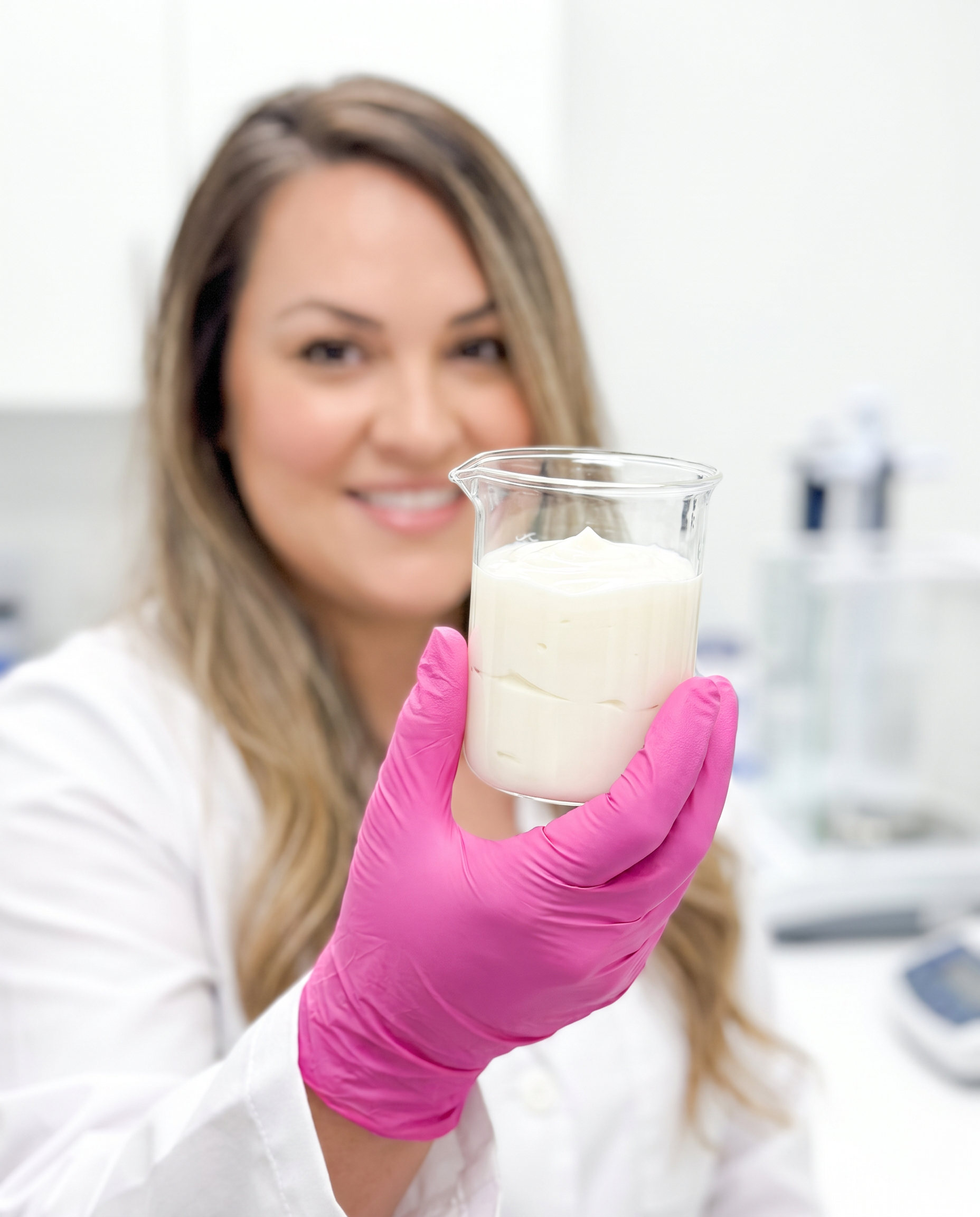
“A cosmetic chemist doesn’t simply formulate products. We solve problems consumers don’t even realize exist.”
When most people imagine a cosmetic chemist, they picture someone mixing ingredients in a laboratory.
While that's certainly part of the job, it barely scratches the surface.
A modern cosmetic chemist is part scientist, part engineer, part product developer, part problem solver, and often part business strategist. They don't simply create lotions and serums—they design products that can be manufactured consistently, remain stable for years, satisfy regulatory requirements, delight consumers, and support a brand's commercial goals.
Behind every successful cosmetic product are thousands of decisions that consumers never see.
Which emulsifier creates the ideal texture?
Will the preservative remain effective throughout the product's shelf life?
Can the formula survive transportation in extreme temperatures?
Will the product still feel luxurious when manufactured in 2,000-kilogram batches instead of one-kilogram laboratory samples?
These are the kinds of questions cosmetic chemists solve every day.
Cosmetic Chemists Transform Ideas Into Products
Many founders begin with a vision.
"I want a lightweight moisturizer."
"I want a sunscreen that doesn't leave a white cast."
"I want a shampoo bar that performs like a luxury liquid shampoo."
A cosmetic chemist transforms those ideas into technically achievable products.
This involves balancing hundreds of variables simultaneously, including:
Ingredient compatibility
Stability
Texture
Consumer experience
Cost
Manufacturing requirements
Packaging
Regulatory compliance
Supply chain availability
Commercial scalability
The goal isn't simply to make something that works in the lab.
It's to create something that works in the real world.
Formulation Is Only One Part of the Job
Laboratory formulation is often the most visible part of cosmetic chemistry, but it's only one responsibility.
An experienced cosmetic chemist may spend a typical week:
Researching new ingredient technologies
Meeting with raw material suppliers
Reviewing scientific literature
Developing prototype formulas
Evaluating texture and sensory profiles
Troubleshooting stability issues
Interpreting laboratory test results
Writing manufacturing procedures
Reviewing regulatory requirements
Working with packaging suppliers
Supporting manufacturing scale-up
Advising brand founders on commercialization strategy
The laboratory is where products begin.
Much of the real work happens before and after formulation.
Cosmetic Chemists Solve Problems
Every formulation project is essentially a series of technical challenges.
Examples include:
Creating elegant textures without silicones
Stabilizing difficult active ingredients
Preventing emulsions from separating
Reducing stickiness
Improving spreadability
Increasing foam performance
Enhancing preservation
Extending shelf life
Improving manufacturing efficiency
Lowering costs without sacrificing quality
Very rarely is there only one correct solution.
In cosmetic chemistry, there are often dozens—or even hundreds—of possible ways to solve the same problem.
Experience helps determine which solution offers the best balance of performance, manufacturability, and commercial success.
Ingredient Science Is a Constant Process
The cosmetic industry evolves rapidly.
Every year introduces:
New peptides
Biotechnology-derived ingredients
Novel emulsifiers
Sustainable alternatives
Fermentation technologies
Delivery systems
Natural polymers
Upcycled materials
Cosmetic chemists continually evaluate these innovations to determine whether they provide meaningful improvements over existing technologies.
Not every new ingredient deserves a place in a formula.
Part of the chemist's role is separating genuine scientific advances from marketing trends.
Formulating Means Learning Continuously
One of the most rewarding aspects of cosmetic chemistry is that no one ever truly finishes learning.
Every project teaches something new.
A preservative may behave differently with a particular polymer.
A new emulsifier may reveal unexpected sensory properties.
A manufacturing trial may uncover processing variables that never appeared during laboratory development.
Even experienced chemists continue learning throughout their careers because every formulation introduces new combinations of ingredients, technologies, and challenges.
That continual discovery is one of the reasons cosmetic chemistry remains such an intellectually rewarding profession.
Cosmetic Chemists Work Closely With Manufacturers
A cosmetic chemist's job doesn't end when the formula performs well in the laboratory.
One of the most important responsibilities is ensuring that the formula can be manufactured consistently at commercial scale.
This process often includes:
Selecting manufacturing-friendly ingredients
Developing detailed manufacturing procedures
Identifying critical processing temperatures
Determining mixing speeds
Specifying homogenization requirements
Evaluating filling temperatures
Supporting pilot batches
Troubleshooting scale-up issues
A laboratory batch might weigh one kilogram.
Commercial production may exceed 2,000 kilograms.
The chemistry doesn't change, but the physics often does.
Understanding how formulas behave during manufacturing is one of the biggest differences between a laboratory formulator and an experienced product development chemist.
Cosmetic Chemists Design Consumer Experiences
Consumers rarely think about chemistry.
They think about experience.
Does the moisturizer absorb quickly?
Does the cleanser foam well?
Does the serum pill under makeup?
Does the sunscreen leave a white cast?
Does the shampoo make hair feel soft?
Every one of those experiences is intentionally engineered.
Cosmetic chemists spend enormous amounts of time optimizing:
Texture
Spreadability
Cushion
Slip
Foam quality
Fragrance compatibility
Dry-down
Residual feel
Appearance
Product stability throughout use
A technically perfect formula that consumers dislike using is rarely a commercial success.
Performance and sensory science must work together.
Cosmetic Chemists Balance Science With Business
One misconception is that cosmetic chemists only think about ingredients.
In reality, product development is also about making smart business decisions.
A chemist may recommend changing an ingredient because:
It reduces manufacturing costs.
It improves stability.
It simplifies production.
It reduces supply chain risk.
It improves global regulatory compliance.
It increases shelf life.
It shortens manufacturing time.
It improves consumer satisfaction.
Sometimes the technically "best" ingredient isn't the best commercial decision.
The most successful formulations balance innovation with practicality.
Cosmetic Chemistry Is Both Science and Creativity
People are often surprised to learn how creative formulation can be.
Two chemists can receive the exact same project brief and develop completely different formulas.
Neither is necessarily wrong.
There are countless ways to achieve:
Hydration
Cleansing
Exfoliation
Brightening
Foam
Texture
Skin feel
Stability
Experience helps chemists understand the trade-offs behind each approach.
One solution may maximize luxury.
Another may maximize manufacturing efficiency.
Another may prioritize sustainability.
Another may focus on ingredient transparency.
The best formula depends on the objectives—not on following a single recipe.
Cosmetic Chemists Continue Learning Throughout Their Careers
Unlike many professions, cosmetic chemistry changes constantly.
New technologies emerge every year.
Ingredient suppliers introduce new materials.
Scientific research improves our understanding of skin biology.
Manufacturing equipment evolves.
Consumer expectations shift.
Regulations change.
The best cosmetic chemists never stop learning.
They attend technical conferences, evaluate new raw materials, study scientific literature, collaborate with suppliers, test emerging technologies, and continuously refine their understanding of formulation science.
No matter how many products they've developed, every new project offers an opportunity to discover something they didn't know before.
Common Misconceptions About Cosmetic Chemists
Many people misunderstand what cosmetic chemists actually do.
Here are some of the most common myths:
"They just mix ingredients."
In reality, formulation is only one part of the profession. Cosmetic chemists also solve technical problems, evaluate ingredients, support manufacturing, review regulations, and help guide commercialization.
"Anyone can copy a formula by reading the ingredient list."
An INCI declaration reveals what ingredients are present, but it doesn't disclose percentages, processing methods, manufacturing conditions, or the countless development decisions that influence performance.
"The newest ingredient always makes the best product."
Novel ingredients can create exciting opportunities, but successful products are built through thoughtful formulation, not by chasing trends.
"Once the formula works, the job is finished."
Product development continues through stability testing, scale-up, manufacturing, packaging compatibility, quality control, and ongoing improvements after launch.
Key Takeaways
Cosmetic chemists do far more than formulate products. They combine science, engineering, manufacturing knowledge, consumer psychology, and business strategy to bring products successfully to market.
Formulation is an iterative process built around solving technical problems, not simply mixing ingredients together.
Every ingredient is selected for a reason and must work as part of a larger formulation system.
Cosmetic chemists design products for both laboratory performance and commercial manufacturing.
Sensory science, stability, preservation, packaging compatibility, and scale-up are all part of a cosmetic chemist's responsibilities.
The profession requires continuous learning as new ingredients, technologies, regulations, and consumer expectations evolve.
Great cosmetic chemistry balances innovation with practicality, ensuring products can be manufactured consistently while delivering an exceptional consumer experience.
Successful cosmetic products are rarely the result of one breakthrough ingredient—they're the result of hundreds of thoughtful formulation decisions working together.
Cosmeta's Perspective
People often ask whether cosmetic chemistry is more science or more art.
The answer is both.
The science provides the rules. Chemistry determines what is possible. Biology explains how skin and hair function. Physics governs how products flow, spread, and remain stable.
But formulation is also deeply creative.
Every project begins with a blank page and an opportunity to solve a problem differently than it has been solved before. Two experienced chemists can receive the exact same brief and develop completely different products, each balancing performance, texture, manufacturability, sustainability, cost, and innovation in its own way.
What makes cosmetic chemistry unique is that success isn't measured by laboratory data alone.
A product can be technically flawless and still fail if consumers don't enjoy using it. Likewise, a beautiful texture means little if the product separates during shipping or can't be manufactured consistently.
At Cosmeta, we believe cosmetic chemists should think beyond formulas. We believe they should understand brands, manufacturing, intellectual property, consumer behavior, ingredient technology, and commercialization. The best products aren't created by optimizing one variable—they're created by balancing hundreds of variables simultaneously.
That's what makes cosmetic chemistry one of the most challenging and rewarding disciplines in product development.
Ready for the Next Step
Whether you're looking to become a cosmetic chemist, hire one, or develop your first beauty product, understanding the role of formulation is the first step toward building products that are scientifically sound, commercially viable, and genuinely memorable.
FAQs
-
A cosmetic chemist develops and improves personal care products by researching ingredients, creating formulations, evaluating prototypes, solving technical problems, conducting stability assessments, collaborating with manufacturers, and supporting products from concept through commercialization.
-
Typically, no. Most new raw materials are developed by ingredient manufacturers. Cosmetic chemists evaluate those ingredients and determine how to incorporate them effectively into finished formulations.
-
Many cosmetic chemists have backgrounds in chemistry, biochemistry, chemical engineering, pharmaceutical sciences, biology, or related scientific disciplines. Specialized knowledge is often gained through industry experience, cosmetic science programs, supplier training, and continuing education.
-
The terms are often used interchangeably within the beauty industry. Both focus on developing products, selecting ingredients, optimizing performance, and supporting manufacturing, although specific job responsibilities may vary between companies.
-
Experience allows chemists to recognize ingredient interactions, anticipate stability challenges, optimize manufacturing processes, and balance technical performance with commercial realities. Years of formulation work build practical knowledge that cannot be learned from ingredient lists or textbooks alone.