How to Choose a Contract Manufacturer
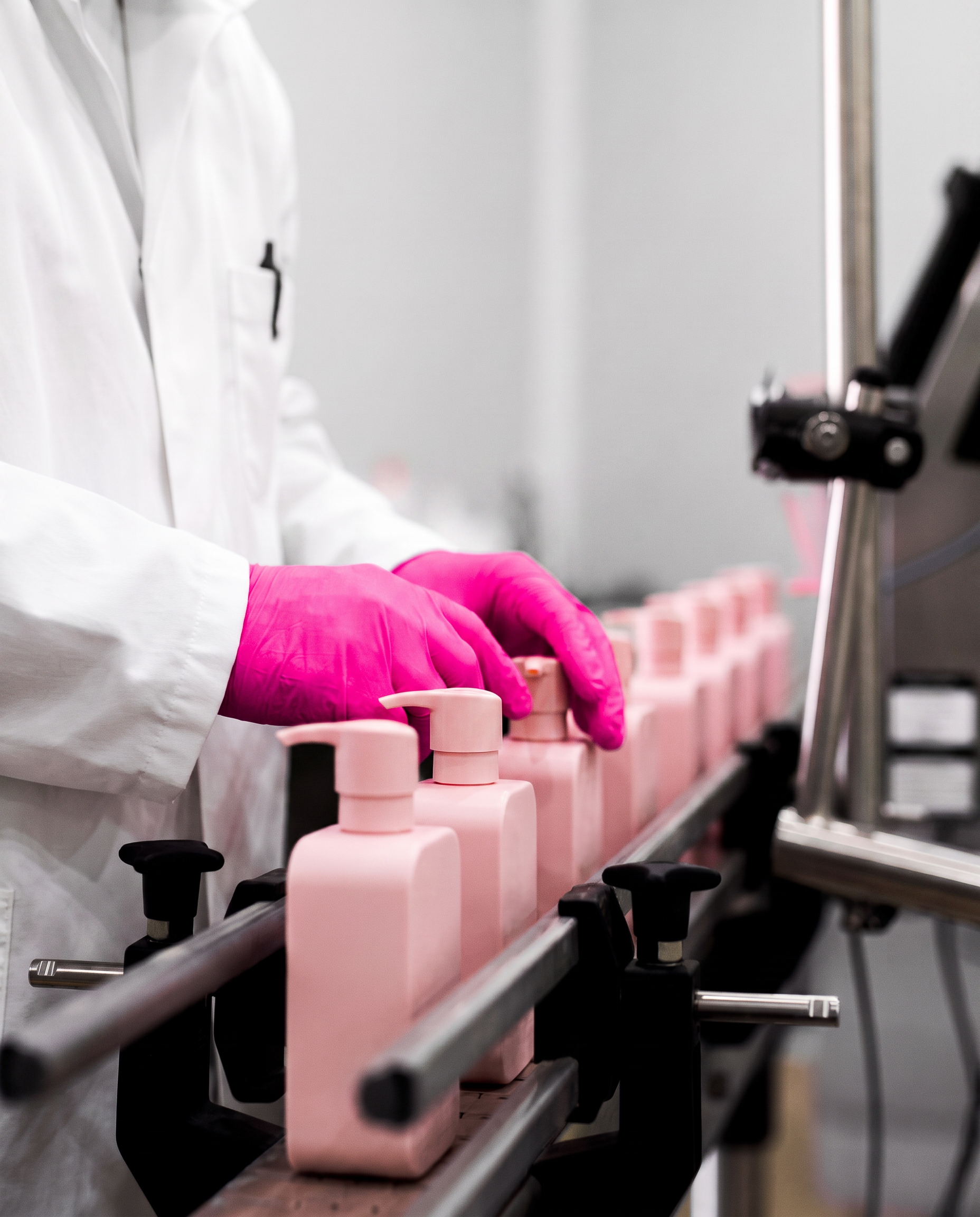
“A great formula deserves a great manufacturer. The right manufacturing partner protects the work you’ve invested in developing your product.”
One of the biggest mistakes beauty founders make is assuming that every contract manufacturer offers essentially the same service.
They don't.
Manufacturers vary dramatically in equipment, technical expertise, quality systems, production capabilities, minimum order quantities, ingredient sourcing, regulatory experience, customer service, and willingness to collaborate.
The manufacturer you choose can influence everything from production costs and launch timelines to product quality and customer satisfaction.
Choosing the right partner isn't simply about finding someone willing to produce your formula.
It's about finding a manufacturer capable of producing your formula consistently, efficiently, and at the quality your customers expect.
Start Looking for a Manufacturer Earlier Than You Think
Many founders wait until formulation is complete before beginning their manufacturer search.
That often creates unnecessary delays.
Different manufacturers have different capabilities.
Some specialize in emulsions.
Others focus on anhydrous products.
Some excel at hot-fill processing.
Others are built around high-speed liquid production.
Packaging requirements, filling equipment, batch sizes, and ingredient sourcing capabilities all influence whether a manufacturer is a good fit.
Bringing manufacturing considerations into the conversation earlier often leads to a smoother development process.
Manufacturing Expertise Matters More Than Facility Size
A large factory isn't automatically a better factory.
Neither is a smaller one.
The better question is whether the manufacturer has experience producing products similar to yours.
For example:
Have they manufactured products with similar viscosities?
Have they worked with sensitive active ingredients?
Can they process waterless formulations?
Do they routinely fill airless packaging?
Have they produced products with similar regulatory requirements?
Are they familiar with your target retail channel?
Relevant experience often matters more than production capacity alone.
Evaluate Their Technical Capabilities
A manufacturer should have equipment appropriate for your product—not simply equipment available.
Ask about:
Mixing vessels
Heating and cooling capabilities
Homogenization equipment
Vacuum processing
Filling equipment
Batch size ranges
Cleaning procedures
Quality control laboratories
Stability testing capabilities
The goal isn't to become a manufacturing expert overnight.
It's to confirm that your product matches the manufacturer's strengths.
Don't Choose Based Solely on Price
A lower manufacturing quote can be appealing, especially for a new brand with limited capital.
But manufacturing cost is only one part of the equation.
Consider:
Batch consistency
Communication
Lead times
Ingredient sourcing
Technical support
Quality systems
Regulatory documentation
Production scheduling
Problem-solving capabilities
A slightly higher production cost may reduce delays, improve product consistency, and ultimately save far more money over the life of the product.
Understand Their Minimum Order Quantities
Every manufacturer has minimum order quantities (MOQs).
These exist because production requires setup time, labor, equipment cleaning, documentation, testing, and packaging preparation regardless of whether they produce 500 units or 50,000.
Ask:
What are your standard MOQs?
Can MOQs vary by product type?
Do packaging choices affect MOQs?
Are pilot batches available?
What happens as production volumes increase?
Understanding these requirements early helps align product development with your financial plan.
Quality Systems Should Never Be an Afterthought
Every reputable cosmetic manufacturer should operate under documented quality systems.
At a minimum, ask about:
Good Manufacturing Practices (GMP)
Batch documentation
Raw material verification
Incoming ingredient inspections
In-process quality checks
Finished product testing
Equipment calibration
Cleaning validation
Traceability
Product recall procedures
These systems protect both the manufacturer and your brand by reducing the risk of inconsistent production, contamination, and costly quality issues.
Ask About Technology Transfer
One of the most overlooked parts of manufacturing is technology transfer.
A formula isn't simply emailed to a manufacturer and produced the next day.
Successful technology transfer includes:
Complete formulation documentation
Manufacturing instructions
Mixing order
Processing temperatures
Mixing speeds
Homogenization parameters
Raw material specifications
Packaging requirements
Finished product specifications
The more complete the documentation, the fewer surprises during production.
A manufacturer should also have an opportunity to review the formula and identify potential production concerns before scheduling the first commercial batch.
For a deeper explanation, read our article Technology Transfer in Cosmetics Explained.
Ingredient Sourcing Can Influence Long-Term Success
Some manufacturers require ingredients to be purchased exclusively through their approved suppliers.
Others allow brands to source ingredients independently.
Neither approach is automatically better, but it's important to understand how ingredient sourcing will affect:
Cost
Lead times
Ingredient substitutions
Supply chain flexibility
International expansion
Long-term pricing
A supplier-agnostic formula often provides greater flexibility if manufacturing partners need to change in the future.
Communication Is Just as Important as Equipment
Even technically excellent manufacturers can become difficult partners if communication breaks down.
Pay attention to how they respond during the evaluation process.
Do they answer questions thoroughly?
Are timelines realistic?
Do they explain technical limitations honestly?
Do they identify risks before they become problems?
The best manufacturing relationships feel collaborative, not transactional.
You want a partner who views your success as part of their success.
Red Flags to Watch For
Not every manufacturer is the right fit.
Be cautious if a manufacturer:
Promises unrealistic production timelines.
Guarantees every project without reviewing the formula.
Avoids discussing quality systems.
Cannot clearly explain their manufacturing process.
Frequently substitutes ingredients without approval.
Is unwilling to discuss documentation or technology transfer.
Has little experience with products similar to yours.
Focuses only on price while avoiding technical discussions.
The goal isn't to find a manufacturer who says "yes" to everything.
It's to find one that communicates openly, identifies challenges early, and has the expertise to solve them.
Think Beyond Your First Production Run
Choosing a manufacturer isn't just about launching your first product.
It's about building a relationship that can support your brand as it grows.
Ask yourself:
Can they accommodate larger batch sizes in the future?
Do they support new product launches?
Can they manufacture additional product categories?
Are they equipped for international expansion?
Can they help navigate changing regulatory requirements?
Switching manufacturers later can be expensive and time-consuming, so it's worth considering long-term compatibility from the beginning.
Key Takeaways
The best contract manufacturer isn't necessarily the largest or the least expensive—it's the one best equipped to manufacture your specific product consistently.
Manufacturing should be considered early in product development, not after the formula is complete.
Relevant experience with similar product types is often more valuable than overall production capacity.
Good Manufacturing Practices (GMP), quality systems, and documentation are essential indicators of a reliable manufacturing partner.
Successful technology transfer minimizes production delays and helps ensure laboratory performance translates to commercial manufacturing.
Strong communication and technical collaboration are just as important as equipment and pricing.
Think beyond your first production run by choosing a manufacturer that can support future growth.
A great manufacturer protects your brand's reputation by producing consistent, high-quality products every time.
Cosmeta's Perspective
Many founders believe choosing a manufacturer is simply the final step before launching a product.
In reality, it's one of the most strategic decisions a brand will ever make.
The manufacturer becomes an extension of your business. They influence product quality, consistency, timelines, customer satisfaction, and ultimately your reputation in the marketplace.
At Cosmeta, we intentionally remain supplier-agnostic. We don't own a manufacturing facility, and we don't steer clients toward one factory because it benefits us. That independence allows us to recommend manufacturers based on what best fits the product, the formulation, the production requirements, and the brand's long-term goals.
No single manufacturer is the best at everything. Some excel at luxury emulsions, others specialize in solid bars, color cosmetics, sunscreens, or waterless products. The right choice depends on the product—not the logo on the building.
We've also learned that the strongest manufacturing relationships are collaborative. Great manufacturers ask thoughtful questions, challenge assumptions when appropriate, communicate openly, and work alongside the chemist to solve problems before they become expensive production issues.
The goal isn't simply to manufacture a product.
It's to build a manufacturing partnership that can support innovation, quality, and growth for years to come.
Ready for the Next Step
If your formula is approaching commercialization, now is the time to begin evaluating manufacturing partners. Taking the time to choose the right manufacturer—and preparing your formula with complete documentation and realistic production expectations—can save months of delays and thousands of dollars while giving your product the best possible start.
FAQs
-
Ideally, you should begin researching manufacturers during formulation development. Early conversations can help identify production requirements, packaging limitations, and ingredient sourcing considerations before the formula is finalized.
-
No. Manufacturers often specialize in specific product categories, equipment types, batch sizes, or processing methods. A manufacturer that excels at lotions may not be the best choice for solid bars, anhydrous balms, or OTC products.
-
Good Manufacturing Practices (GMP) are standardized procedures designed to ensure cosmetic products are manufactured consistently, safely, and with appropriate quality controls. GMP-compliant facilities reduce the risk of contamination, production errors, and inconsistent product quality.
-
Not automatically—but their recommendation can be valuable if it's based on technical fit rather than financial incentives. An independent chemist who is supplier-agnostic can often recommend manufacturers based on your product's specific needs instead of existing business relationships.
-
Yes, but changing manufacturers can require technology transfer, pilot batches, process validation, packaging adjustments, and additional stability work. Choosing the right manufacturing partner from the beginning is usually far more efficient than switching after launch.