Niacinamide for Skin: What It Actually Does and Why More Isn't Always Better
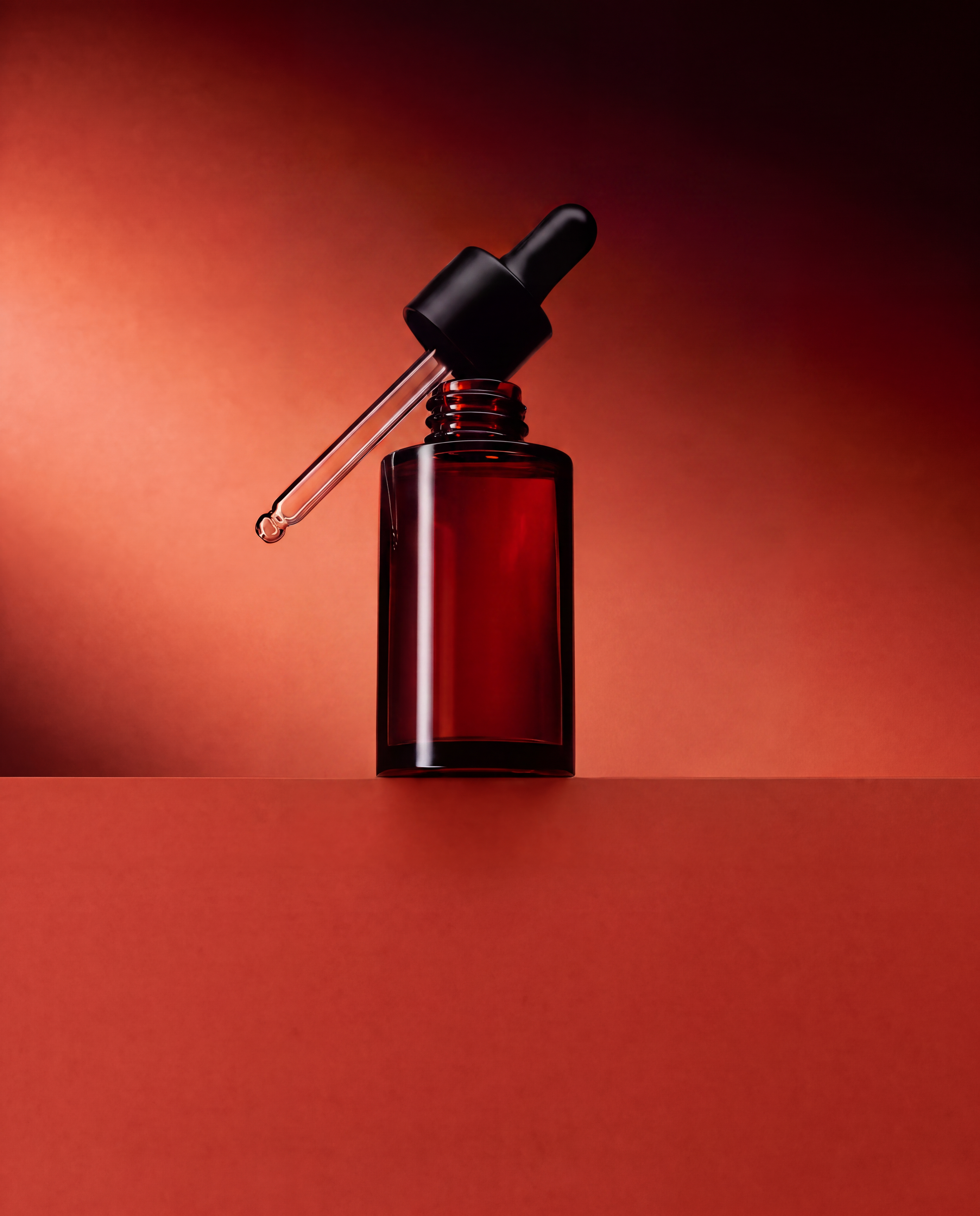
“Niacinamide doesn’t need to be pushed to an extreme percentage to be interesting. Sometimes the more sophisticated formula is the one that knows when enough is enough.”
Niacinamide is everywhere in skincare.
It's in serums for uneven tone, moisturizers for barrier support, products for oily skin, eye creams, body lotions, scalp treatments, and formulas positioned for sensitive skin. Unlike some ingredients that become popular primarily because of a compelling marketing story, niacinamide has a substantial body of research behind its topical use.
It is also relatively easy for consumers to recognize and understand, reasonably versatile for formulators, and compatible with many different product concepts.
That combination explains much of its staying power.
But niacinamide has also become a good example of what happens when skincare marketing starts competing on percentage. If 5% is good, does that make 10% better? What about 15% or 20%?
Not necessarily.
With niacinamide, the more useful question isn't how high the percentage can go. It's what concentration makes sense for the product you're trying to create.
What Is Niacinamide?
Niacinamide is a water-soluble form of vitamin B3. It is also known as nicotinamide, and its cosmetic INCI name is Niacinamide.
Vitamin B3 is essential to human biology, but topical skincare and dietary vitamin B3 shouldn't be treated as the same thing. When niacinamide is applied in a cosmetic product, we're interested in what that specific topical ingredient and finished formulation can do at the skin.
Niacinamide participates in biological pathways related to the cellular cofactors NAD and NADP, which are involved in numerous cellular processes. Topically, research has investigated niacinamide for several cosmetic benefits, including barrier support, moisturization, visible pigmentation, sebum, redness, and signs of skin aging.
That breadth is unusual.
Many cosmetic actives have one particularly compelling application. Niacinamide can make sense in several.
What Does Niacinamide Actually Do for Skin?
Niacinamide's popularity isn't built around one single mechanism or benefit.
Supports the Skin Barrier
One of niacinamide's most useful roles is barrier support.
Topical niacinamide has been associated with changes in epidermal lipid synthesis, including ceramides and other barrier-relevant lipids. This helps explain why it appears so frequently in moisturizers and products designed for dry or compromised-feeling skin.
It also makes niacinamide an interesting supporting active in a barrier formula rather than simply a standalone serum ingredient.
A ceramide moisturizer, for example, may provide skin-identical or biomimetic lipids while niacinamide supports the broader barrier-focused product strategy through a different pathway.
That's a more thoughtful combination than simply putting two trending ingredients together.
Helps Improve the Appearance of Uneven Tone
Niacinamide is also widely used in products targeting visible hyperpigmentation and uneven skin tone.
Its pigmentation story differs from ingredients that primarily target melanin production. Research suggests niacinamide can interfere with the transfer of melanosomes from melanocytes to keratinocytes, providing a different route for addressing the visible appearance of pigmentation.
That distinction can matter when building a multi-ingredient brightening product.
Instead of asking how many "brightening ingredients" can fit into a serum, a formulator can choose ingredients that approach the concern through complementary mechanisms.
Can Help With Oiliness
Niacinamide has also been studied for its effects on facial sebum, which is one reason it has become so common in products for oily and blemish-prone skin.
This gives it an unusual positioning advantage.
The same ingredient can make sense in a lightweight product for oily skin and in a richer moisturizer focused on barrier support. The formula surrounding it determines which story becomes dominant.
Supports the Appearance of Aging Skin
Niacinamide has also been studied in relation to visible signs of aging, including fine lines, skin texture, sallowness, blotchiness, and elasticity.
That doesn't make it a substitute for every established aging-skin technology.
It does make it a useful supporting active because it can contribute to several aspects of skin appearance without requiring the entire product concept to revolve around niacinamide.
What Percentage of Niacinamide Works?
This is where the consumer conversation around niacinamide has become unnecessarily complicated.
A large amount of the commonly cited topical research has used niacinamide in the general neighborhood of 2% to 5%, depending on the benefit being investigated and the study design.
That doesn't mean every product should contain exactly that amount, nor does it mean concentrations above 5% can't be formulated.
It means there is no good scientific basis for assuming that a 10% product must be twice as effective as a 5% product simply because the number is twice as large.
For many cosmetic applications, a formulator might consider niacinamide within a broad range of roughly 2% to 5% as a very meaningful starting territory. Higher concentrations are also commercially available and may make sense depending on the product, target consumer, claims strategy, supporting ingredients, tolerability goals, and raw material.
The right level is product-dependent.
And there is another practical issue: as the concentration rises, the formula still has to feel good on skin and work with everything else you're trying to accomplish.
The percentage can't be considered in isolation.
Is 10% Niacinamide Better Than 5%?
Not automatically.
The popularity of 10% niacinamide products has made 10% feel almost like a consumer standard, but popularity and optimal concentration aren't the same thing.
Higher levels may create a stronger front-of-package story because the percentage is easy for consumers to compare.
From a formulation perspective, however, there may be little value in increasing the concentration once you've reached a level appropriate for the intended benefit.
Higher isn't automatically more sophisticated.
If 5% niacinamide allows room for a better supporting active system, improved sensory profile, lower irritation potential, or a more elegant overall product, that may be the better commercial formula.
This is one of the places where marketing value and formulation value can diverge.
A 10% claim is instantly understandable.
A beautifully optimized 4% or 5% niacinamide system may require more explanation.
The best product strategy considers both realities.
Niacinamide, Nicotinamide and Niacin Are Not the Same Thing
These names are often confused.
Niacinamide and nicotinamide refer to the same molecule.
Niacin, also called nicotinic acid, is a related but chemically distinct form of vitamin B3.
That distinction matters in skincare because nicotinic acid can produce the characteristic warmth, redness, itching, or flushing associated with the "niacin flush."
Properly formulated niacinamide products are not intended to create that response.
Niacinamide can hydrolyze to nicotinic acid under sufficiently stressful conditions. Classic stability research found its hydrolysis rate is relatively slow through normal pharmaceutical conditions, with greatest aqueous stability around moderately acidic conditions rather than at pH extremes.
This is one reason formulation pH, temperature, and long-term stability matter more than internet rules about which ingredients are supposedly "allowed" to be used together.
The Niacinamide and Vitamin C Myth
One of the longest-running skincare rules says you should never use niacinamide and vitamin C together.
That statement is far too broad.
The concern is rooted partly in older chemistry involving niacinamide under conditions that don't necessarily represent a modern finished cosmetic sitting on someone's bathroom shelf.
But there's a formulation nuance here that is often lost when the myth is corrected.
Can niacinamide and vitamin C exist in the same skincare routine? Yes.
Does that mean every form of vitamin C belongs in the same formula as niacinamide? No.
Pure L-ascorbic acid is typically formulated in an acidic environment, while niacinamide has different formulation considerations. A chemist developing a product containing both has to consider the particular vitamin C technology, pH, stability, concentration, packaging, and complete formula.
A vitamin C derivative may make more sense for one niacinamide concept. In another case, separate products may be the better solution.
This is why "Can I use these ingredients together?" and "Should I formulate these ingredients together?" are two different questions.
Consumers are usually asking the first.
Formulators have to answer both.
Niacinamide Is More Formulation-Friendly Than Many Hero Actives
One reason formulators return to niacinamide is that it offers considerable flexibility.
It's water soluble and can be incorporated into many aqueous skincare formats. It also doesn't require the extremely acidic environment associated with L-ascorbic acid or present the same oxidation challenge as some antioxidant actives.
But "easy to formulate with" shouldn't be confused with "impossible to formulate badly."
The finished pH still matters. Heat exposure, other raw materials, preservation, long-term stability, and the complete formulation environment matter too.
Recent research has also shown that formulation pH can affect niacinamide permeation through human skin models, adding another layer to what formulators may eventually consider when optimizing delivery. That doesn't mean every product should now be formulated at the pH producing the greatest permeation in one experimental system. It means pH can influence more than ingredient stability alone.
That's a useful distinction.
A formula isn't optimized around one variable.
What Works Well With Niacinamide?
One of niacinamide's biggest strengths is that it can play either the hero or supporting role.
Ceramides and Barrier Lipids
Niacinamide works naturally within barrier-focused concepts because its biological story complements topical lipid systems.
A formula may combine niacinamide with ceramides, cholesterol, fatty acids, or other barrier-support technologies depending on the product.
The ingredients don't need to perform the exact same function to belong together. In fact, complementary functions are often more interesting.
N-Acetyl Glucosamine
N-acetyl glucosamine, commonly seen as Acetyl Glucosamine on an INCI list, is a particularly interesting partner for niacinamide in products focused on visible tone and hydration.
This pairing allows a formulator to build a more nuanced active system without simply increasing the niacinamide percentage.
Hyaluronic Acid and Other Humectants
Niacinamide also works easily within hydration-focused systems containing glycerin, hyaluronic acid, betaine, sodium PCA, polyglutamic acid, or other humectants.
These ingredients aren't doing the same job as niacinamide.
That's precisely why the combination can make sense.
Retinoids
Niacinamide can also be paired with retinoid-focused products, particularly when the broader formula is designed to support hydration and barrier comfort.
Again, compatibility doesn't mean every active belongs in one bottle.
The intended consumer, retinoid form, product format, pH, stability, and sensory goals still determine whether the combination is worthwhile.
When More Actives Make the Niacinamide Formula Worse
Niacinamide's versatility creates a temptation.
Because it can coexist with so many ingredient categories, it's easy to keep adding more.
A brightening serum can quickly become niacinamide plus vitamin C plus tranexamic acid plus alpha-arbutin plus licorice plus N-acetyl glucosamine plus peptides plus three molecular weights of hyaluronic acid.
Technically possible doesn't necessarily mean commercially intelligent.
Every additional active affects something: pH, electrolyte load, viscosity, preservation, color, odor, tack, stability, cost, supplier complexity, or consumer tolerability.
It also affects the story.
If the consumer can no longer understand what the product is supposed to do, the ingredient list may be sophisticated while the product concept becomes weaker.
Sometimes niacinamide should be supported.
Sometimes it should be allowed to shine.
Knowing the difference is part of formulation strategy.
Niacinamide Doesn't Need a "Multi-Form" Story
Unlike hyaluronic acid, ceramides, peptides, or vitamin C, niacinamide usually doesn't benefit from stacking numerous forms of niacinamide itself.
The ingredient story is comparatively straightforward: Niacinamide is the primary cosmetic INCI.
There are other vitamin B3-related materials and delivery technologies, but combining several vitamin B3 compounds simply to advertise a "multi-B3 complex" doesn't automatically provide the kind of functional rationale that can exist with multiple molecular weights of hyaluronic acid or different ceramide structures.
For niacinamide, the more interesting sophistication is often what you formulate around it.
That can be a stronger product-development strategy than inventing complexity where the ingredient doesn't need it.
Who Is Niacinamide Best For?
Niacinamide's breadth makes it relevant to many skin types.
It can make particular sense in products designed around:
Barrier support and dryness
Uneven-looking skin tone
Oily skin
Blemish-prone skin
Visible pores
Early signs of aging
Sensitive-skin positioning
General daily skin maintenance
The same percentage doesn't necessarily belong in every one of those products.
A lightweight daily moisturizer for sensitive skin and a concentrated tone-focused serum may use niacinamide very differently.
The consumer should determine the formulation strategy, not the popularity of the ingredient.
Is Niacinamide Good for Acne?
Niacinamide is frequently used in products for acne-prone skin, but cosmetic and drug claims need to be separated.
From a cosmetic perspective, niacinamide can be useful for oily or blemish-prone consumers because of its relationship with sebum, barrier function, visible redness, and overall skin appearance.
That doesn't make a cosmetic niacinamide serum an acne drug.
If a product is intended to treat acne, regulatory requirements and appropriate OTC drug actives become a different product-development conversation in markets such as the United States.
A cosmetic formula can support the appearance and condition of acne-prone skin without claiming to treat the disease.
Topical Niacinamide Is Different From Taking Vitamin B3
Vitamin B3 is nutritionally essential, but that fact isn't evidence that a niacinamide serum will produce every biological effect associated with dietary vitamin B3.
Oral vitamin B3 is consumed, absorbed, metabolized, and distributed systemically.
Topical niacinamide is delivered through a finished formulation onto the skin.
Those are different exposure routes with different concentrations, delivery considerations, and evidence.
The same distinction applies in reverse. Research on topical niacinamide shouldn't automatically be used to make claims about a vitamin B3 supplement.
For skincare, the most useful evidence is research that actually evaluates topical niacinamide or a relevant finished topical product.
Is Niacinamide Natural or Synthetic?
Commercial cosmetic niacinamide is generally manufactured to provide a highly purified, standardized ingredient rather than extracted from vitamin-B3-containing foods.
That's not a disadvantage.
For formulation, purity and consistency matter.
A cosmetic chemist is interested not only in whether an ingredient can be described as "natural," but in its specifications, purity, contaminants, documentation, supply reliability, compatibility, and suitability for the standards the finished product is intended to meet.
For a brand developing toward a particular natural-origin certification, retailer clean standard, vegan requirement, or other ingredient policy, the specific raw material and its documentation should be evaluated rather than making assumptions from the ingredient name alone.
Niacinamide and Clean Beauty 2.0
Niacinamide fits unusually well into modern clean-beauty formulation because brands don't necessarily have to choose between a recognizable ingredient story and a useful formulation technology.
But the larger lesson of Clean Beauty 2.0 is that inclusion is becoming as important as exclusion.
A product can meet an extensive no-list and still be mediocre.
The next generation of clean formulation has to ask what the product actually does, how it feels, whether it's stable, whether the preservation system works, and whether the ingredient strategy makes sense for the consumer.
Niacinamide can be part of that strategy.
It isn't the strategy by itself.
Should Another Brand Launch a Niacinamide Serum?
This is where the conversation gets more commercial.
Niacinamide has tremendous consumer recognition.
It also has tremendous market saturation.
Launching a basic water-based serum whose primary differentiation is "10% niacinamide" puts a brand into an extremely crowded category with products available at almost every price point.
That doesn't mean niacinamide is commercially exhausted.
It means niacinamide alone may no longer be the innovation.
A more interesting product might use niacinamide inside a differentiated barrier system, sensitive-skin moisturizer, body treatment, tone-focused technology, post-active recovery product, scalp treatment, or another format where it supports a larger idea.
For an established ingredient, product architecture becomes the innovation.
Hero Ingredient or Supporting Active?
Niacinamide can do either job.
As a hero ingredient, it has excellent consumer recognition and a broad, understandable benefit story.
As a supporting active, it may be even more strategically useful because it complements so many product concepts without requiring the consumer proposition to revolve around it.
That makes niacinamide especially valuable when a brand wants a recognizable ingredient alongside a newer technology consumers don't yet understand.
The novel ingredient can provide differentiation.
Niacinamide can provide familiarity.
That's often a stronger commercial pairing than asking an unfamiliar technology to carry the entire marketing story.
Formula Ownership Matters When Percentage Becomes Part of the Product Story
Niacinamide illustrates one of the limitations of reading an INCI list.
An ingredient list can tell you that Niacinamide is present.
It generally cannot tell you whether the formula contains 2%, 5%, or 10%.
For a consumer, that may simply be an unanswered question.
For a brand building its positioning around a particular active level, it can be strategically important.
With 100% ownership of the finished quantitative formula, a brand can know and control the niacinamide percentage along with the rest of its product architecture. It can also make deliberate decisions later if the product needs to evolve.
Maybe a future version reduces niacinamide and adds a more differentiated technology. Maybe the formula needs to meet a new retailer standard. Maybe COGS changes. Maybe a new manufacturing partner is needed.
Owning the quantitative formula provides greater control over those decisions.
It does not transfer ownership of a supplier's patented technology, trademark, proprietary raw material, or other third-party intellectual property.
It gives the brand control over its formula.
From Niacinamide to an Actual Product
Choosing niacinamide is the easy part.
The real product-development decisions begin afterward.
What is the product supposed to accomplish?
Who is going to use it?
Does niacinamide need to be the hero, or would it be better as supporting technology?
What percentage is justified?
What should accompany it?
What should be left out?
What texture makes sense?
What pH does the complete active system require?
How will the product be preserved?
What packaging supports the formula and consumer experience?
Can it remain stable through its intended shelf life?
Can the manufacturer reproduce it consistently at scale?
These questions aren't unique to niacinamide.
That's exactly the point.
An ingredient becomes a commercial skincare product only when it works inside a much larger system.
Key Takeaways
Niacinamide is the cosmetic INCI name for nicotinamide, a form of vitamin B3 with substantial topical skincare research.
Its benefits are unusually broad. Depending on the finished formula, it can contribute to barrier-focused, tone-focused, oil-control, hydration, and visible-aging product strategies.
Much of the compelling topical evidence exists at moderate concentrations, which is why more niacinamide should not automatically be interpreted as better niacinamide.
Niacinamide and nicotinic acid are related but different molecules. Product pH, stability, and formulation conditions matter.
Niacinamide can work with vitamin C, retinoids, ceramides, humectants, and many other skincare technologies, but ingredient compatibility alone doesn't mean every active belongs in one product.
Its biggest commercial limitation may also be one of its strengths: consumers already know it. The opportunity for brands is increasingly to use that familiarity inside a more differentiated product rather than launching another percentage-driven niacinamide serum.
Cosmeta's Perspective
Niacinamide may actually become more valuable as it becomes less novel.
Beauty has a tendency to treat ingredients as trends. We discover one, put it everywhere, increase the percentage, saturate the category, and then start looking for the next story.
But good formulation doesn't have to work that way.
An ingredient with strong consumer recognition, useful evidence, broad compatibility, and reasonable formulation flexibility can become part of the infrastructure of skincare rather than disappearing when the trend cycle moves on.
That's how I look at niacinamide.
The interesting question for product development isn't necessarily, "How do we make niacinamide new again?"
It's, "Where does niacinamide make this particular product better?"
Sometimes it deserves the front of the package.
Sometimes a newer active deserves that space and niacinamide quietly strengthens the formula behind it.
Knowing which role an ingredient should play is often more important than finding another ingredient to add.
Ready for the Next Step
If niacinamide is part of a new product concept, decide what job you actually need it to do before choosing the percentage. The target consumer, supporting active system, product format, sensory profile, positioning, and quantitative formula should determine the ingredient strategy, not the number on a competing bottle.
FAQs
-
Yes. Niacinamide is commonly formulated into products intended for daily use, including serums, moisturizers, eye products, and body care. How often you should use a specific product depends on the complete formula and your skin's response, particularly if it contains other potentially irritating actives.
-
Yes. The blanket rule that niacinamide and vitamin C can never be used together is outdated. Consumers can use products containing both ingredients in the same routine. Formulating both into the same product is a more technical question because the vitamin C form, pH, concentrations, stability, and complete formula need to work together.
-
Not necessarily. A significant amount of topical niacinamide research has demonstrated benefits at moderate concentrations, and efficacy doesn't necessarily increase proportionally with percentage. A well-designed 5% formula may be preferable to a higher-concentration product depending on the intended benefit, supporting ingredients, tolerability, and finished formulation.
-
It depends on what you're trying to improve. Hydration and the feel of the skin may change relatively quickly, while visible changes in uneven tone, texture, oiliness, or signs of aging generally require consistent use over weeks. Clinical studies of topical niacinamide commonly evaluate outcomes over several weeks rather than days.
-
No. Niacinamide, also called nicotinamide, and niacin, also called nicotinic acid, are related forms of vitamin B3 but are chemically distinct. Nicotinic acid is associated with the characteristic "niacin flush." Niacinamide does not normally produce the same flushing response when used in a properly formulated cosmetic product.