
Cosmeta Intelligence
Research. Formulation. Future of Beauty.
"Free-From" Claims: What They Really Mean
"Paraben-free," "sulfate-free," and "chemical-free" labels have become common in skincare, but what do they actually tell you? Learn what free-from claims really mean, where they can be useful, and why removing an ingredient doesn't automatically create a better formula.
How Long Does Cosmetic Product Development Take?
How long does it really take to develop a custom cosmetic product? Learn what influences development timelines, from strategy and prototype iterations to stability testing, manufacturing, and commercialization, so you can plan your launch with realistic expectations and avoid unnecessary delays.
What Is a Minimum Order Quantity (MOQ) and Why Does It Matter?
Minimum order quantities (MOQs) affect far more than how many products you manufacture. Learn why cosmetic MOQs exist, how they influence pricing, packaging, cash flow, and product development, and how to make smarter decisions before committing to your first production run.
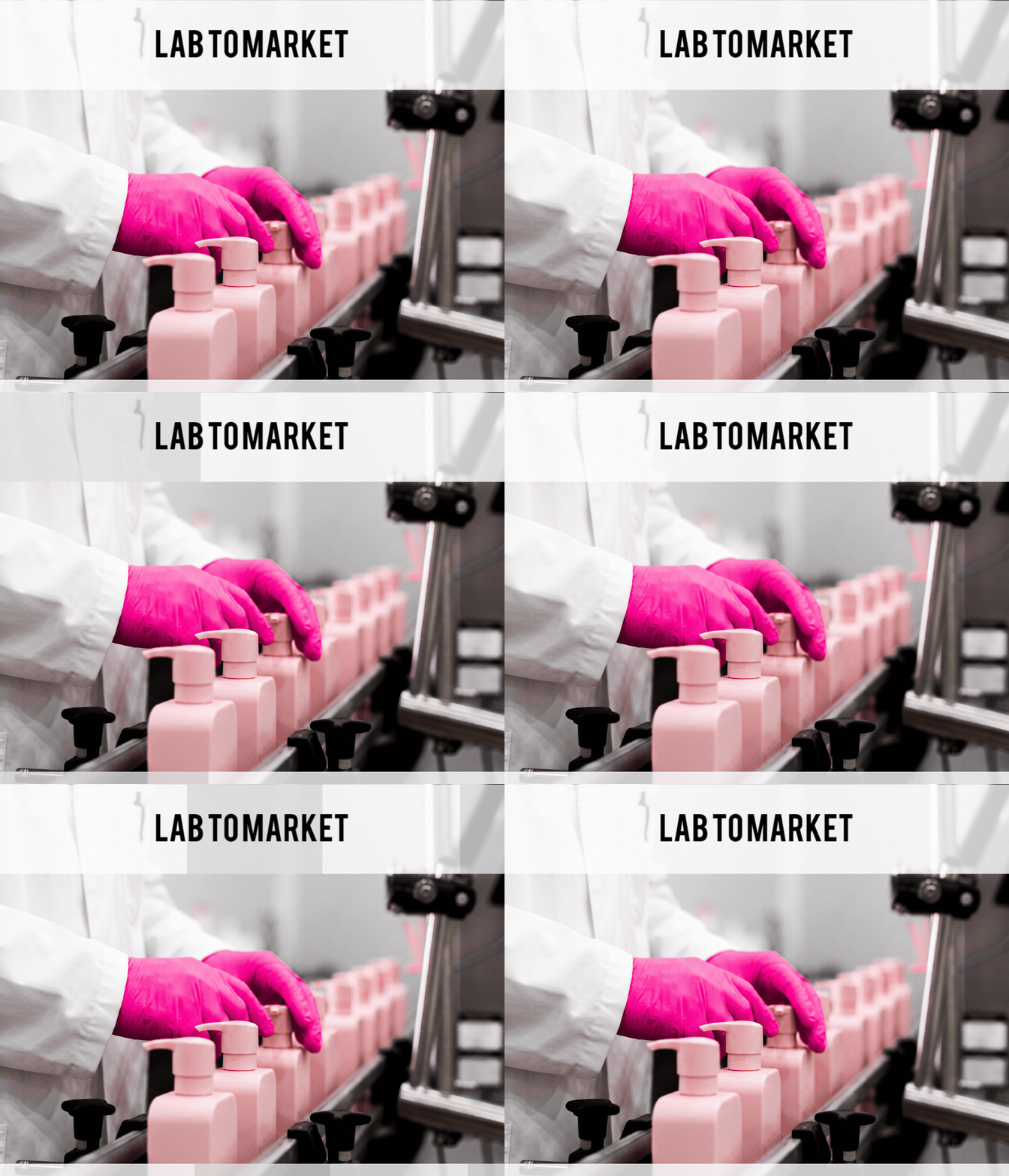
How to Choose a Contract Manufacturer
Choosing a contract manufacturer is about much more than comparing quotes. The right manufacturing partner influences quality, scalability, timelines, and long-term success. Learn how to evaluate manufacturers, ask the right questions, and prepare your formula for a smooth transition from laboratory to commercial production.
Waterless and Anhydrous Formulation: What It Actually Requires
Waterless beauty isn't simply about removing water from a formula. It changes preservation, ingredient selection, manufacturing, packaging, stability, and consumer experience. Learn what truly defines anhydrous formulation and why developing successful waterless products requires a completely different approach.
How Many Prototype Iterations Should You Expect?
Wondering how many prototype iterations your cosmetic formula will require? Learn what influences formulation revisions, why multiple prototypes are often a sign of innovation rather than failure, and how collaboration between founders, chemists, and manufacturers leads to better products and more successful commercial launches.
What's a Stock Base? And Why Cosmeta Doesn't Use One
Many beauty brands believe they're buying a custom formula when they're actually modifying a stock base. Learn what stock bases are, why they're so common, and why starting from a blank page can create products that truly stand apart.
What Does a Cosmetic Chemist Do?
Cosmetic chemists do much more than mix ingredients. They solve technical problems, design consumer experiences, evaluate raw materials, oversee testing, and help transform product ideas into scalable commercial formulations. Learn what cosmetic chemists actually do—and why their role extends far beyond the laboratory.
Peptides in Skincare: What They Actually Do
Peptides are among the most popular ingredients in skincare, but not all peptides work the same way. Learn what peptides actually do, how cosmetic chemists formulate with them, and why the overall formulation matters just as much as the peptide itself.
Biotech Ingredients: The Future of Cosmetic Formulation
Biotech ingredients are changing how cosmetic products are developed. From precision fermentation to bioengineered actives, these innovations improve sustainability, consistency, and performance while opening entirely new possibilities for skincare formulation.
Skincare Product Development: From Concept to Market
Developing a successful skincare product involves much more than creating a great formula. From market strategy and ingredient selection to prototype testing, stability studies, manufacturing, and launch preparation, every stage matters. This guide walks through the complete skincare product development process from concept to commercialization.
Can You Own Your Cosmetic Formula?
Can you actually own your cosmetic formula? Many founders assume the answer is yes—but ownership isn't automatic. Learn who owns a cosmetic formula, how intellectual property works, what rights you should receive, and what to look for before signing a formulation or manufacturing agreement.
Challenge Testing vs. Preservative Efficacy Testing: What's the Difference?
Challenge Testing and Preservative Efficacy Testing (PET) are often used interchangeably, but they don't always mean exactly the same thing. Learn how these microbiological evaluations work, why they're critical for cosmetic safety, when they're performed, and how they fit into the product development process.
Scaling a Cosmetic Formula: From Lab to Manufacturing
Scaling a cosmetic formula from the laboratory to commercial manufacturing involves far more than increasing ingredient quantities. Learn how equipment, mixing, heating, cooling, shear, ingredient order, and pilot batches influence product quality—and why successful scale-up requires both formulation science and manufacturing expertise.
How Cosmetic Chemists Evaluate New Ingredients
How do cosmetic chemists decide whether a new ingredient belongs in a formula? Learn the scientific process behind ingredient evaluation, from supplier credibility and clinical evidence to formulation compatibility, stability, manufacturability, cost, and commercial viability.
What Is an INCI List and How Is It Created?
Every cosmetic product requires an INCI ingredient list, but few founders understand how it's created. Learn what an INCI list is, why it matters, how ingredients are ordered, and the common mistakes brands should avoid before taking a product to market.
What Happens After Your Formula Is Finished?
Your cosmetic formula is finished—but product development isn't. Learn what happens next, from stability testing and technology transfer to pilot batches, manufacturing, packaging, regulatory preparation, and commercial production. Understanding these next steps helps transform a successful laboratory formula into a successful product launch.
Cosmetic Stability Testing Explained
What is cosmetic stability testing, and why is it essential before launching a skincare or beauty product? Learn how accelerated aging, freeze-thaw cycles, packaging compatibility, and real-world stability studies help predict shelf life, prevent costly product failures, and ensure your formula performs consistently from the laboratory to the consumer's hands.
Technology Transfer in Cosmetics Explained | Cosmeta
Technology transfer turns an approved cosmetic formula into a repeatable manufacturing process. Learn what must move from the development lab to the contract manufacturer, why formula documents alone are insufficient, how pilot batches reveal scale-up risk, and what brands should verify before authorizing commercial production.
How Sensory Science Shapes a Product's Texture
Texture is one of the first things consumers notice, yet it's one of the most complex aspects of cosmetic formulation. Learn how cosmetic chemists engineer spreadability, absorption, afterfeel, and finish through sensory science—not by accident, but by design.